History Lessons in Phnom Penh
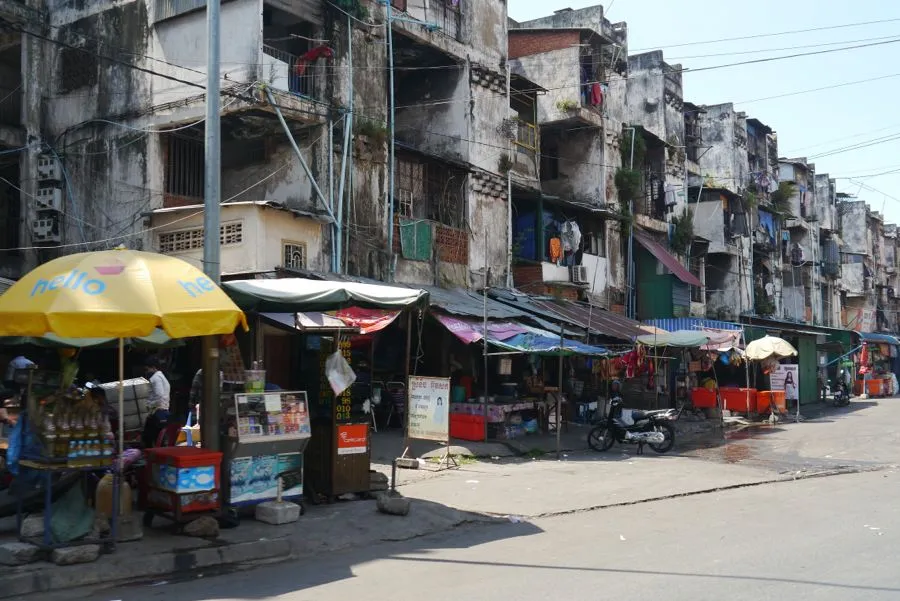
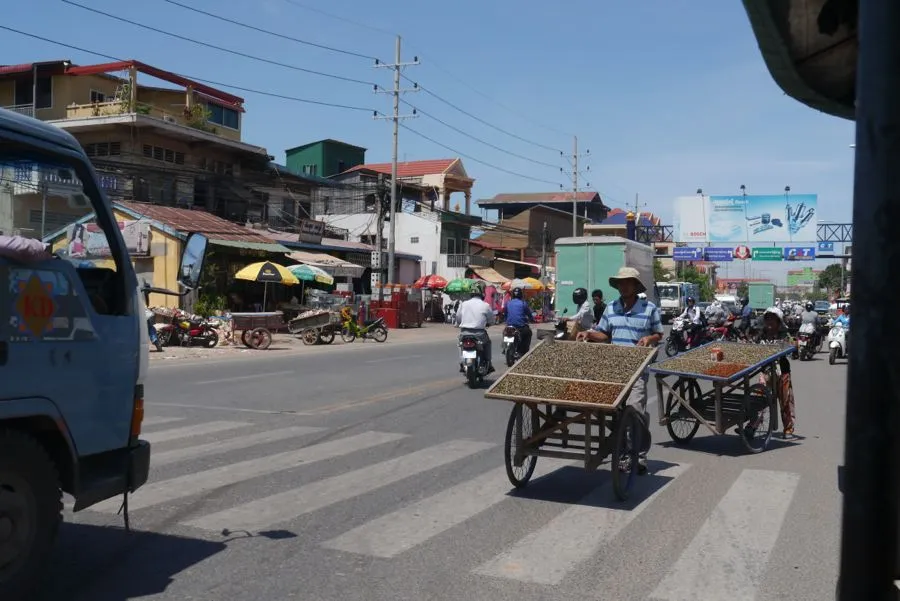
We took the afternoon bus from Sihanoukville to Phnom Penh, the capital of Cambodia. In true South East Asia style it took a lot longer than advertised but the a/c worked and condition of the bus was much better than I had expected. We reached Phnom Penh as dusk fell and the journey into the centre of the capital was a real eye opener. We have never seen such a dirty city, there was rubbish everywhere! Street vendors were preparing food and their customers consuming it in such dirty conditions - paradise for cockroaches! This was definitely one of the dirtiest places we had been too.
Our hostel had arranged for a tuk-tuk to meet us for a 'free transfer'. The transfer is free if you choose to use the tuk-tuk drivers services during your stay. This wasn't particularly surprising so we agreed a fee for the following day's itinerary. After checking-in we jumped back in our tuk-tuk in search of some dinner. The driver was very friendly so we asked if he would take us somewhere he eats, for some real Khmer food. Now, usually if you eat where the locals eat the food is pretty good and cheap. This time, despite certainly being a locals restaurant, the food wasn't that cheap nor great. Ahh well, we tried. After saying goodbye to our driver we went to the opposite end of the spectrum and indulged in a cocktail at one of the plushest restaurants in Phnom Penh overlooking the Mekong River.
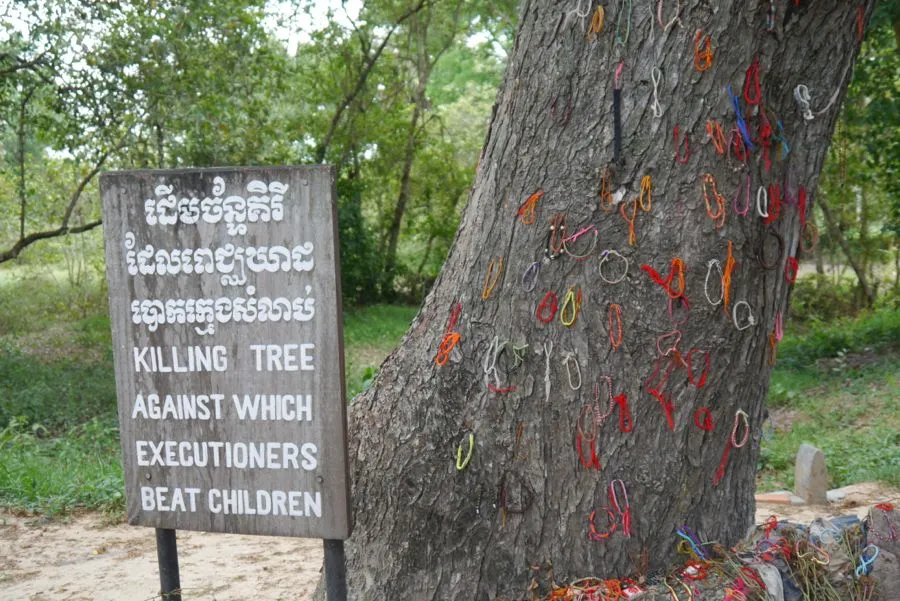
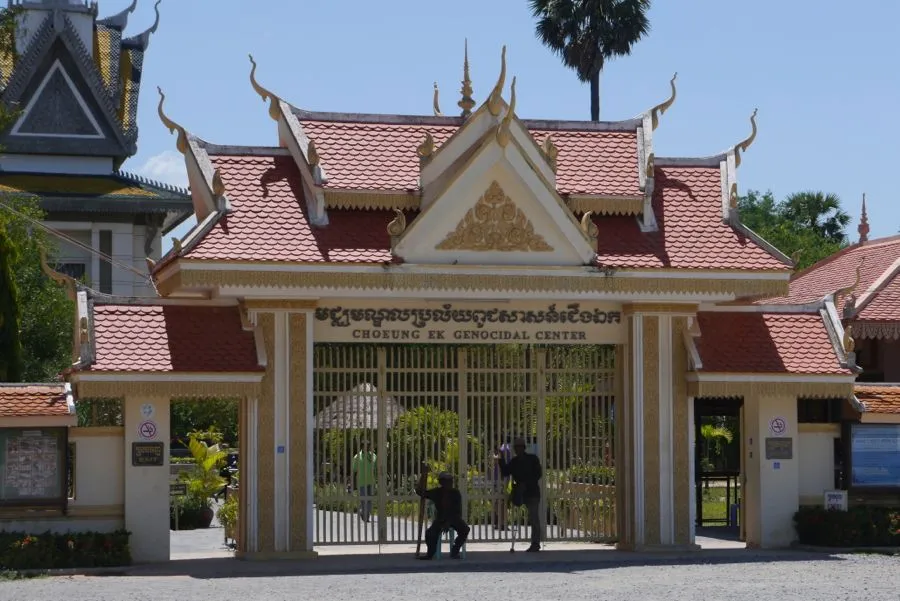
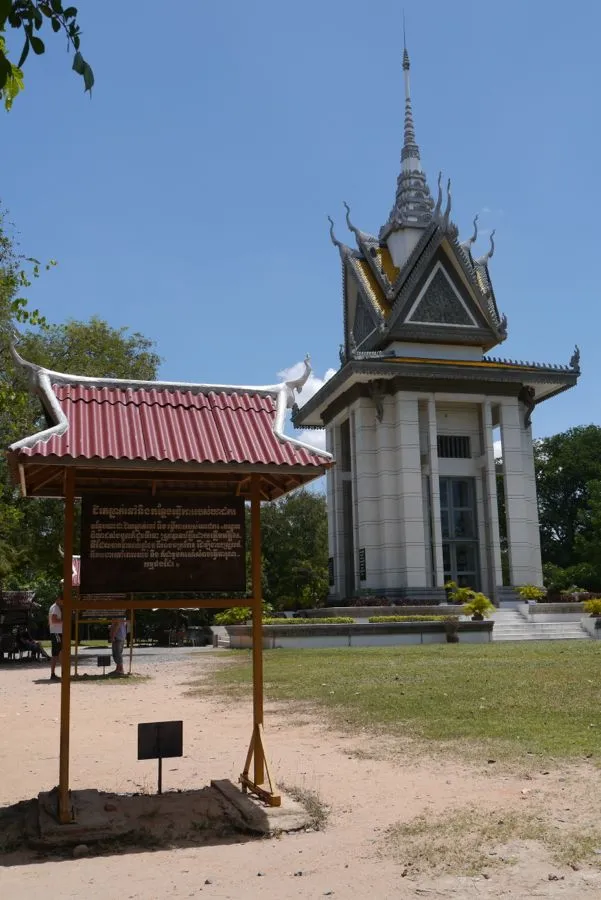
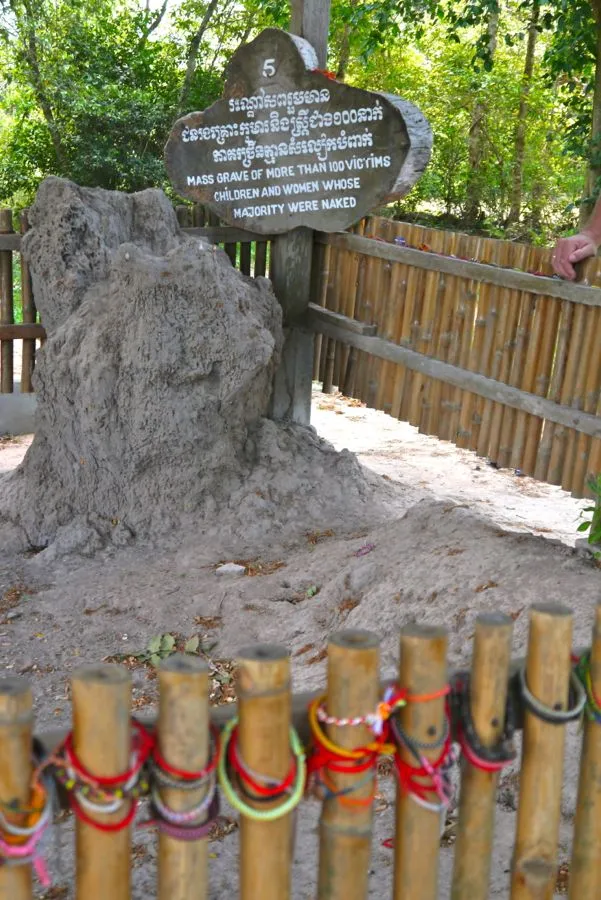
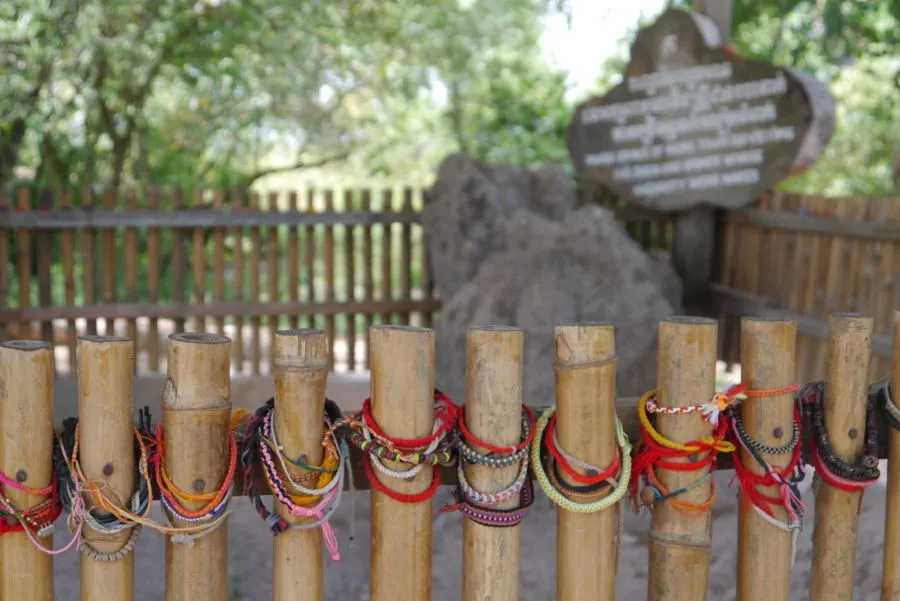
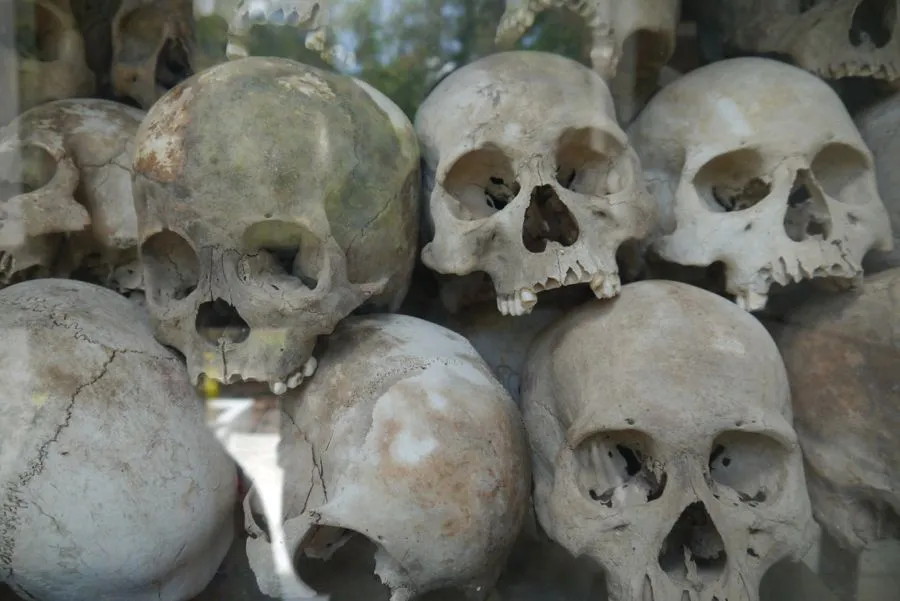
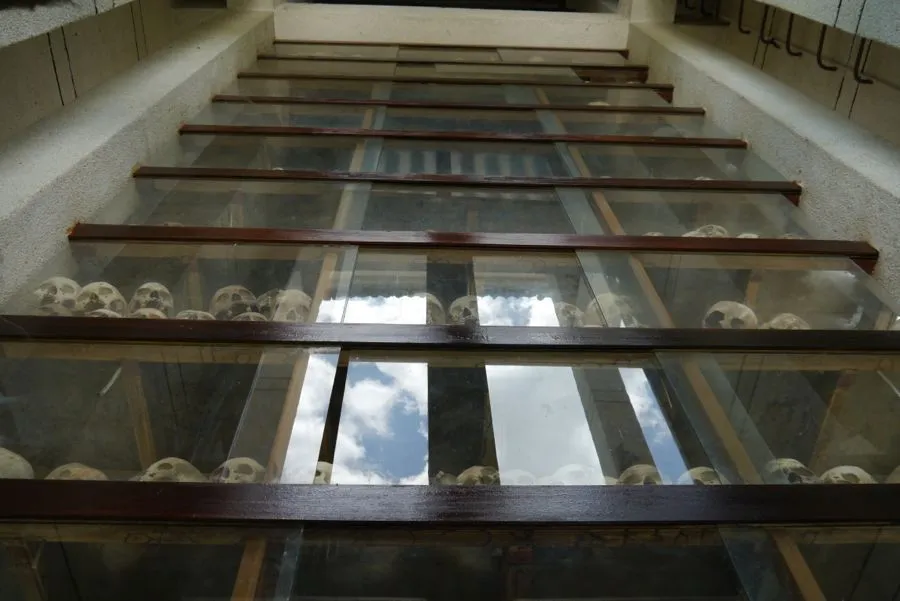
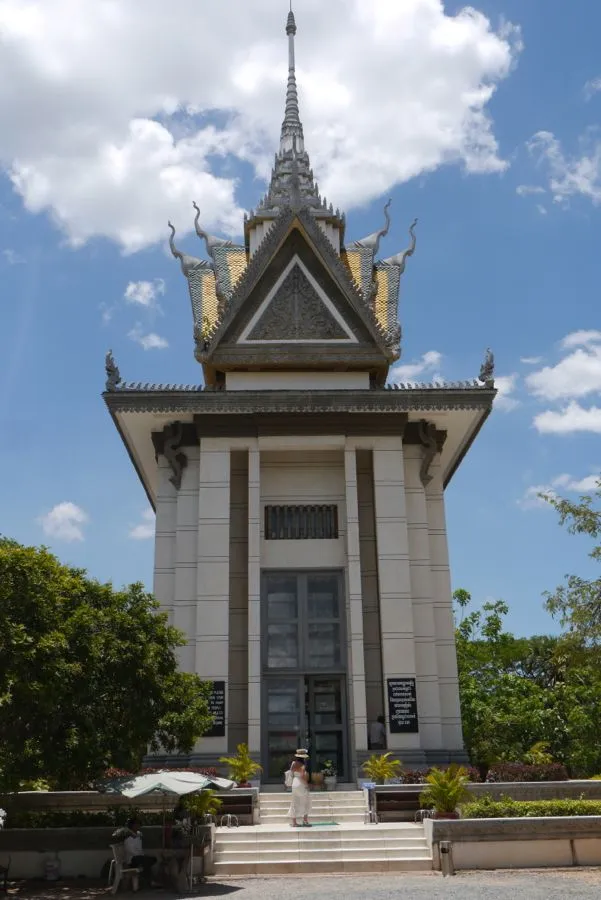
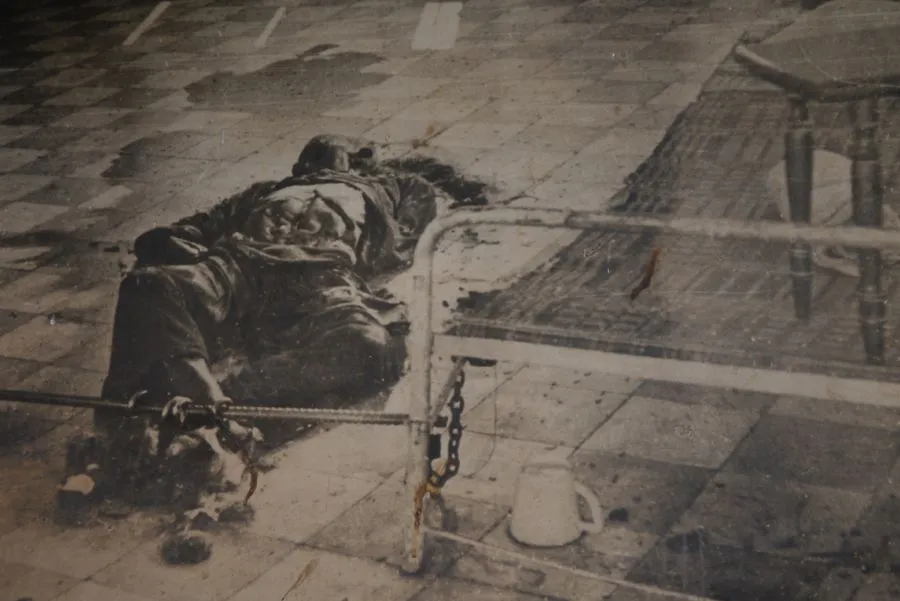
We only had one day in Phnom Penh for sightseeing as we were on another bus to Siam Reap the following morning. In the morning our tuk-tuk took us out of the city to the infamous Killing Fields of Choeung Ek. This is just one of the hundreds of sites used by the Khmer Rouge for killing and burying, in mass graves, Cambodian people. Although there are countless genocidal sites through Cambodia, Choeung Ek was chosen to educate visitors in what happened during the rule of the Khmer Rouge and why civil war is so devastating to a nation.
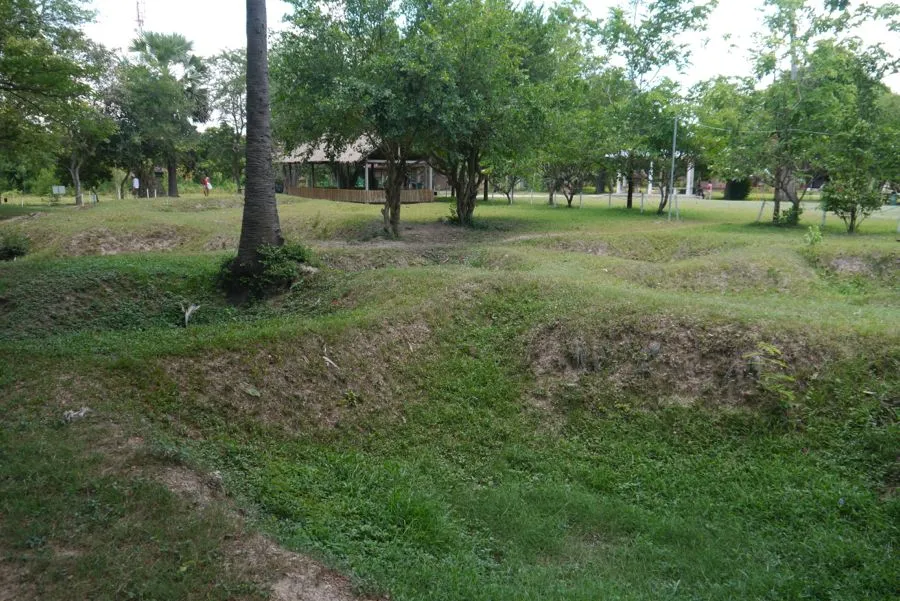
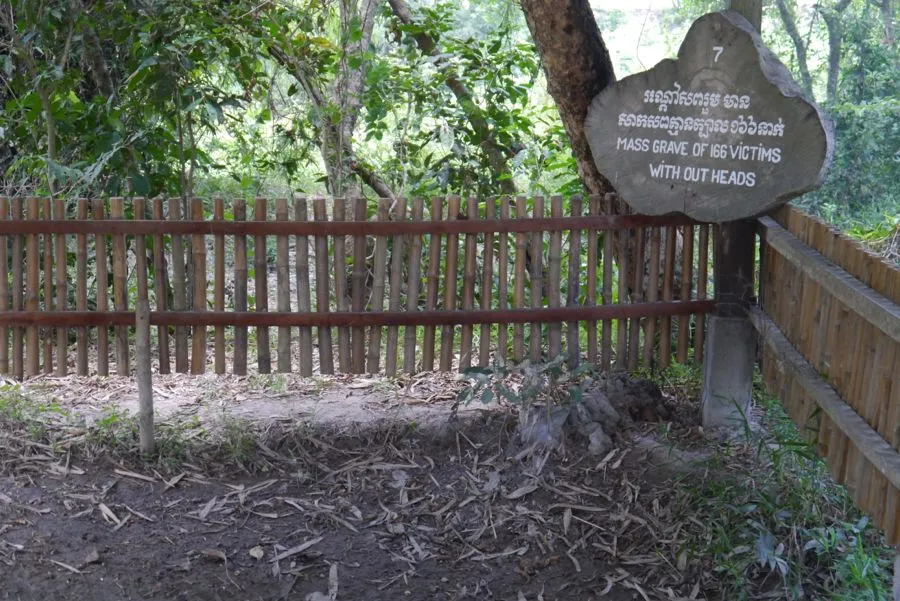
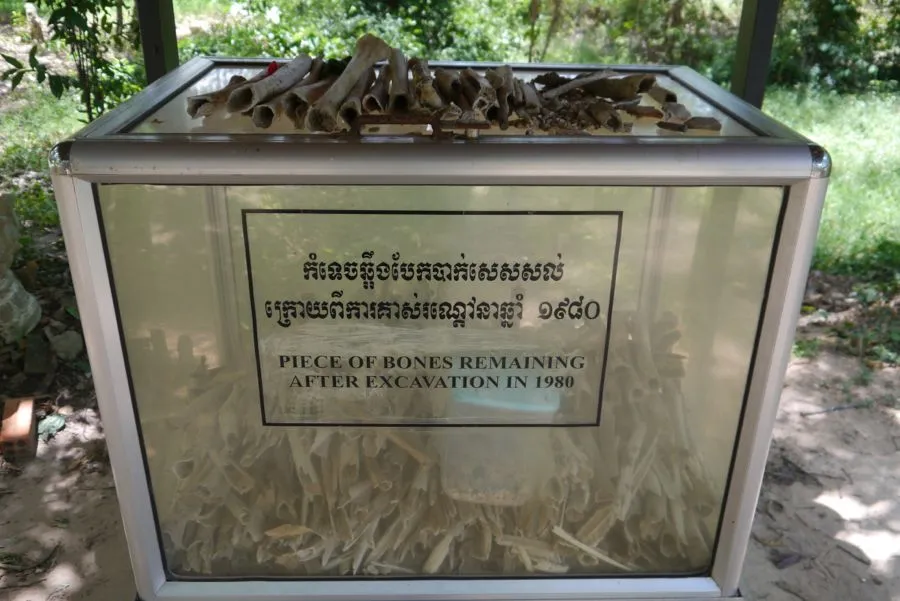
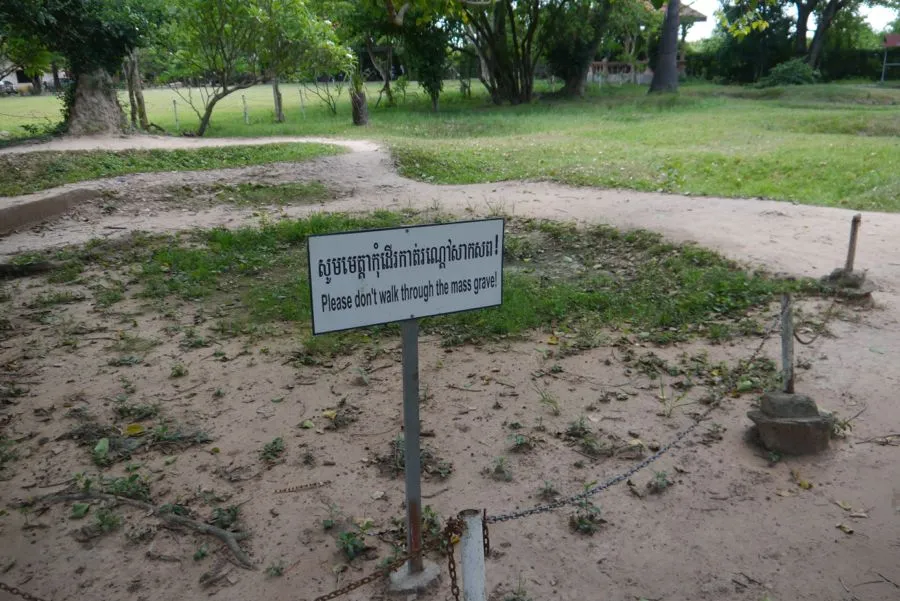
The tour is self guided using a headset that directs you around the one-time lychee orchard. Although nearly all the structures that comprised the extermination camp were destroyed out of vengeance by Cambodians following the liberation by the Vietnamese, the tour took us to the points where the prisoners were unloaded, where their details were recorded and where they were killed. We learnt that to save on expensive bullets the prisoners were often bludgeoned to death with tools or savagely cut and left to bleed to death in a mass grave. As we walked around the orchard, which is punctuated by dozens of sunken holes created by the exhumation of the thousands of bodies, we could see bone fragments and pieces of fabric in the soil, brought to the surface during heavy rain. The information and the stories conveyed were sobering and deeply sad but certainly interesting.
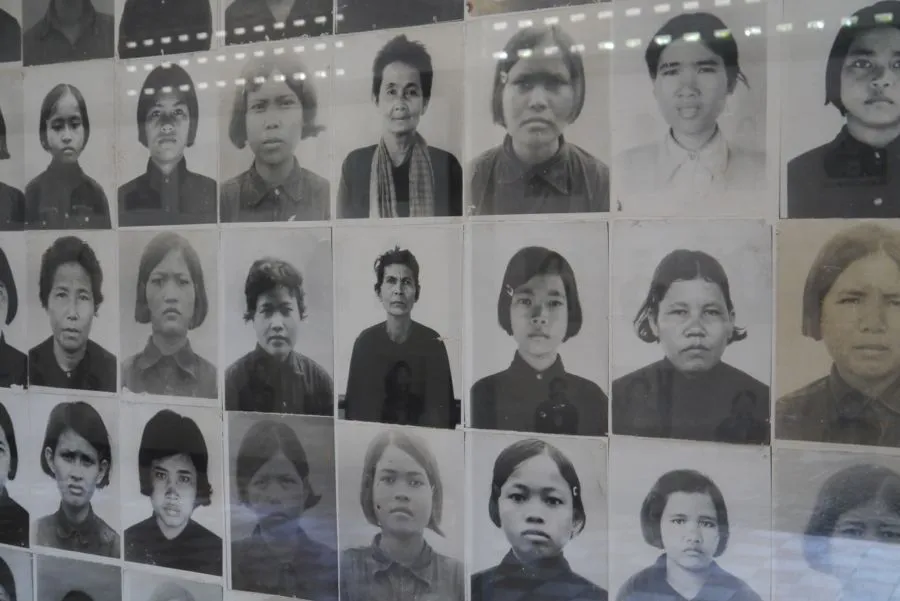
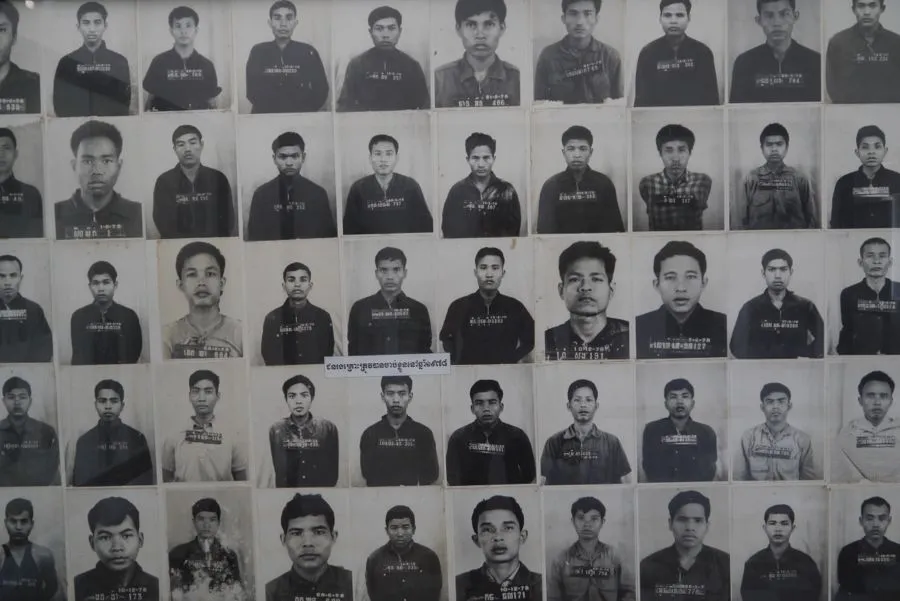
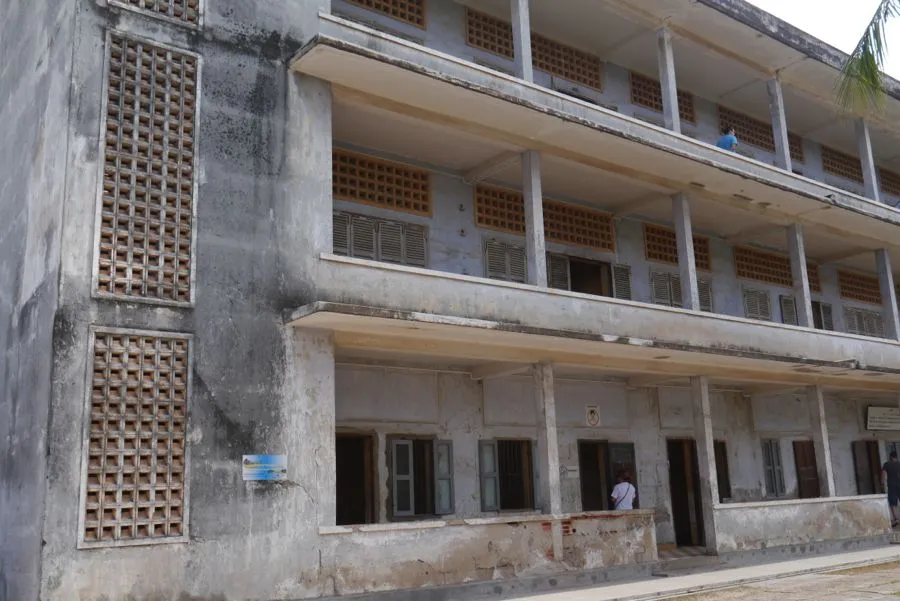
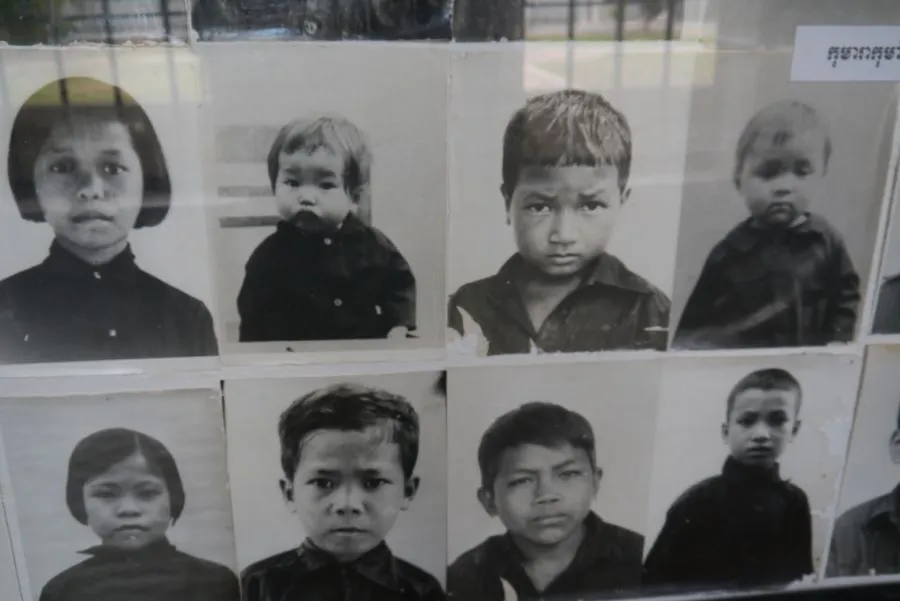
Our next stop was Tuol Sleng Museum, otherwise known as Prison S-21. Formerly a high school before being taken over by Pol Pot's security forces, the prison became the countries worst detention and torture centre. S-21 was the final stop before being transported to the killing fields of Choeung Ek; over 17,000 were sent to their death, only a handful survived S-21. The most disturbing part of the museum's exhibition was the mug shot photos of inmates. There were men of all ages, from teenagers to elderly, but there were also many women, including pregnant women. Even more harrowing were the pictures of children, some just toddlers.
It was hard to believe that Pol Pot's regime, in power between 1975 and 1979, was allowed by the international community to carry out such genocide. The Khmer Rouge implemented one of the most brutal and radical social restructurings ever attempted. Within days of coming to power, all city and town dwellers were sent out to the countryside, splitting families, to work on farms as slaves. Schools and administrative institutes were closed. They turned the country into a peasant-dominated agrarian cooperative. The society was 'cleansed' by executing anyone with government or military seniority, if you were educated or even had soft hands you were deemed an enemy of the revolution. The radicalism is incredible!
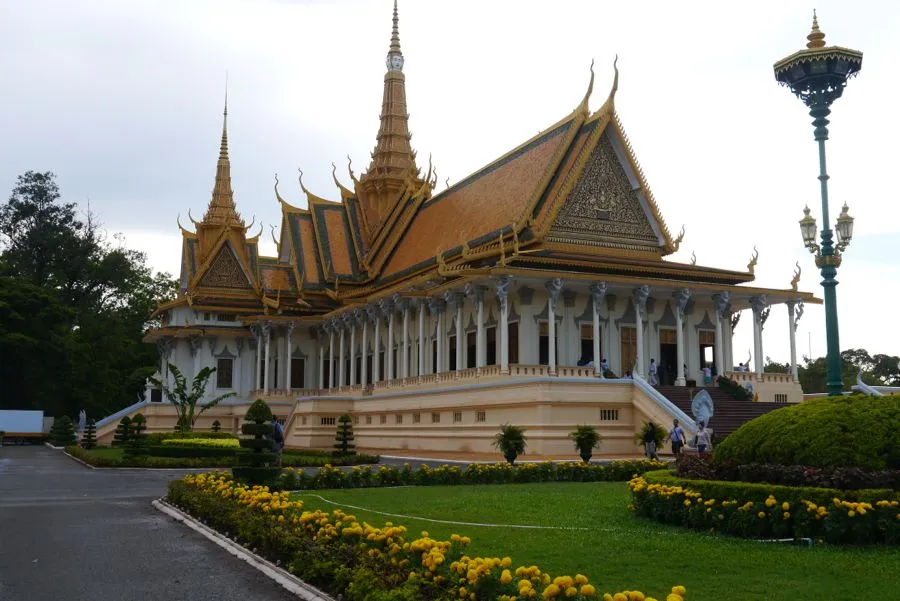
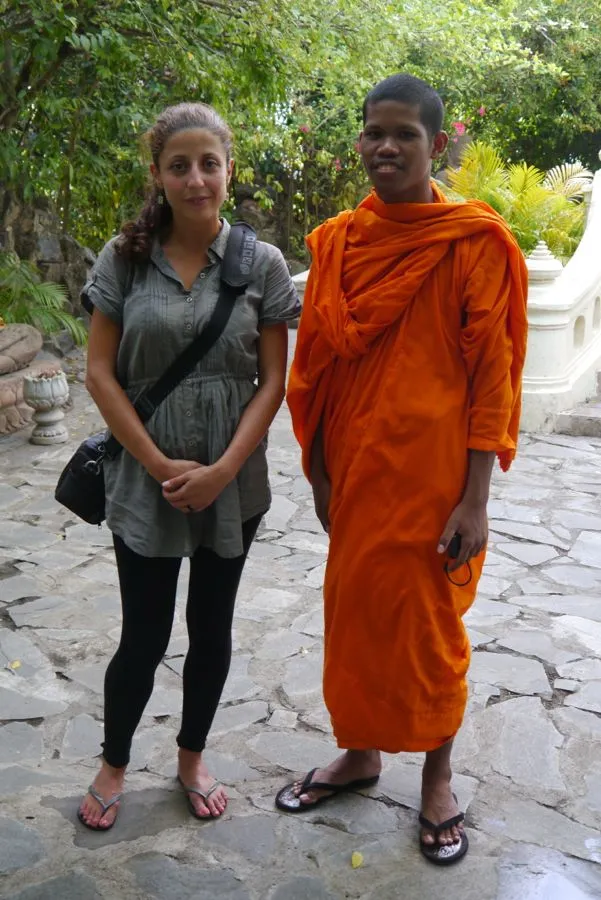
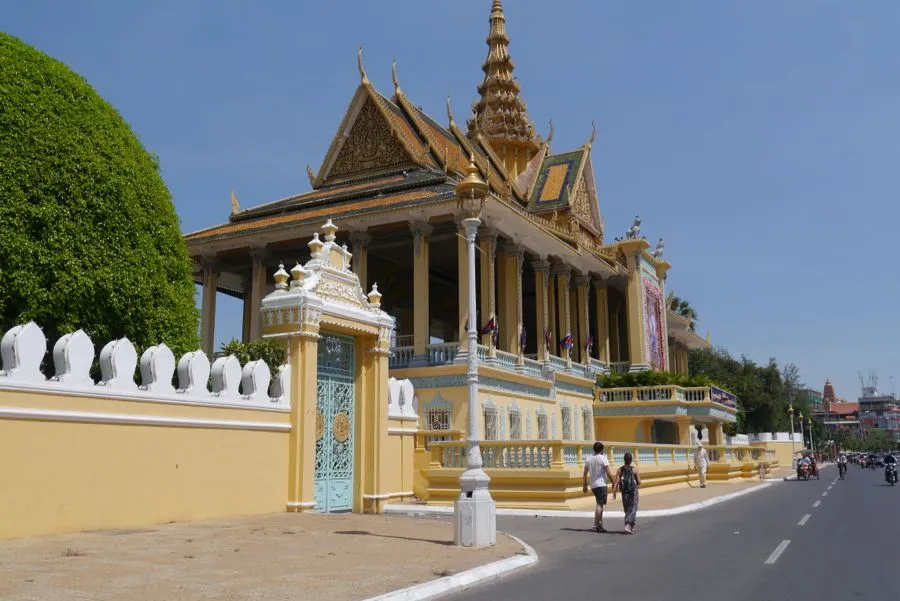
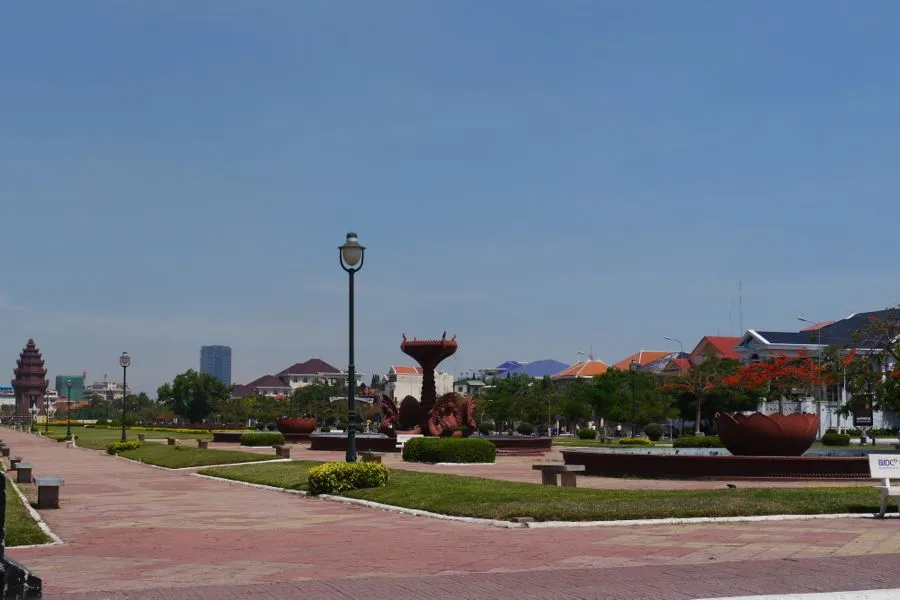
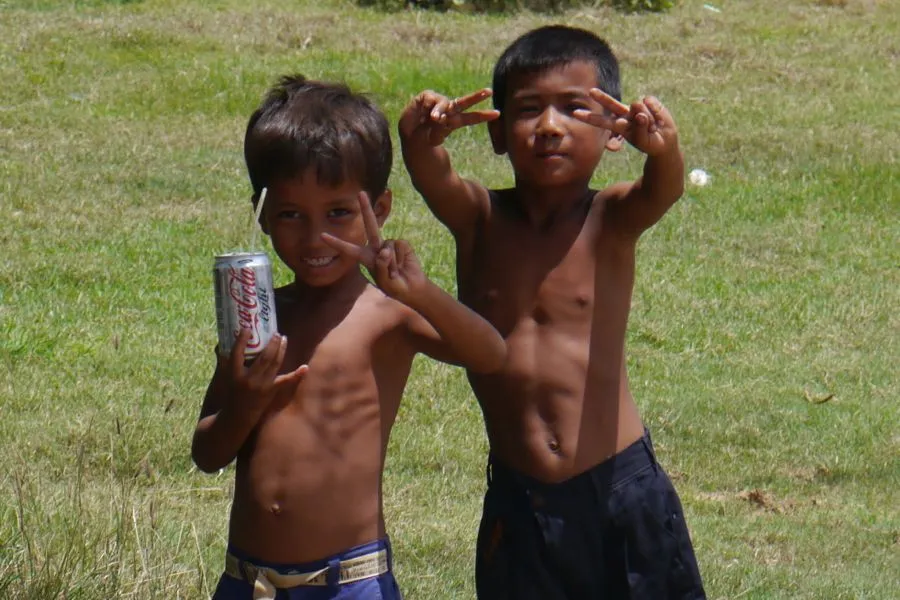
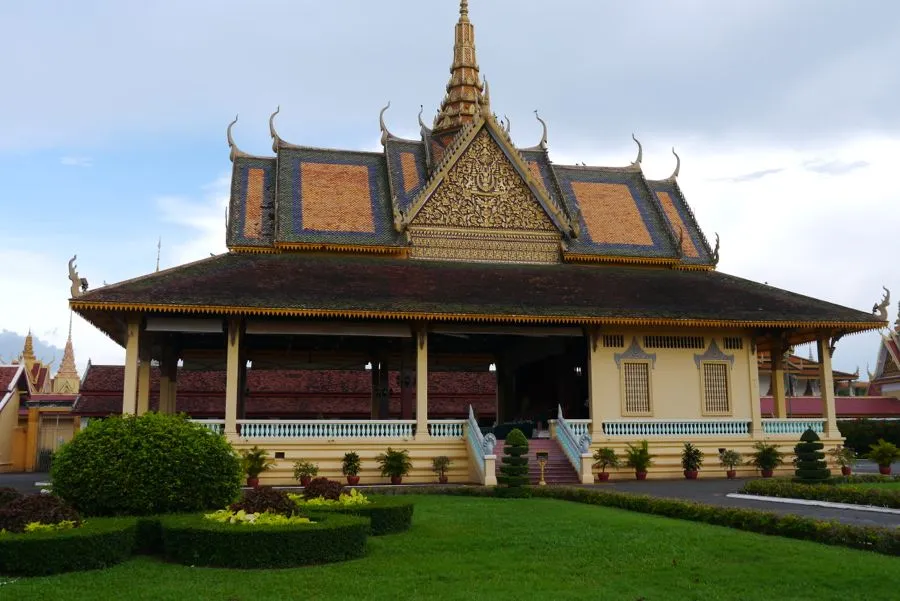
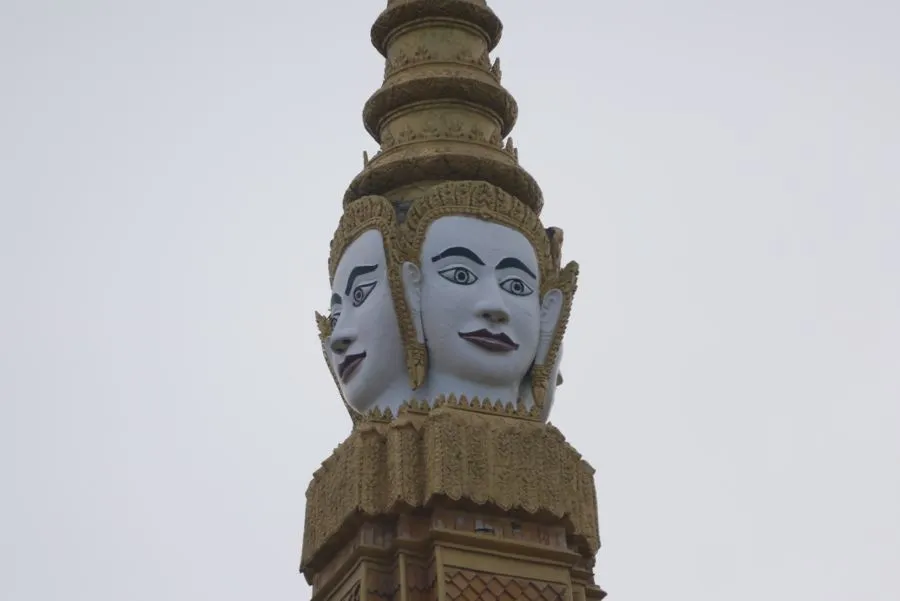
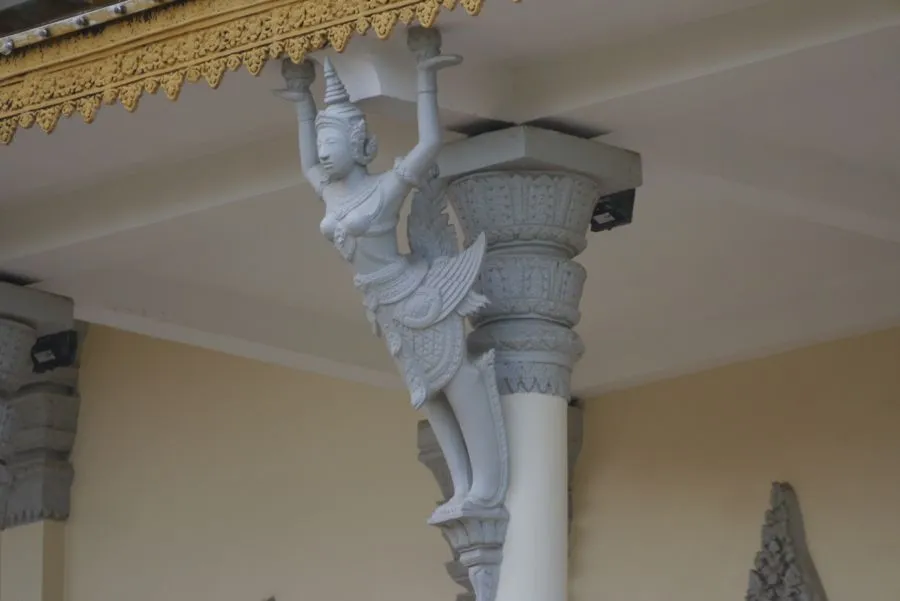
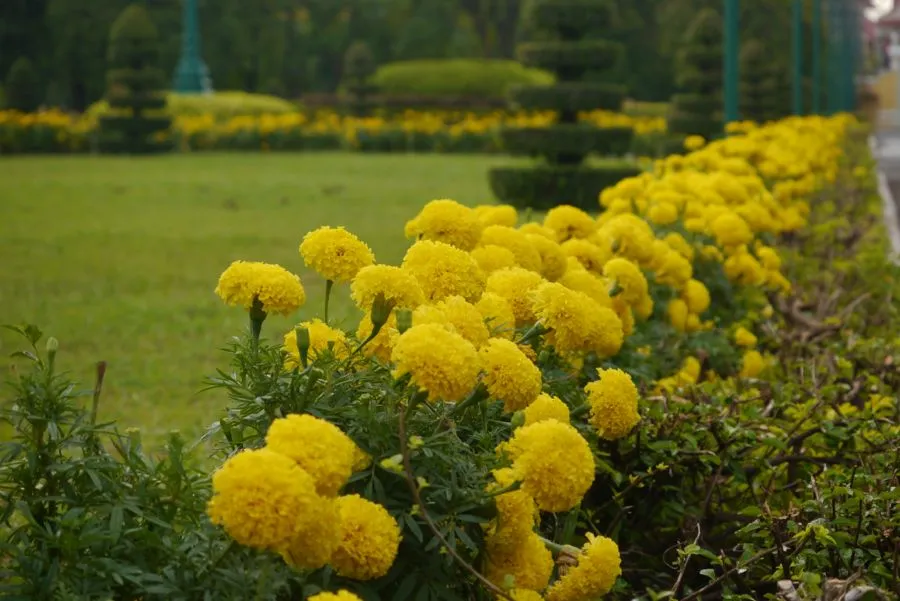
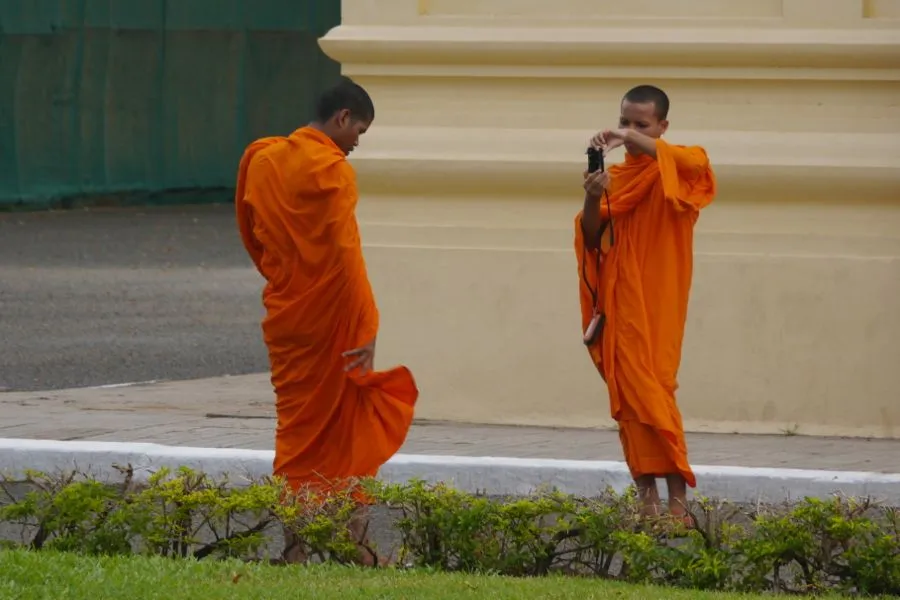
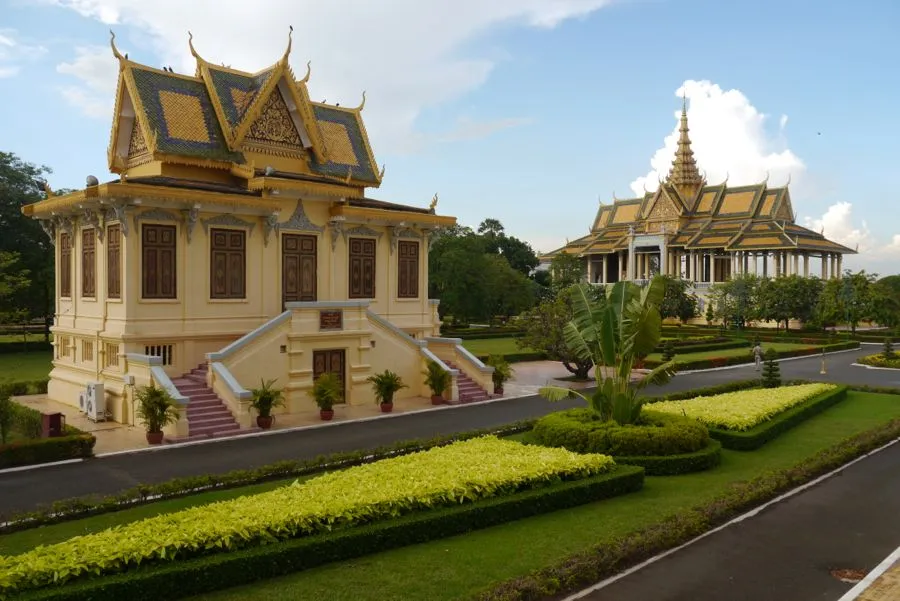
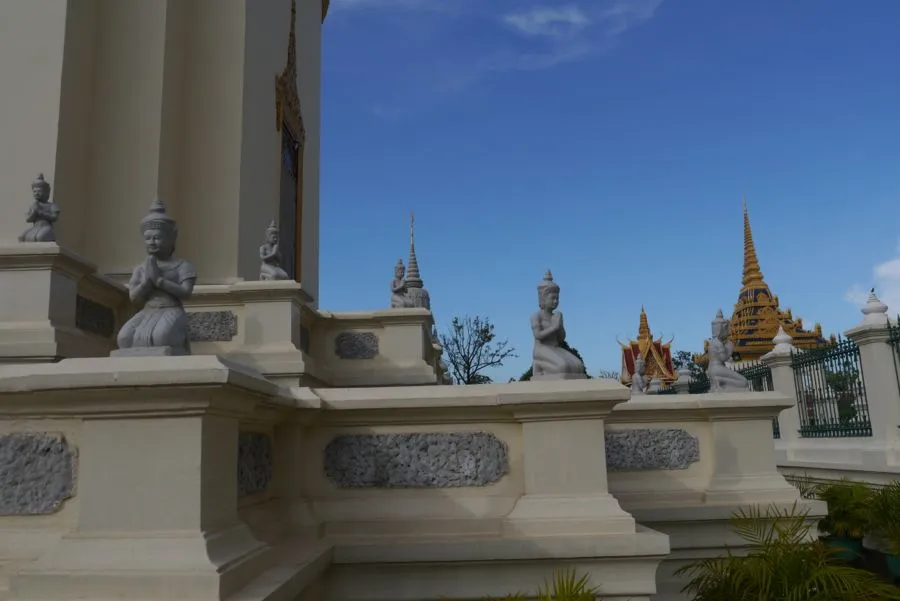
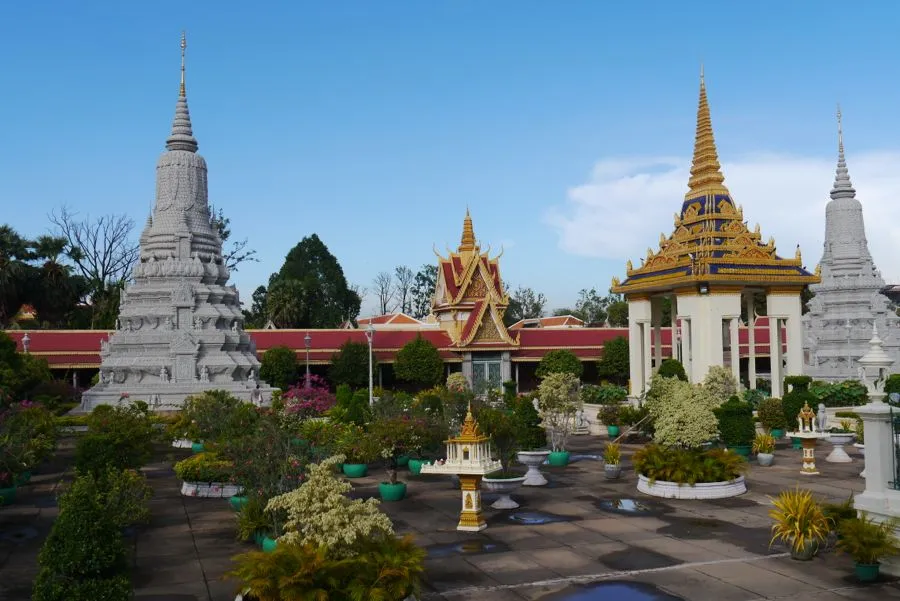
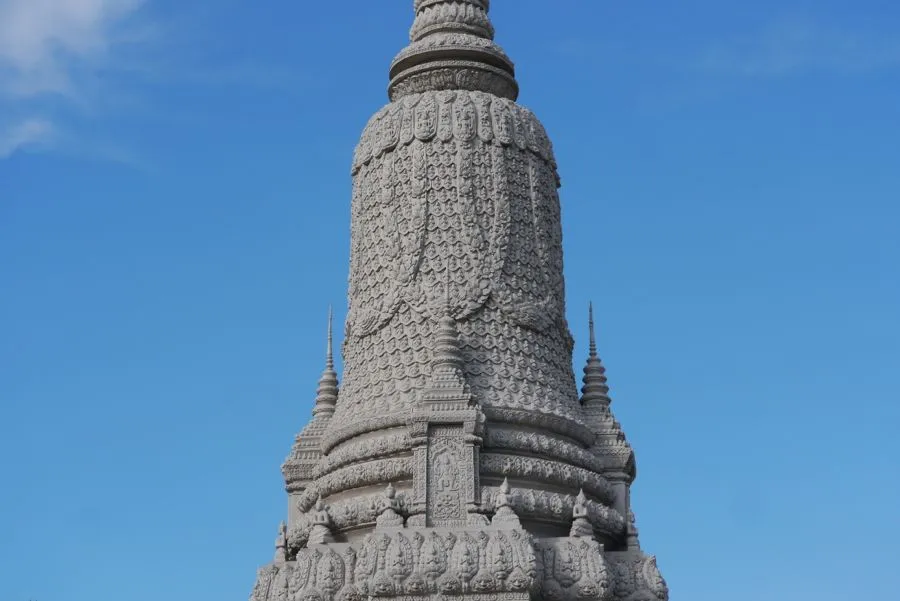
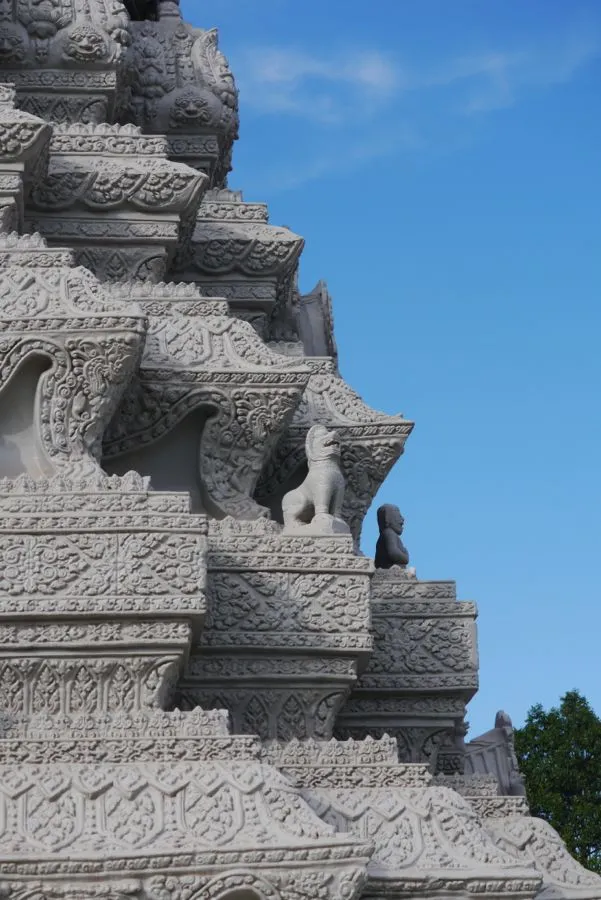
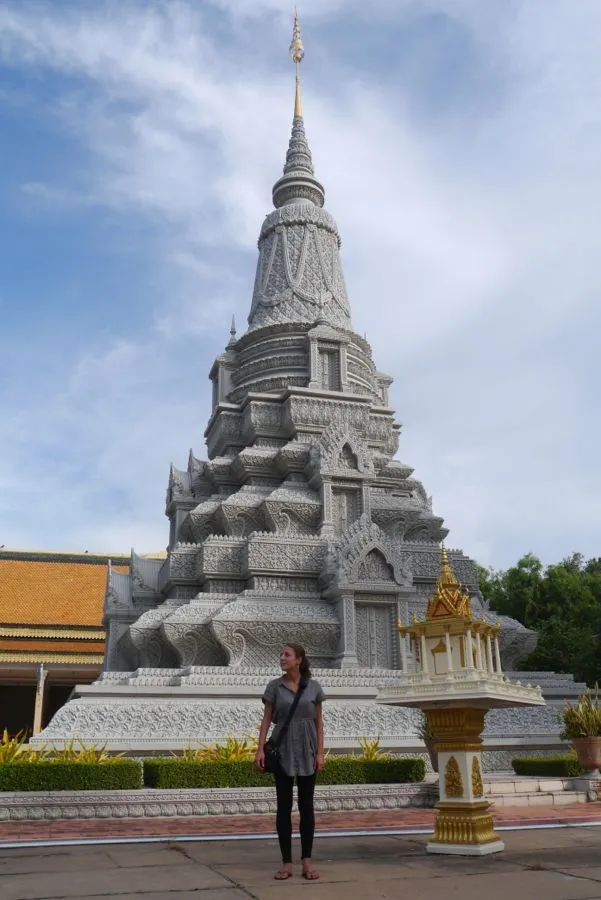
After the sadness of Choeung Ek and Prison S-21 our tuk-tuk took us the Royal Palace in central Phnom Penh. As we reached central Phnom Penh the stark contrast between the rich and poor was evident. Beautiful manicured gardens line the boulevards around the royals grounds and upper class mansions, yet turn down a side street and people are living in ramshackle buildings with broken pavements and litter strewn everywhere. The palace was nice enough but personally I found it frustrating that despite paying a reasonable entrance fee we were prohibited from walking around most of the beautiful gardens. The royal family resided in a huge complex sealed off from the public so what was the point in not letting us enjoy the gardens?! The silver pagoda was also a disappointment as the silver floor, from which it gets its name, was covered in carpet. The highlight was chatting to a young, smiling, cambodian monk who wanted to practice his English. He was full of questions and we were only too happy to oblige. Something that we repeatedly found remarkable about Cambodian people is despite the hardship their nation has gone through (one third of the population was massacred or died from famine just over thirty years ago) they are so friendly, happy and welcoming.