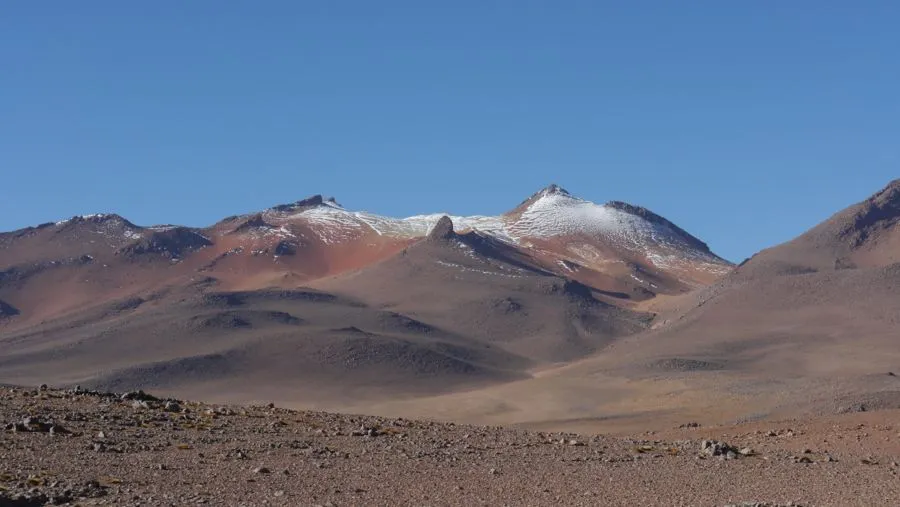
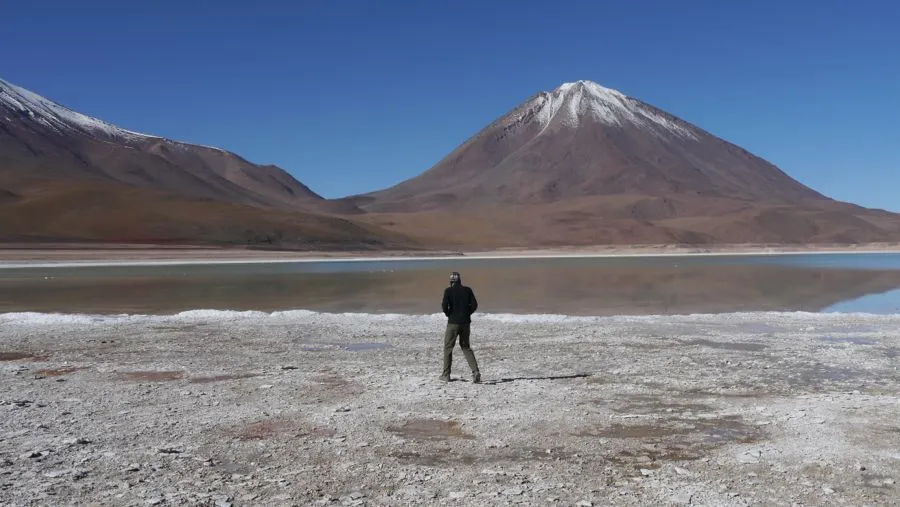
Uyuni Salt Lakes
Why is Bolivia the poorest country in the South Americas? Well, their infrastructure and systems are messed up and no one is willing to put sense or reason to fix it. Here is a small but perfect example… We arrived in La Paz hoping to get an overnight bus south to Potosi or Sucre. There are a number of agencies all doing the same route and we ascertained that none of the evening's buses had any spaces left. We were reasonably early, still had 2-3 hours till the buses departed, but obviously all the tickets had been sold. We were told to come back tomorrow. Deciding that another night and day in La Paz would actually be quite nice, we asked to buy tickets for the next day's buses and we were again told to come back tomorrow. What? We know which bus we want and we know how much it will cost us. Why can't we just buy them while we are at the bus station? Their answer: mañana, mañana (tomorrow). Each day, that day's bus tickets become available for sale… No one can explain why, but at least one passenger from each party has to make a journey down to the bus station on the desired day to buy bus tickets (early in the morning if they want to sit together) and then again come back later that evening to catch the bus or you could run the risk of not getting on the bus at all. What a waste of time! I can't think of anywhere else this would happen. We left the bus station feeling 'un poco' frustrated and went in search of a hostel, which we found just round the corner (nice and easy for the next mornings dash into the station). We then treated ourselves to a lovely Lebanese meal in a tiny restaurant. We ate delicious shish kebabs, humus and other various middle-easterm foods until the point of near bursting and it cost us the sum of £2.60 each… This is why I love Bolivia.
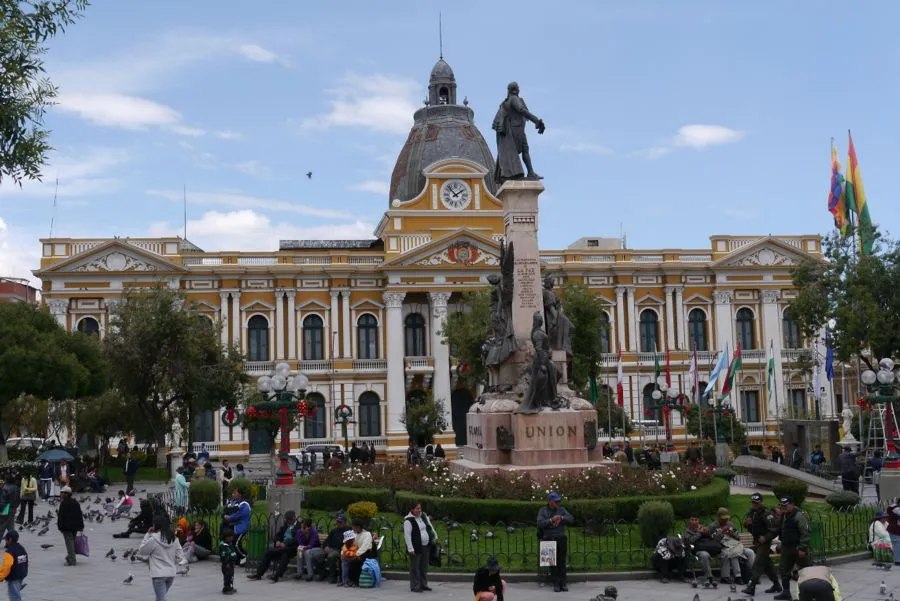
Next morning Mark and I went off for a long walk all around town, to the Coca museum and highly interesting San Pedro prison, which is on one of the main squares in central La Paz. We had both recently read 'Marching Powder' a true account of an British guy imprisoned in this very strange prison for cocaine trafficking. The prison, just like all other institutions in Bolivia, is thoroughly corrupt. The inmates have to buy their own cells in different parts of the prison depending on their budget. The wives and children of the inmates live in the prison but are able to come in and out freely and are regularly used as mules for drugs coming out of the prison. No, that's not a typo. The best drugs are actually manufactured inside the prison and are taken out to be sold. Inside the prison there are many jobs the inmates can do to earn money including running errands around the prison, cleaning or you could even run your own business - a restaurant or a shop. If you have enough money you can have the best accommodation with most of modern day comforts or even bribe the guards for a day or a night out in La Paz. It's thoroughly corrupt but makes for an excellent read. We sat outside the prison and watched a garbage truck being loaded by the prisoners. The heavily armed guards, complete with their army style uniforms, had formed a loose circle around the collection truck at the main gate and chatted whilst the prisoners bring out many buckets of waste and load it onto the truck with bare hands.
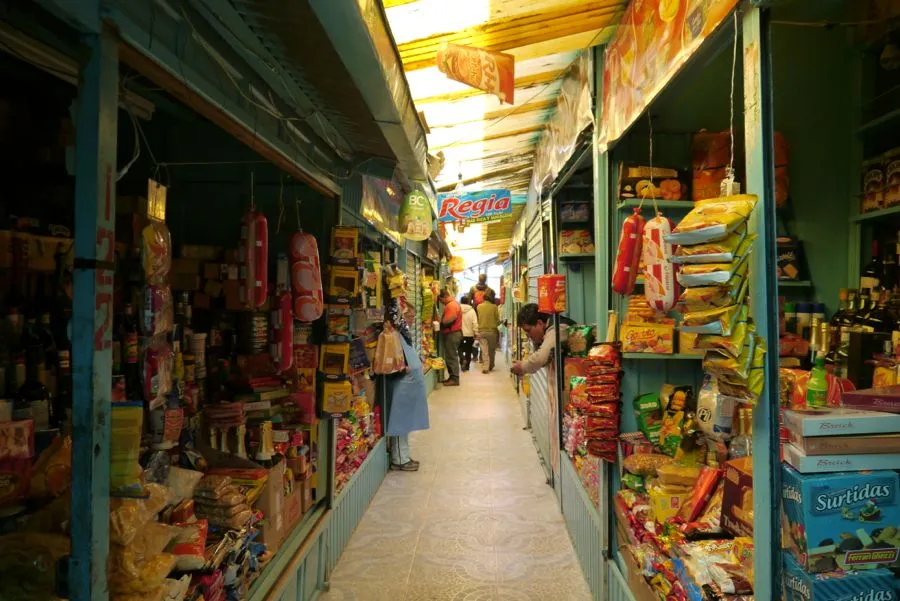
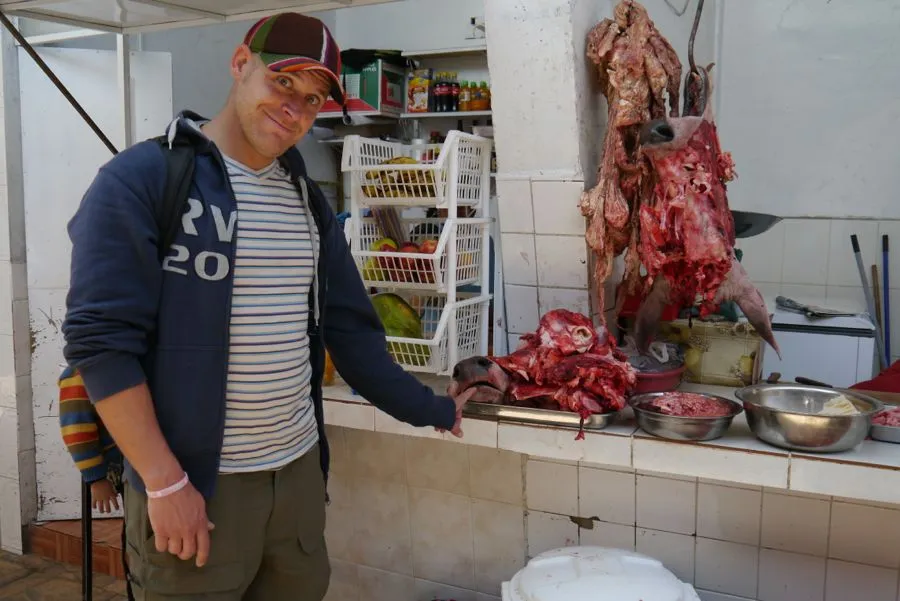
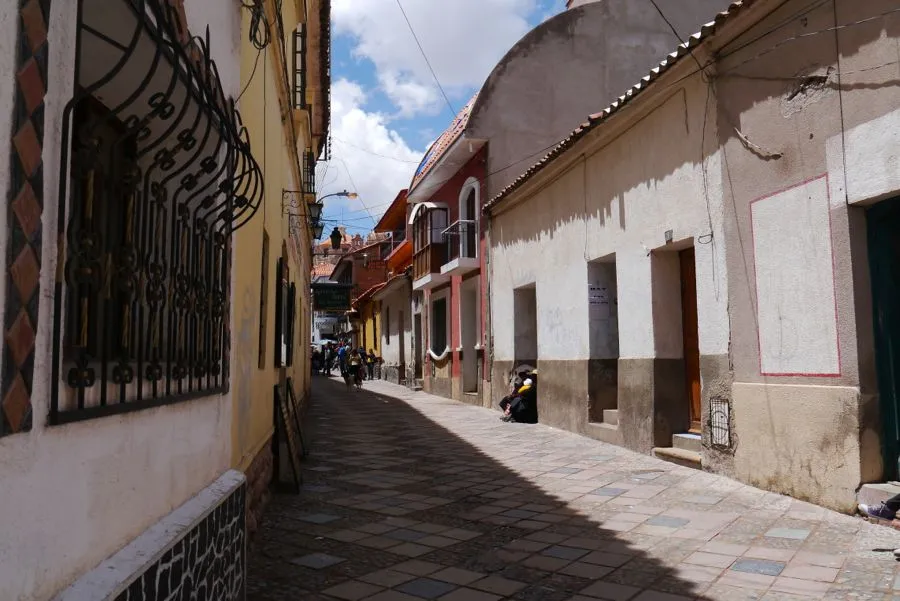
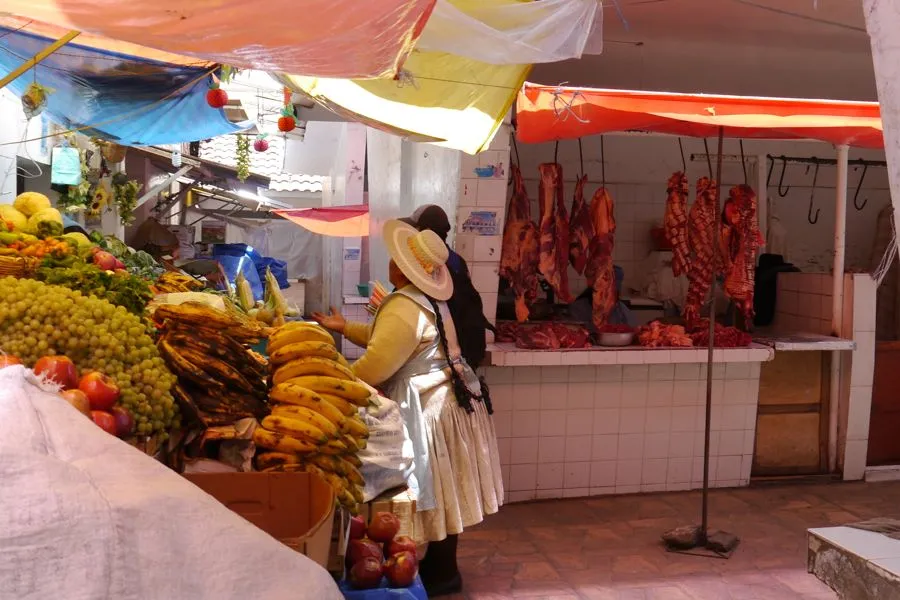
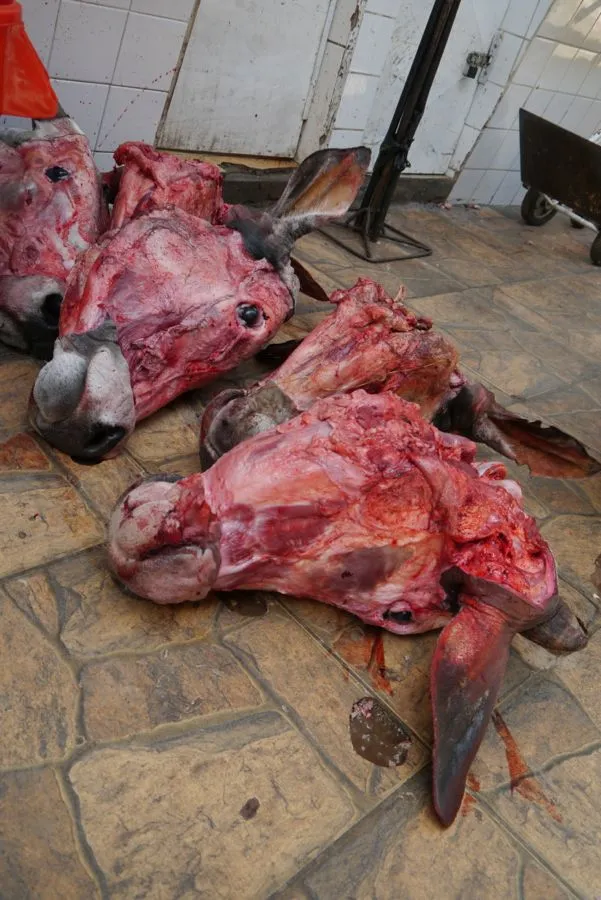
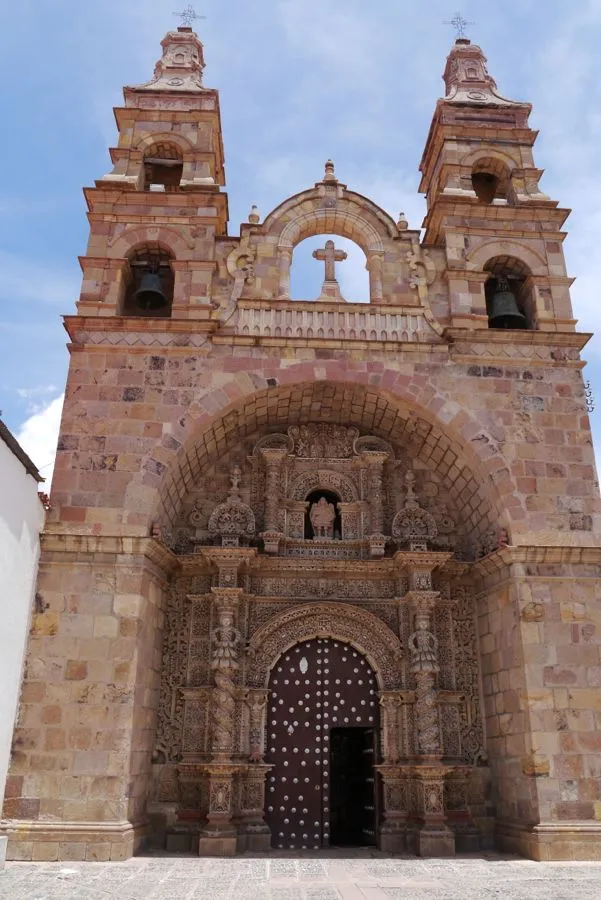
Our night bus to silver mining town of Potosi was uneventful. The town, set at an altitude of 4200m, was pretty cold and had an interesting background. In it's heyday Potosi was as big as New York or Paris. The silver mining in the area was so lucrative it drew massive crowds and quickly it became the biggest and wealthiest city of the Americas and the silver ore bankrolled the Spanish empire for a good while. The conditions of work for the miners were terrible and millions lost their lives in the mines. When the silver more or less dried out, the depression and poverty followed and many left Potosi, leaving it as a bit of a ghost city. There're still some beautiful colonial architecture to look at and also you can visit the working mines. As crawling in tiny holes hundreds of metres underground did not appeal to us we went off for a nice walk around the city and found the local market with all sorts goods on offer from electronic goods, counterfeit branded alcoholic drinks, local produce and strange cuts of meat. The cow lips were especially appealing.
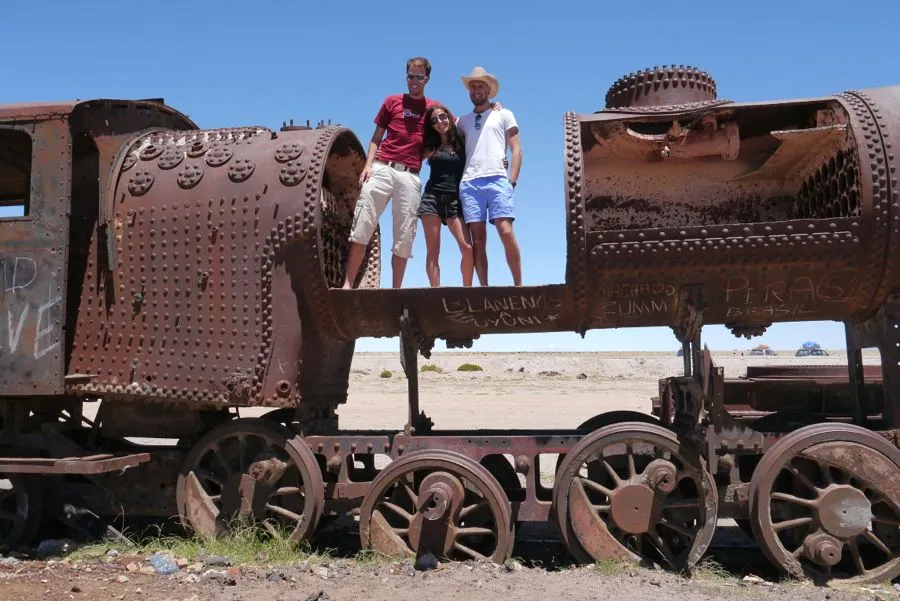
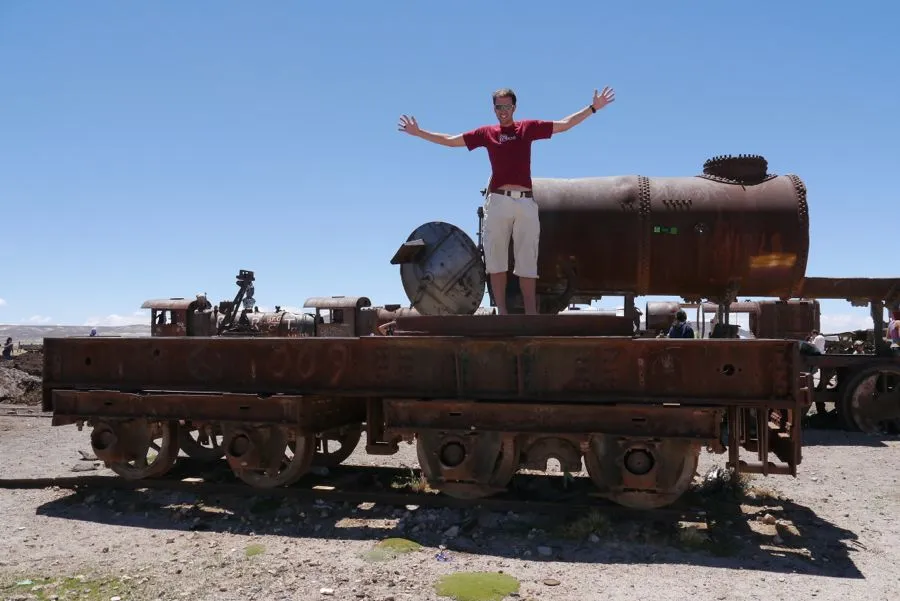
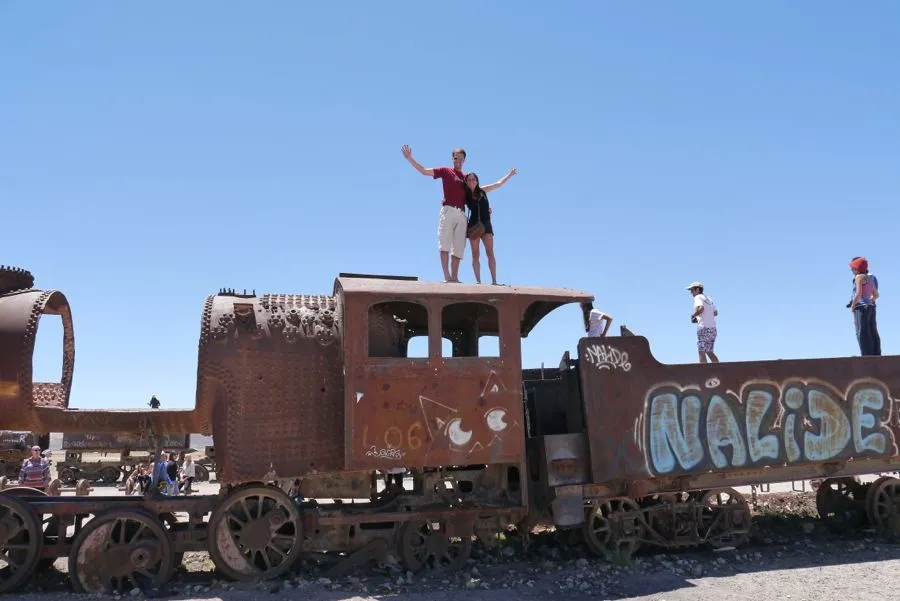
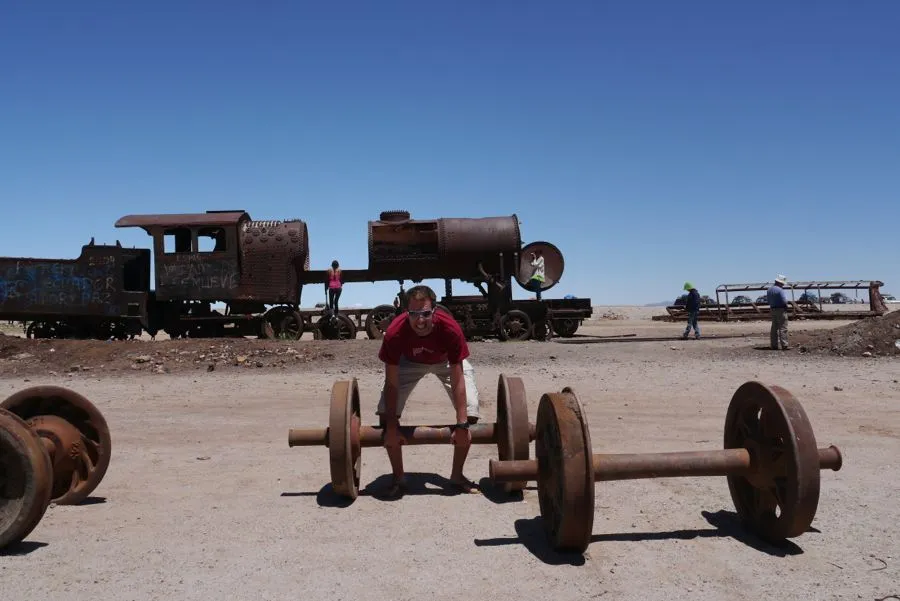
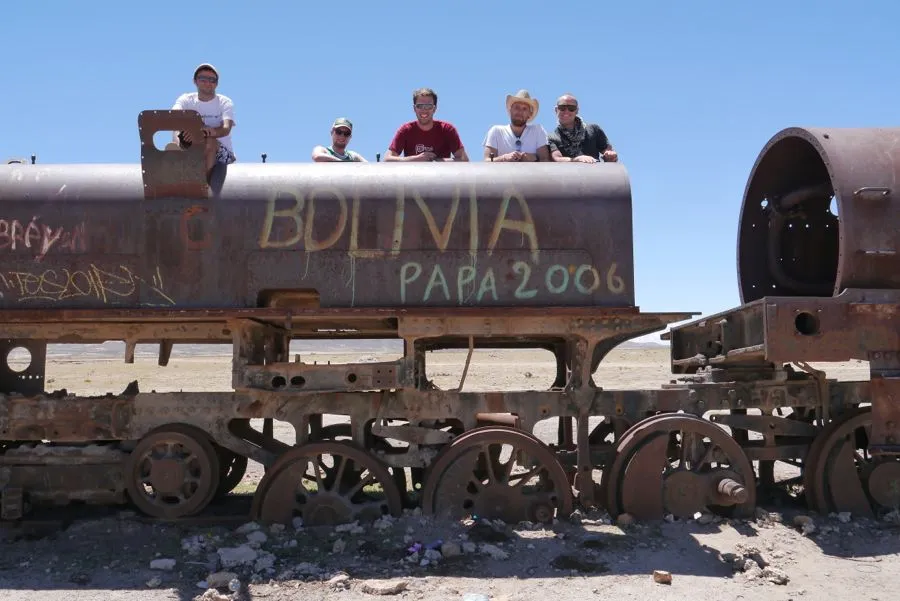
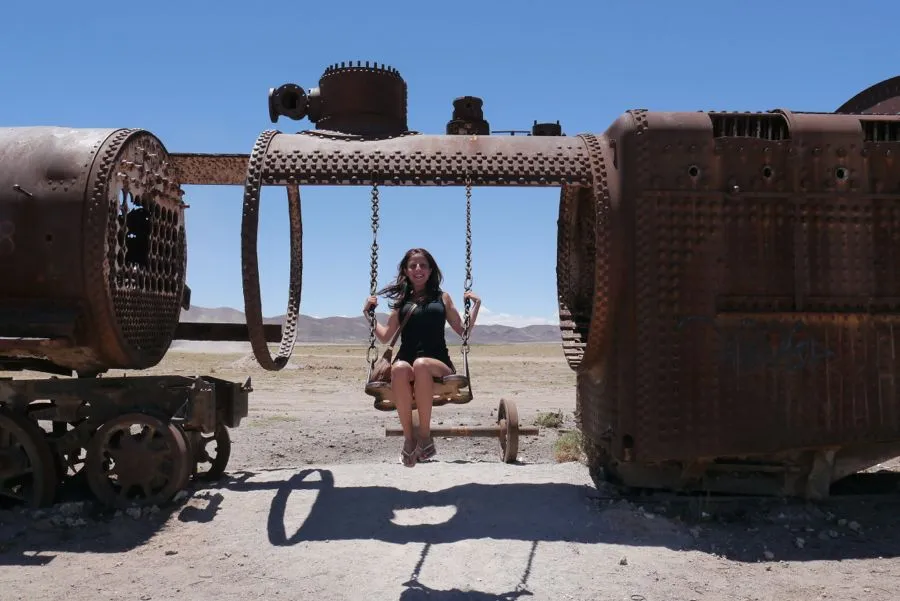
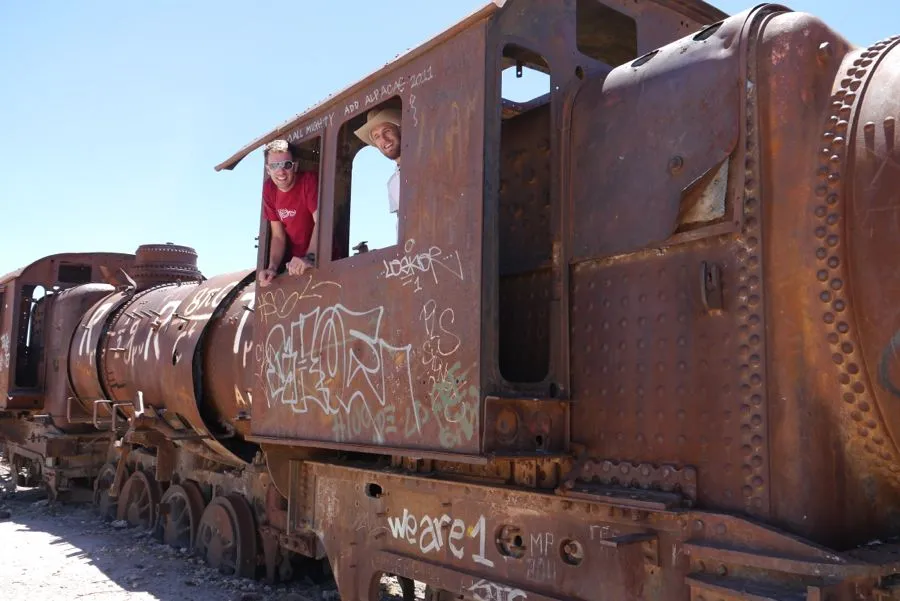
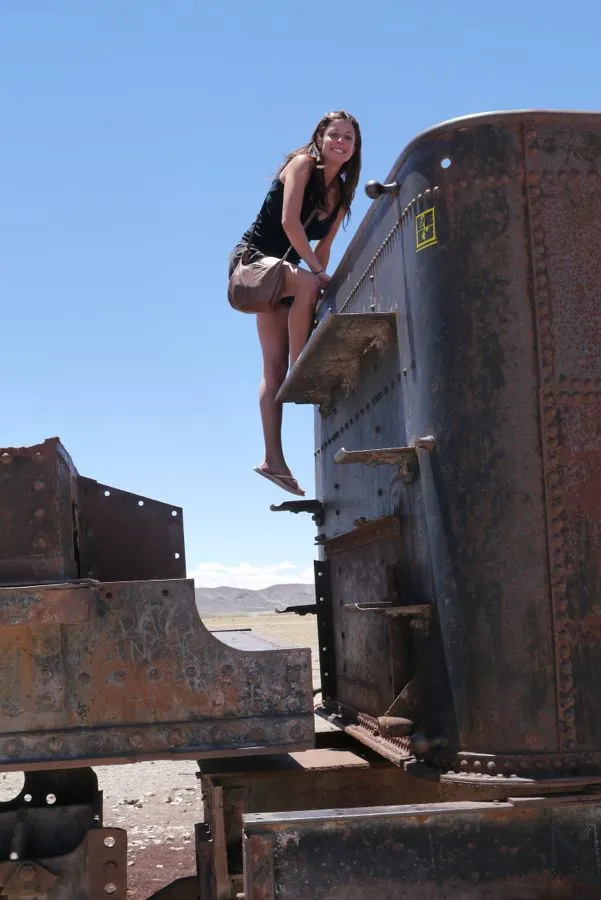
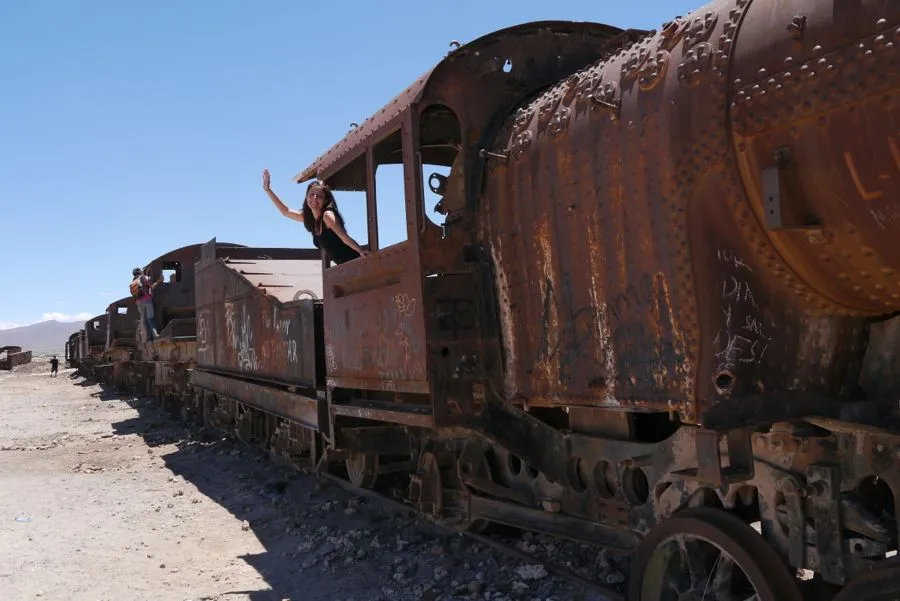
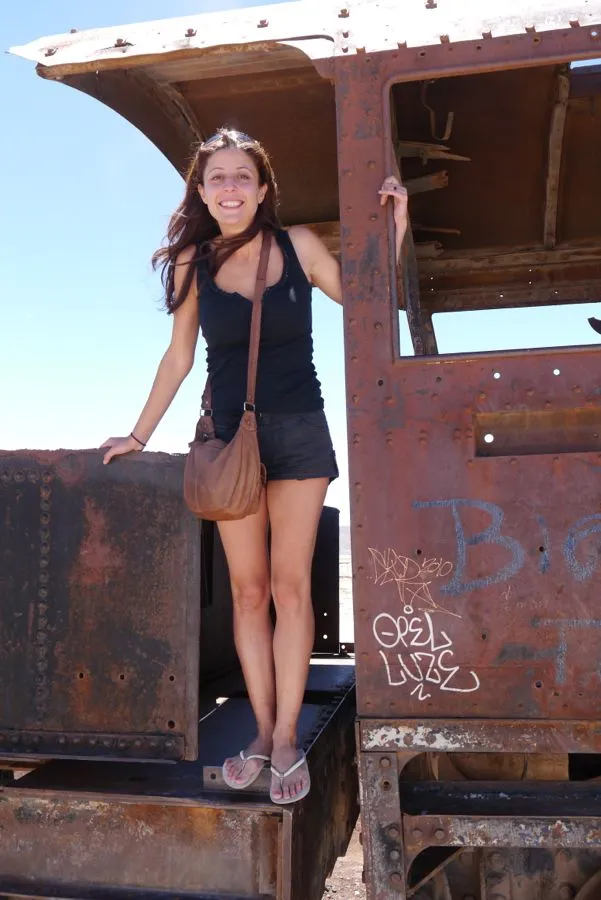
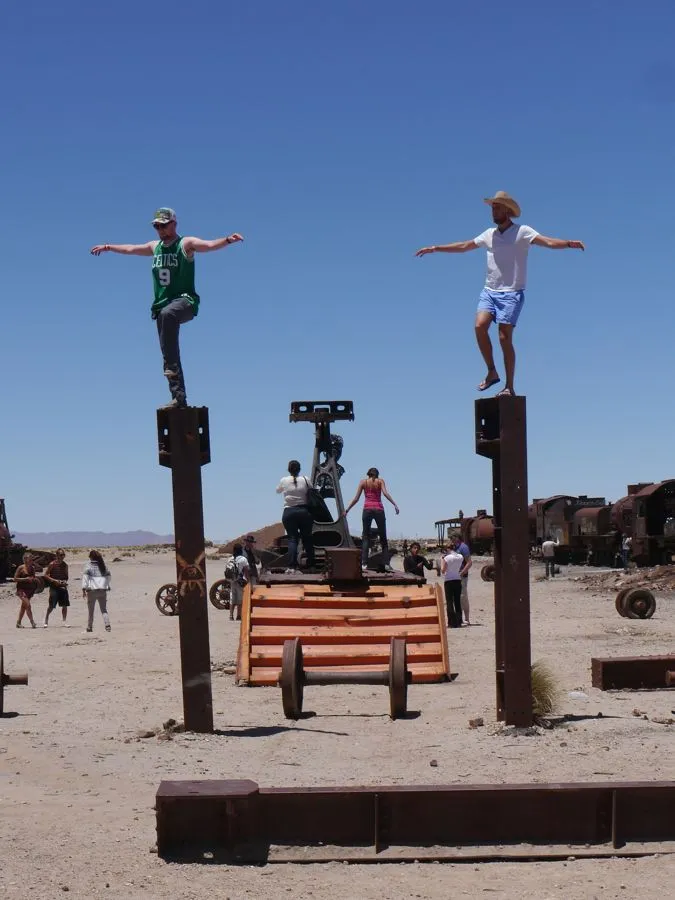
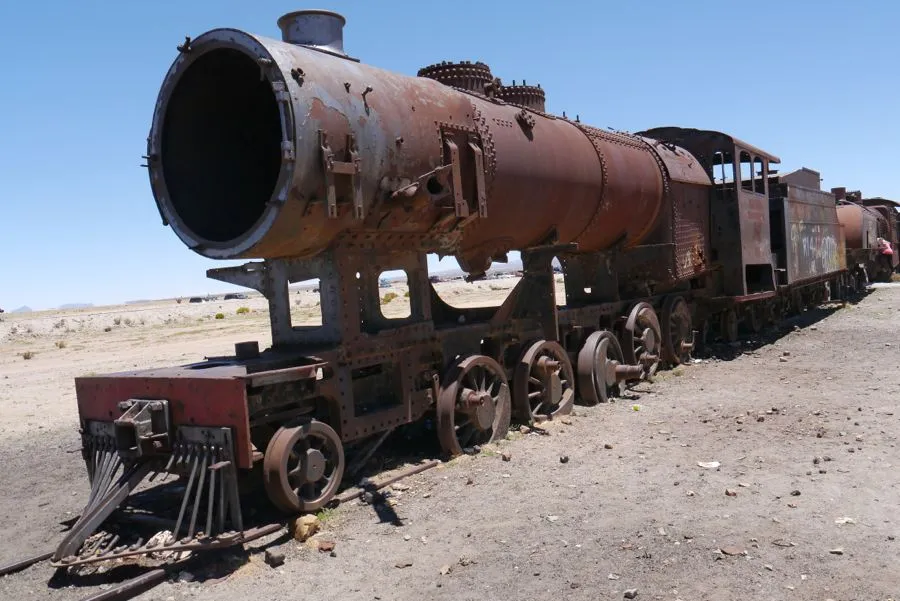
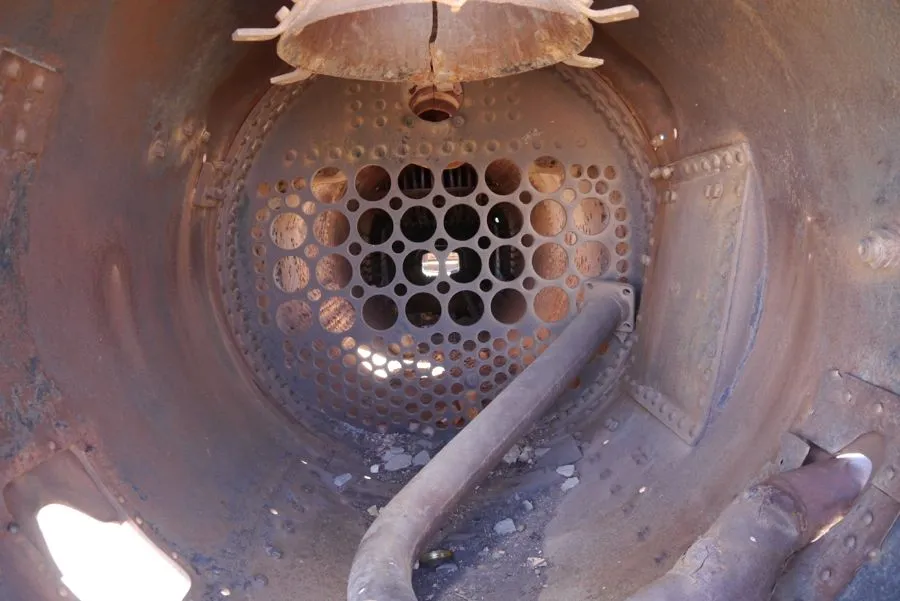
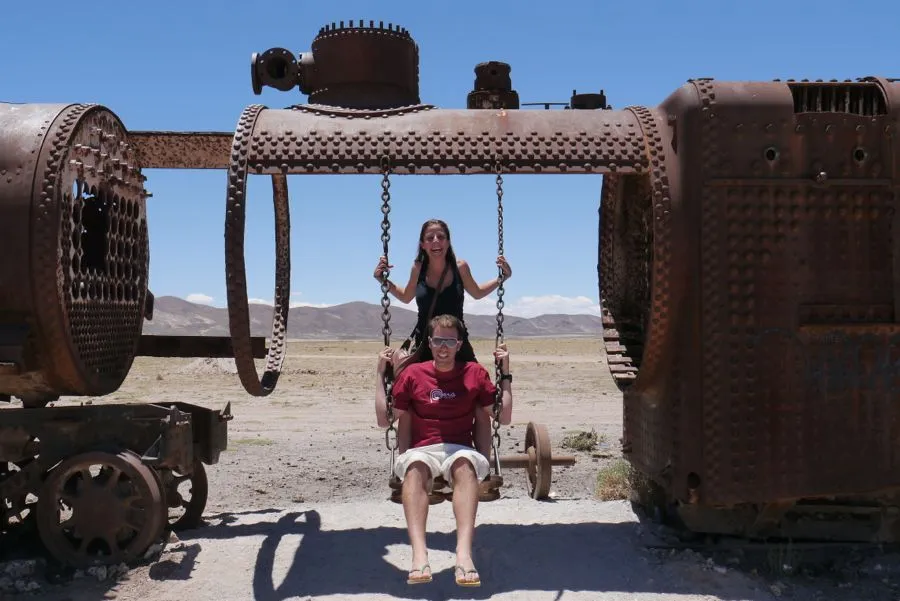
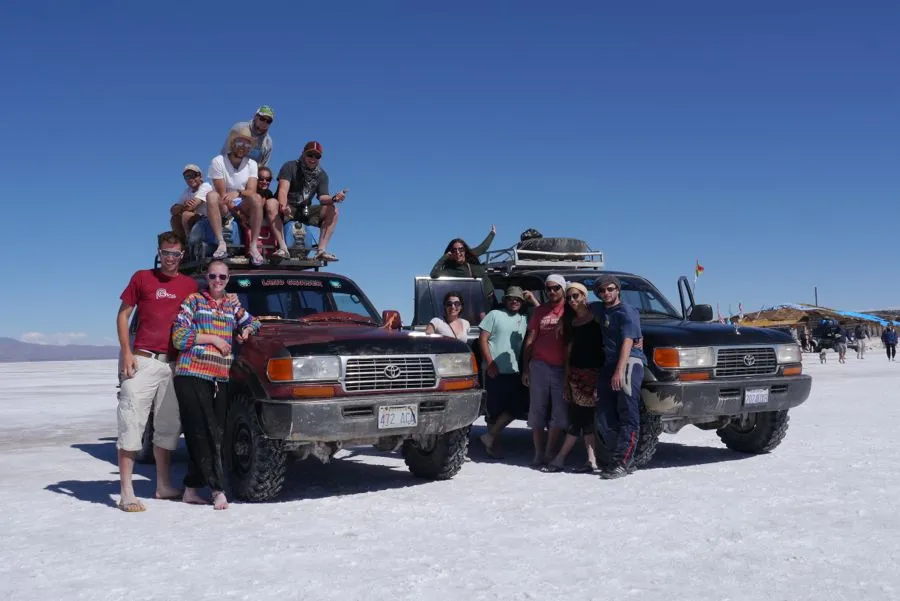
Next day we headed over to the little town of Uyuni, gateway to the salt lakes (Salar de Uyuni) and the stunning desert of Atacama crossing into Chile. We chose a 3 day tour that would leave us at the Chilean border town of San Pedro de Atacama. The train cemetary was the first stop on day one. A load of old trains had been left to rot on sidings a few metres from the still active train line; our guide explained that these were used to distribute the metals from the mining industry into Chile and Argentina, but as mining in the area diminished the track and trains had been left as a playground for tourists.
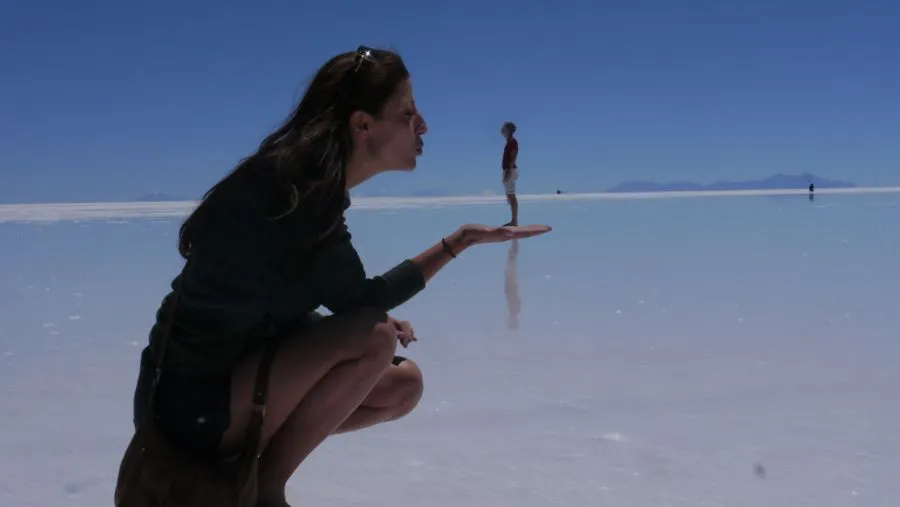
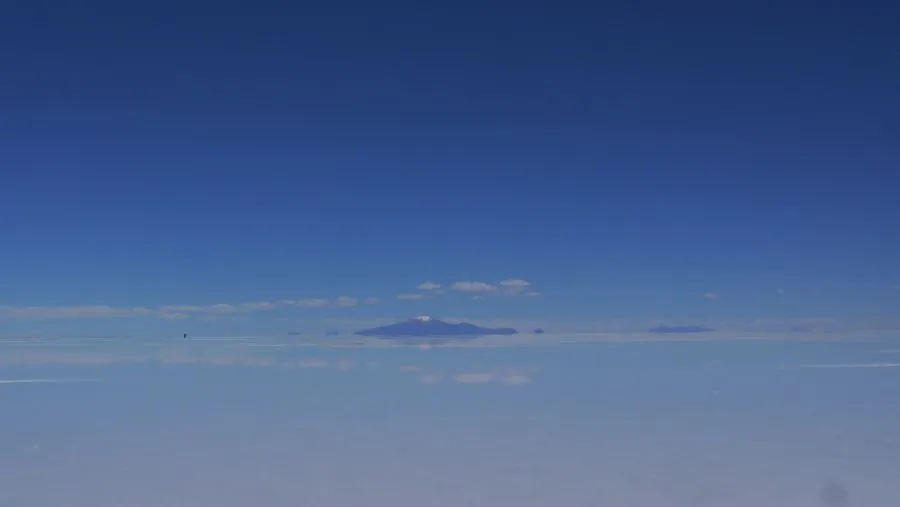
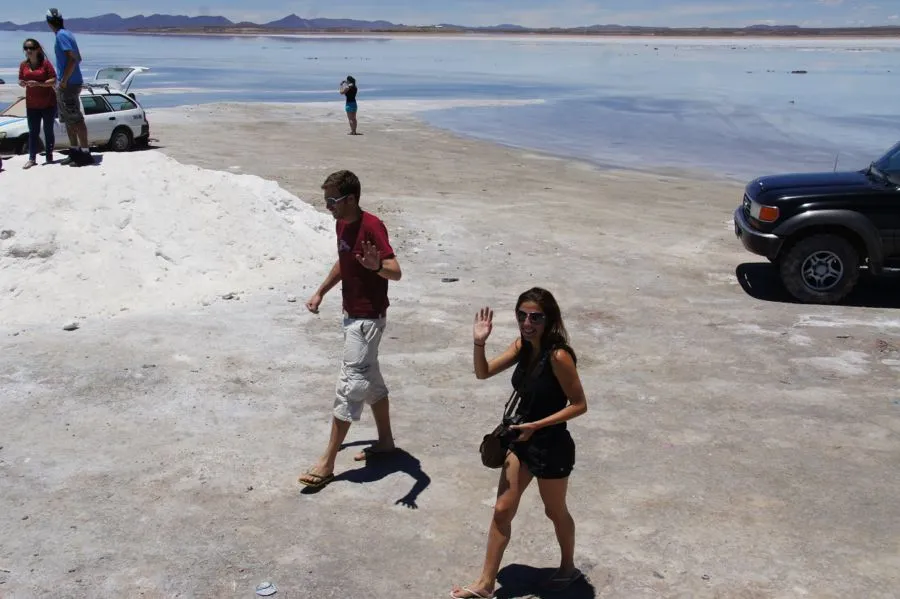
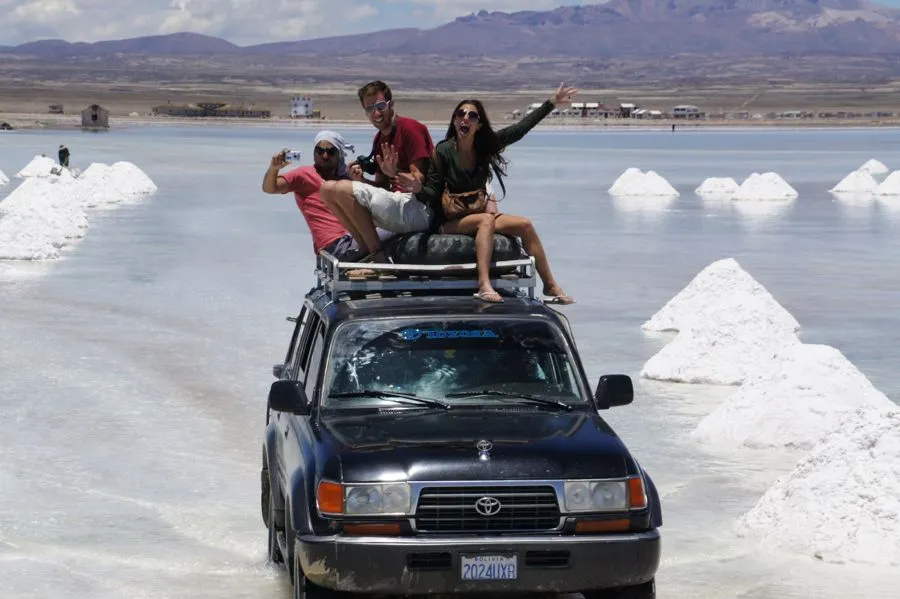
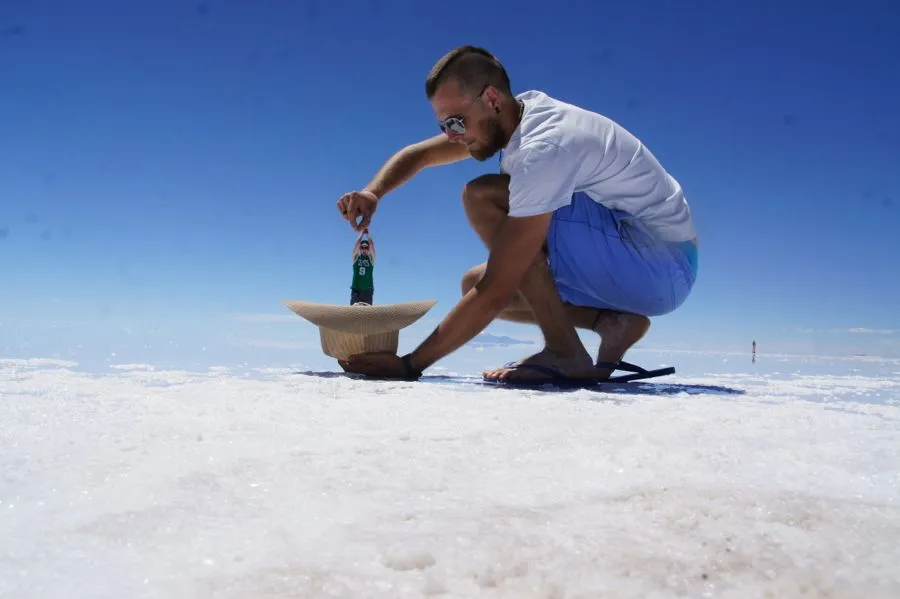
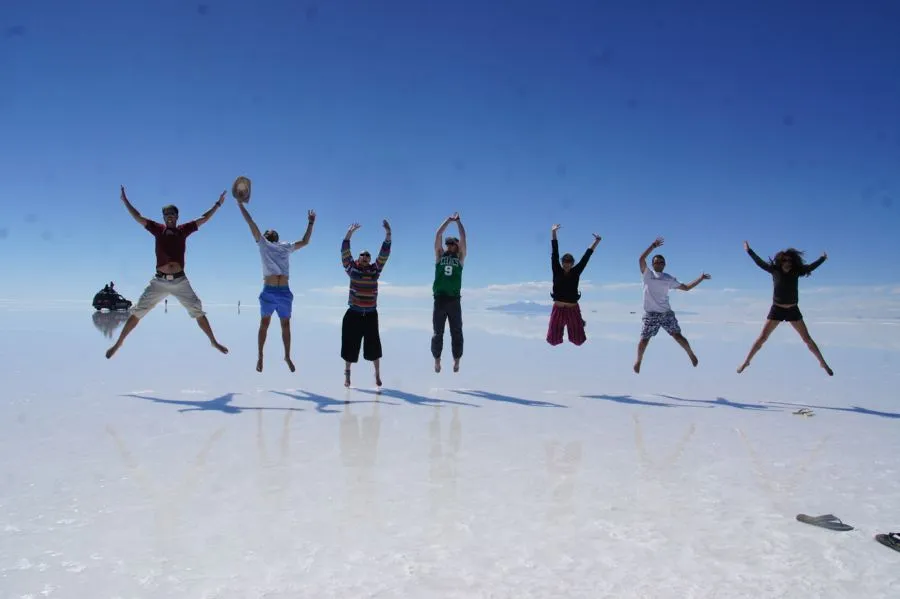
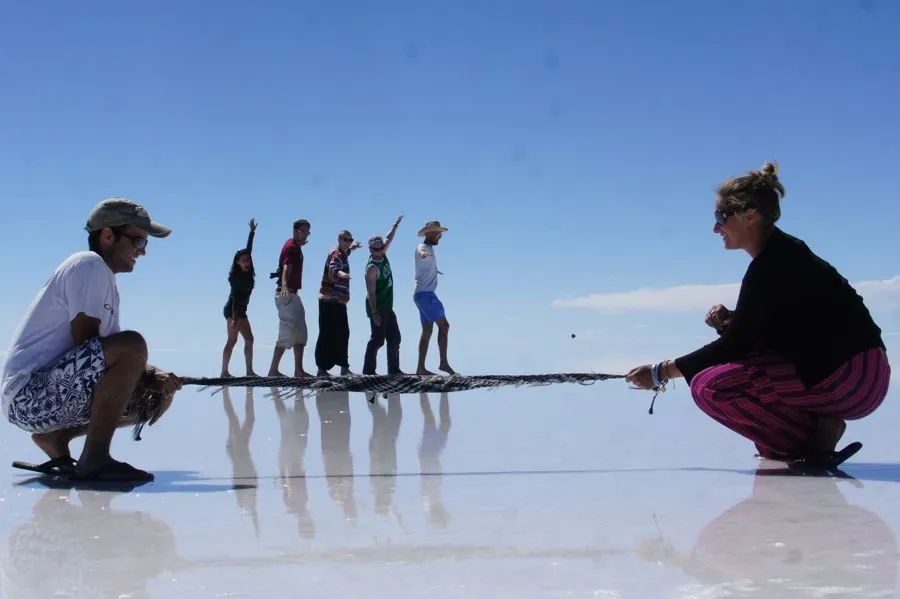
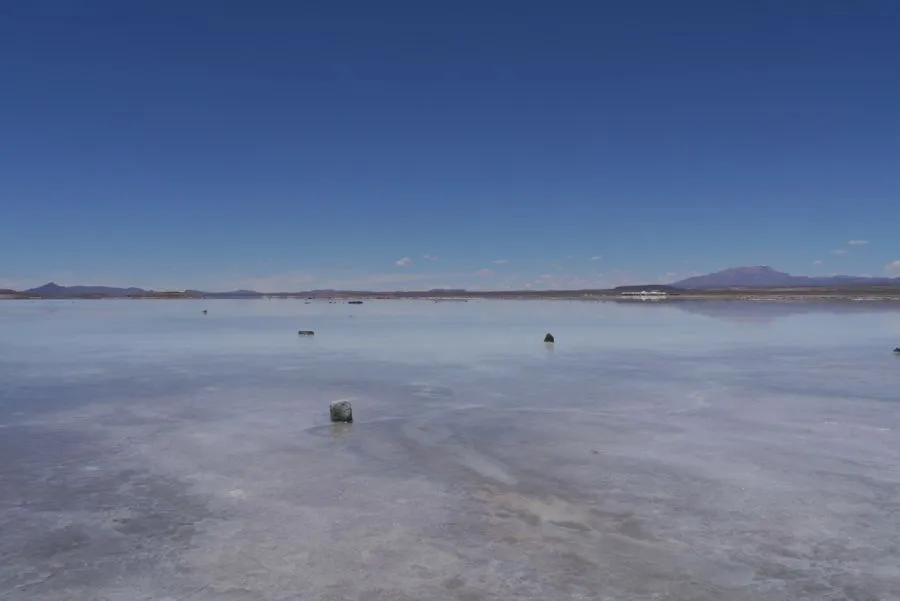
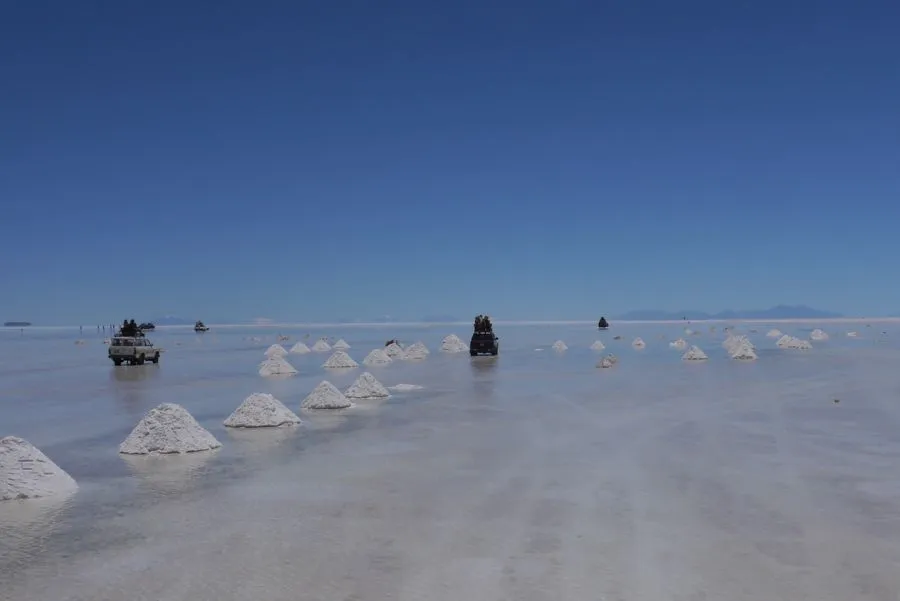
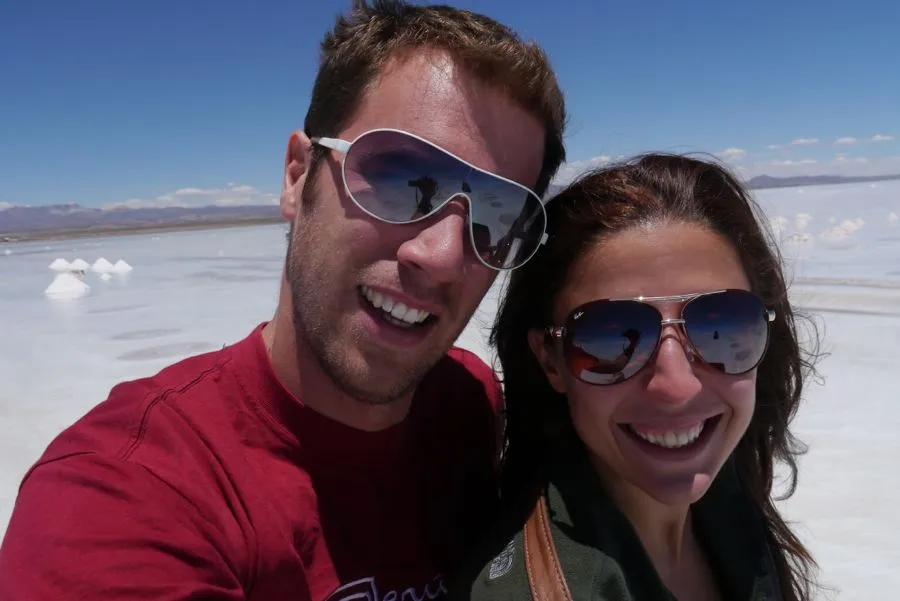
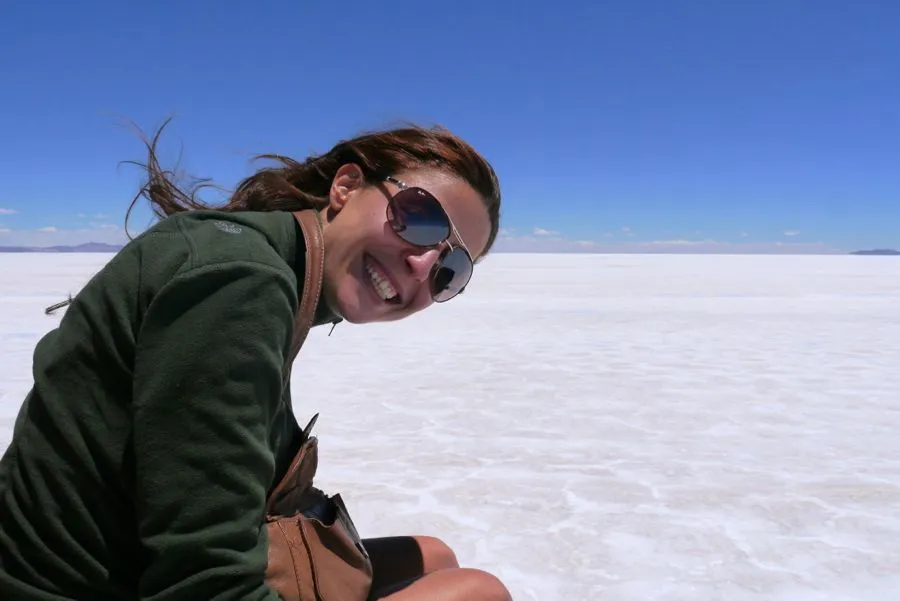
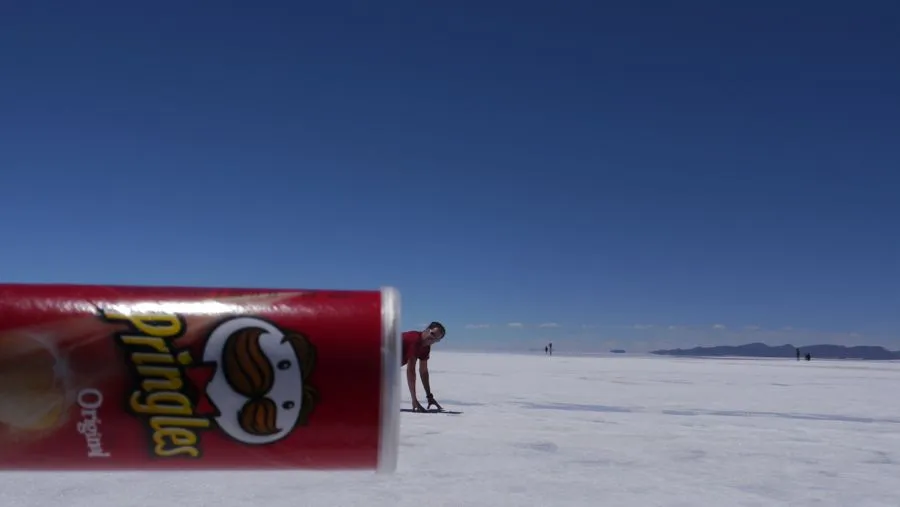
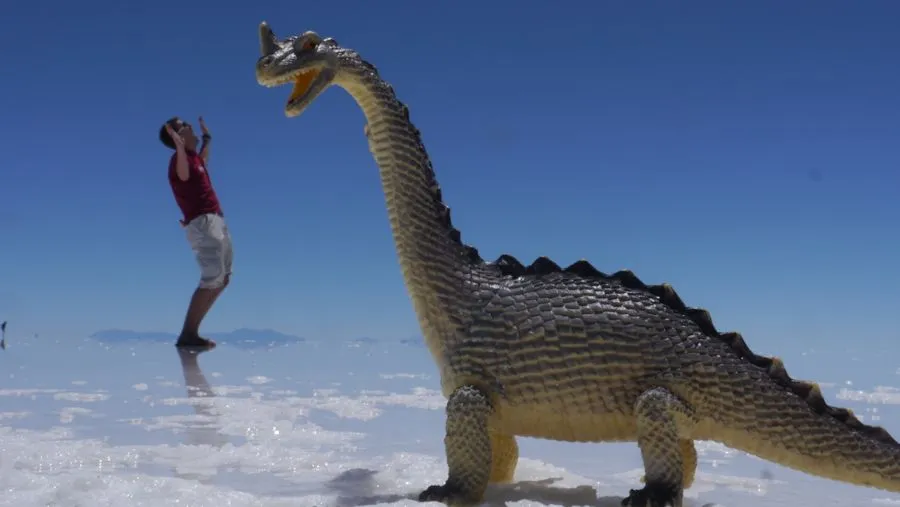
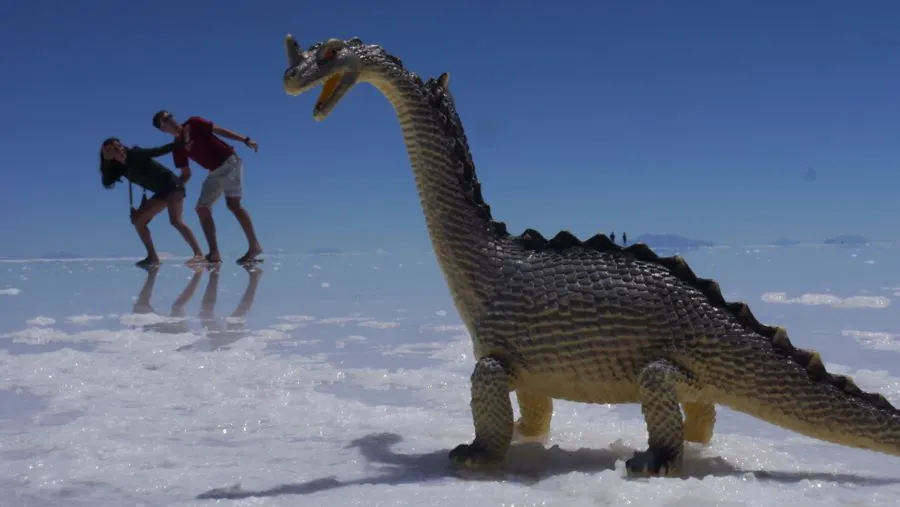
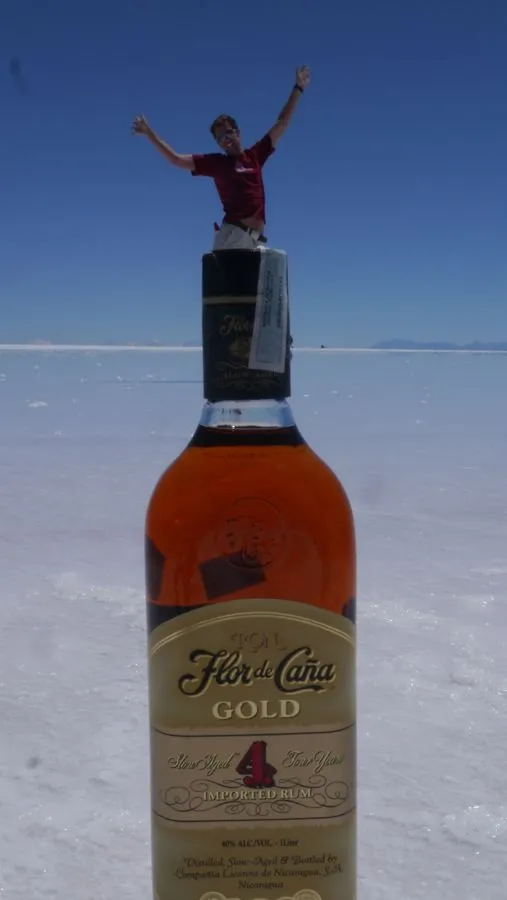
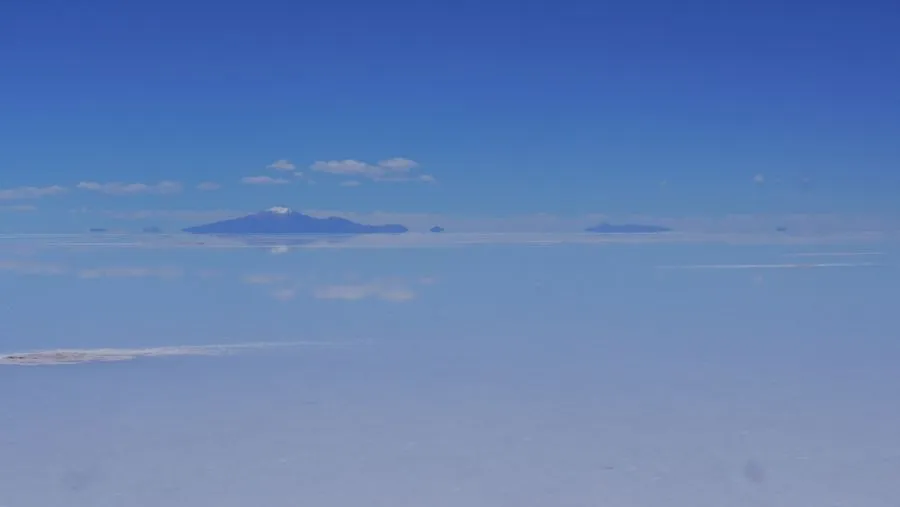
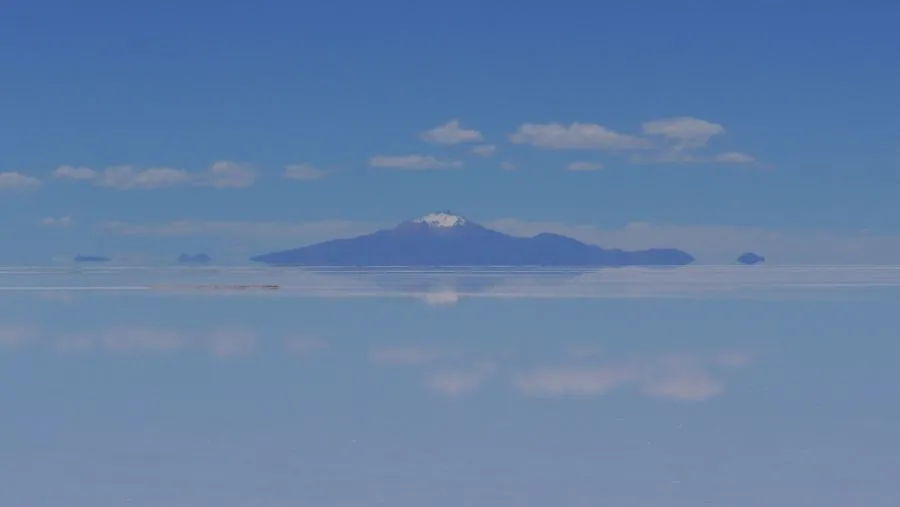
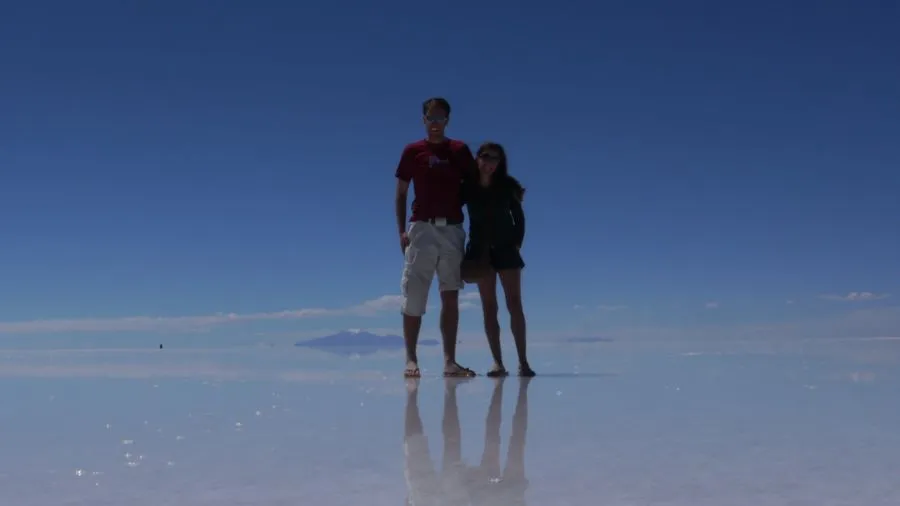
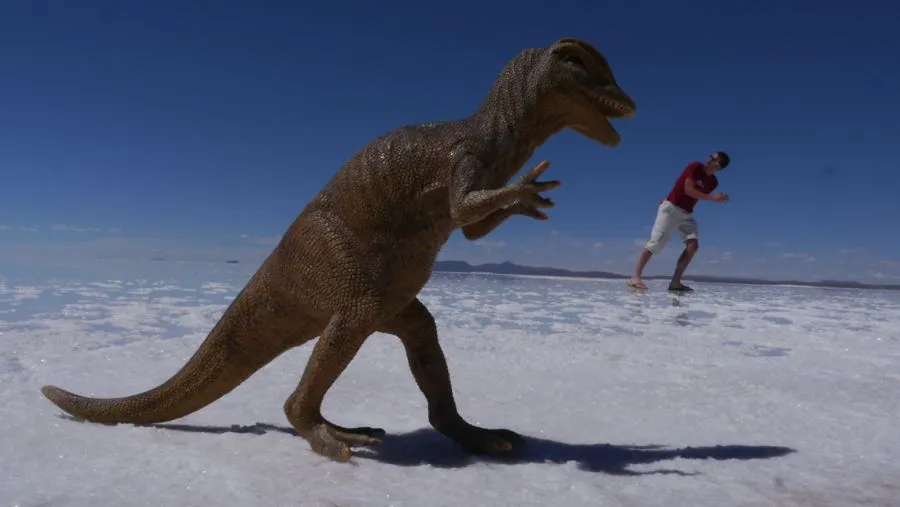
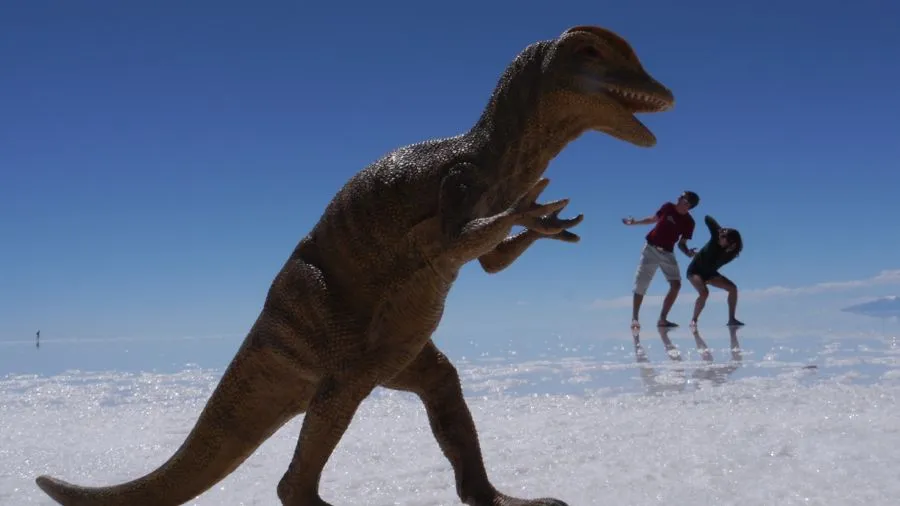
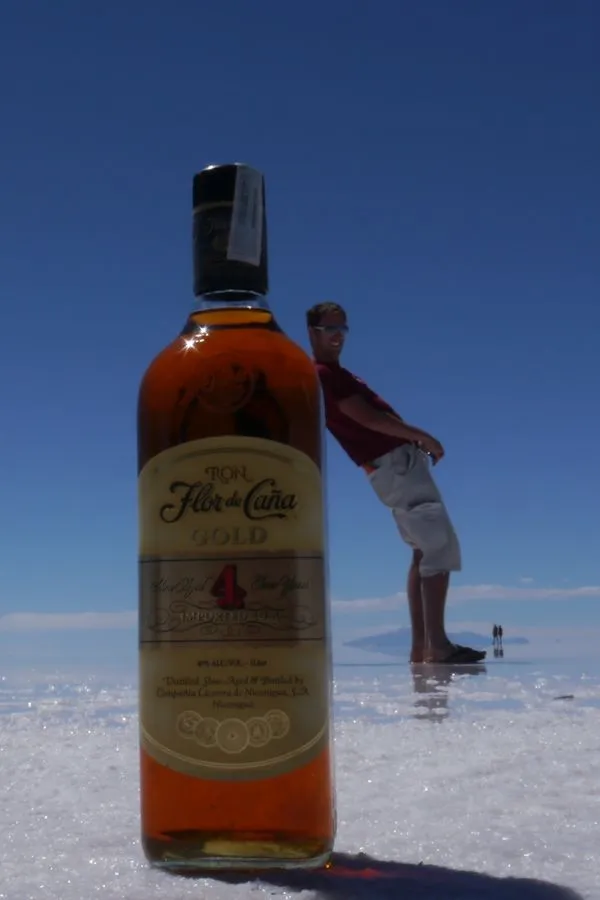
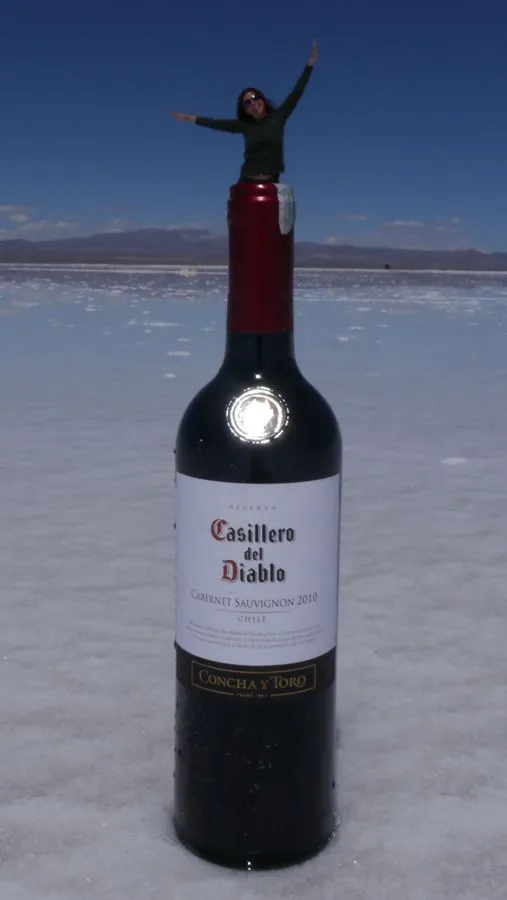
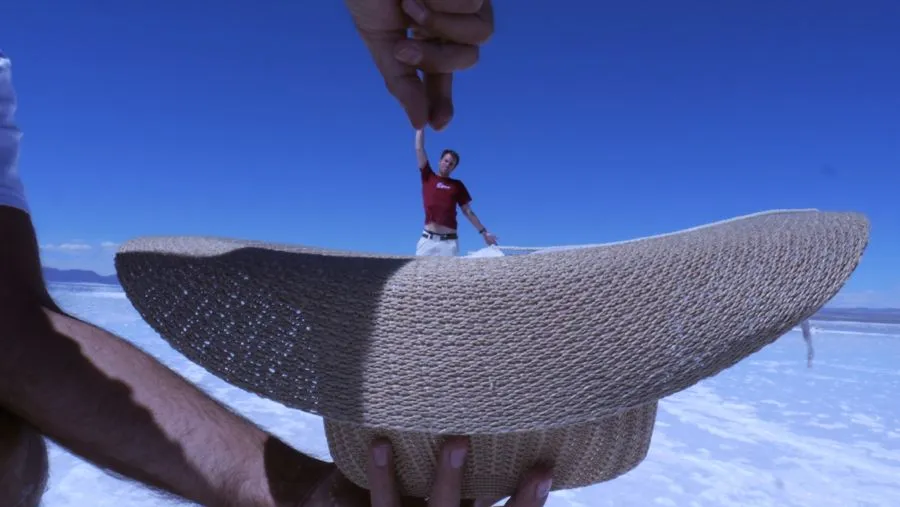
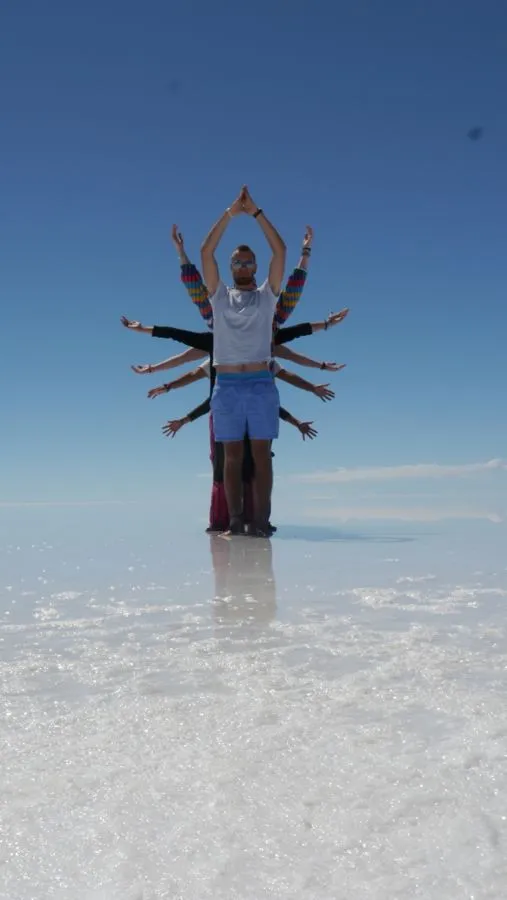
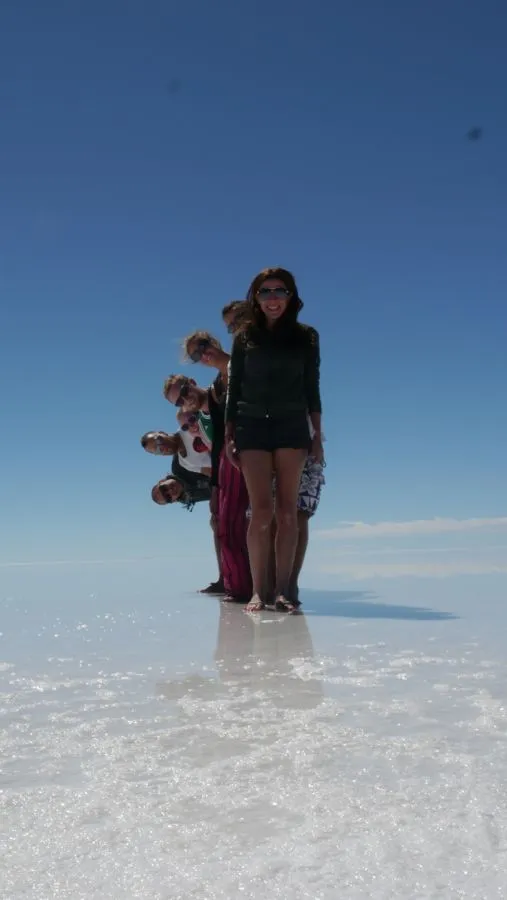
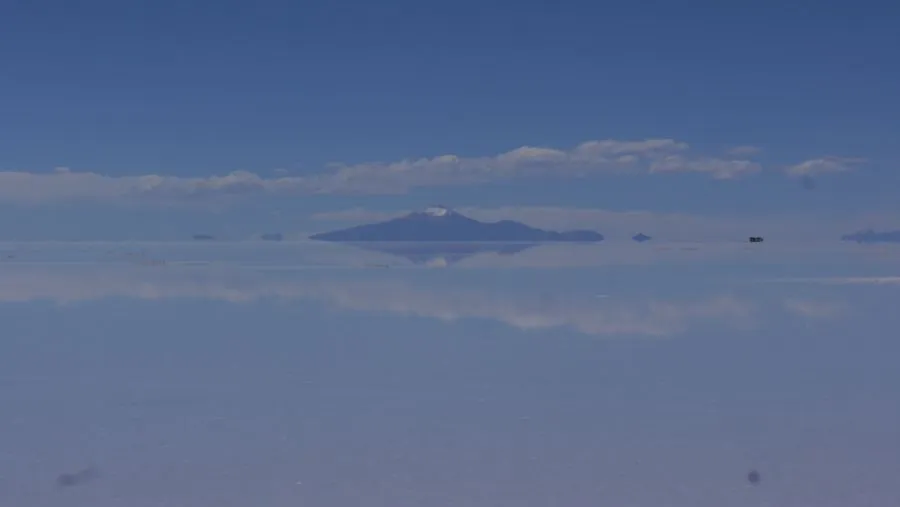
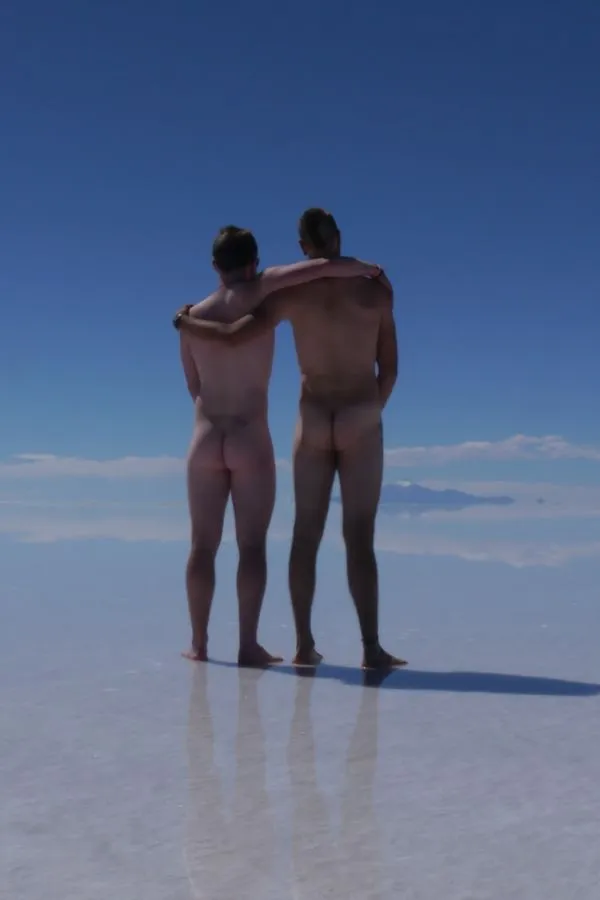
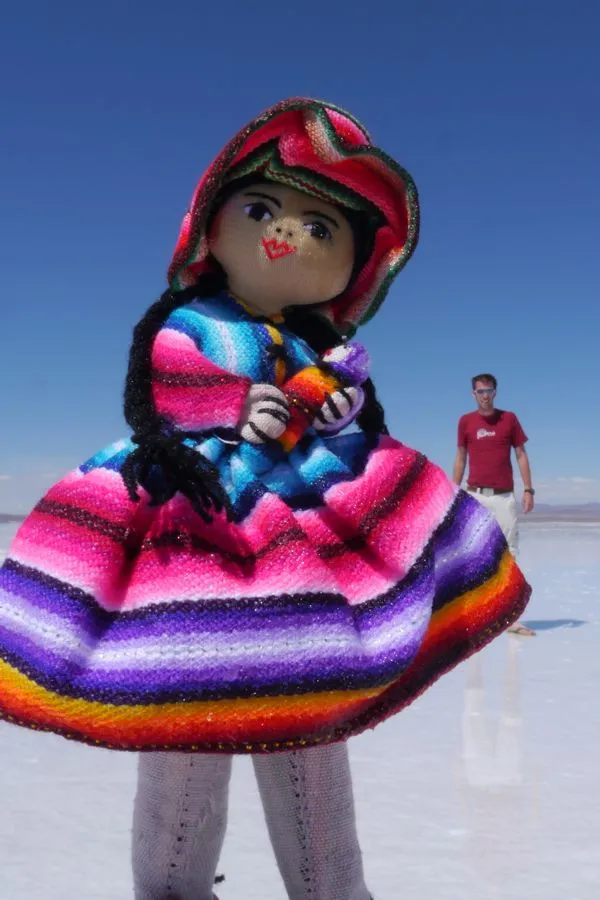
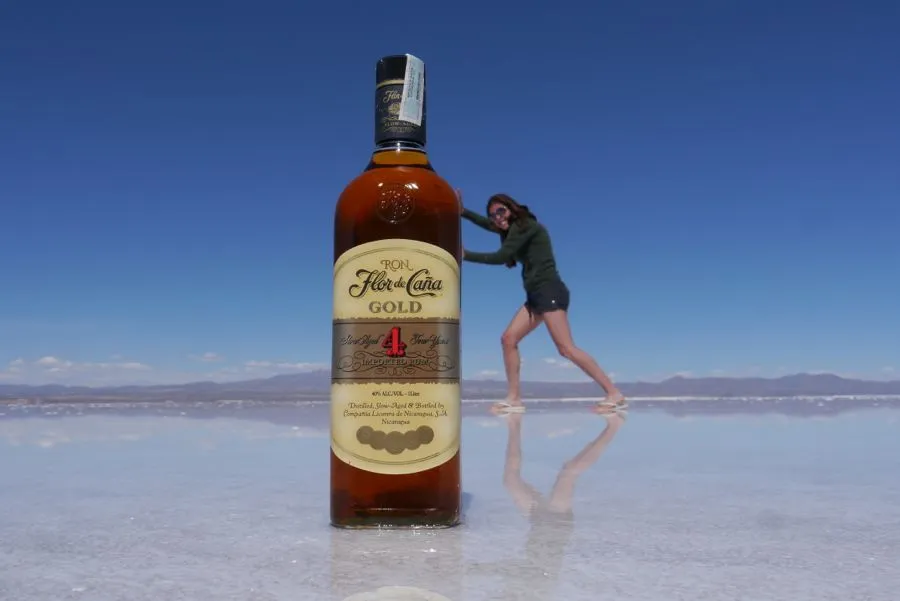
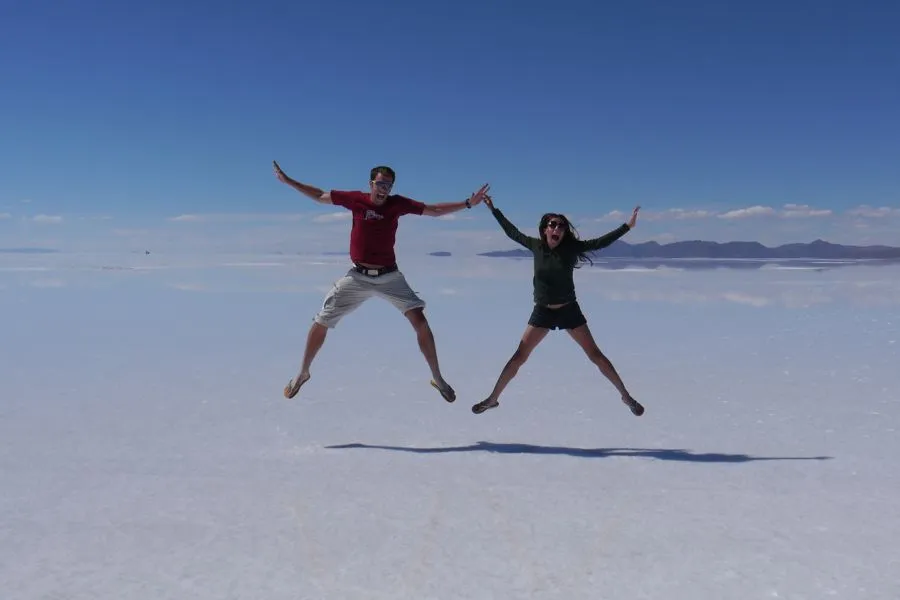
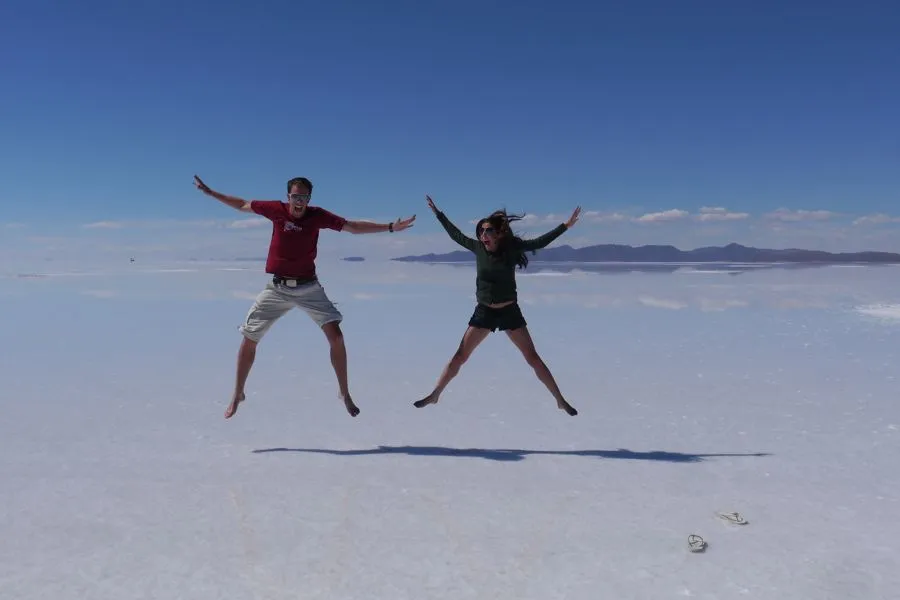
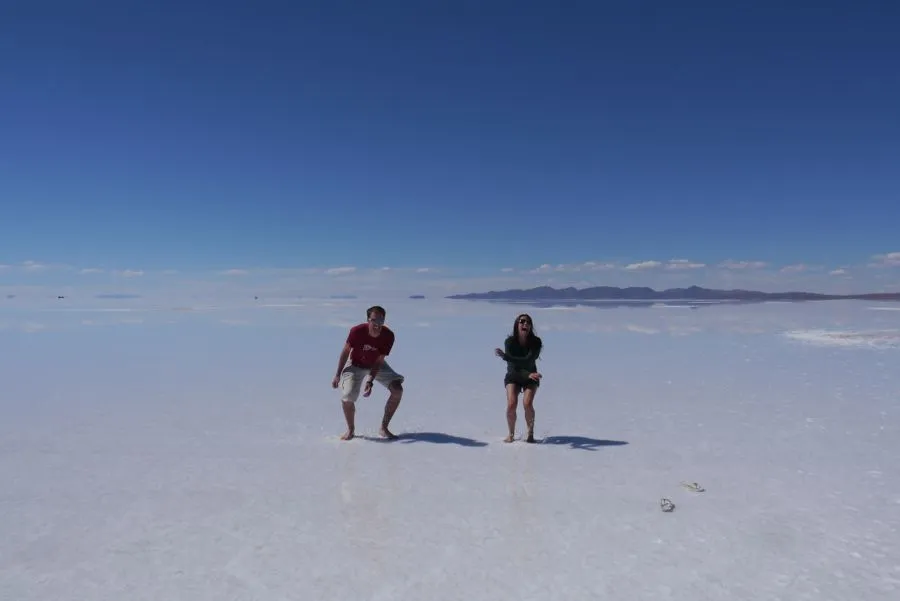
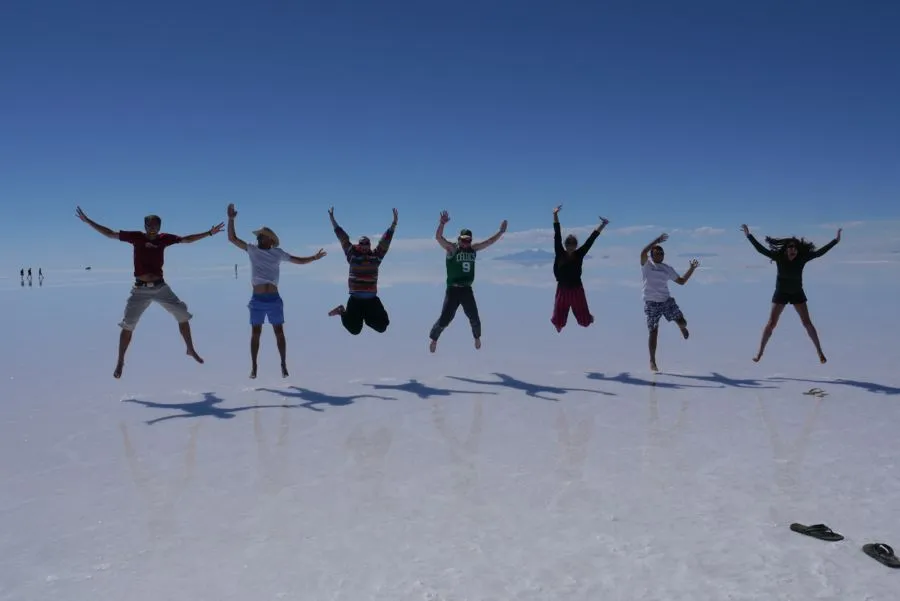
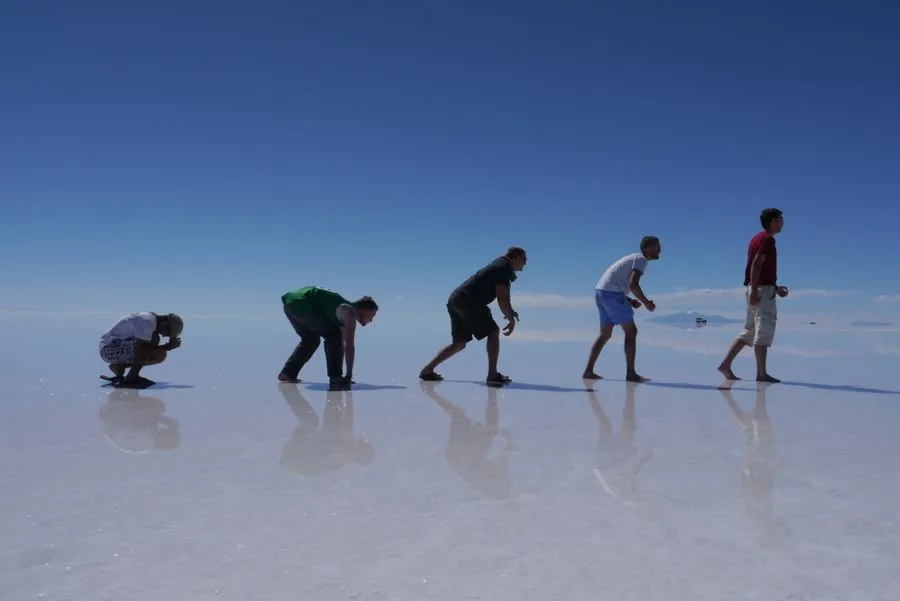
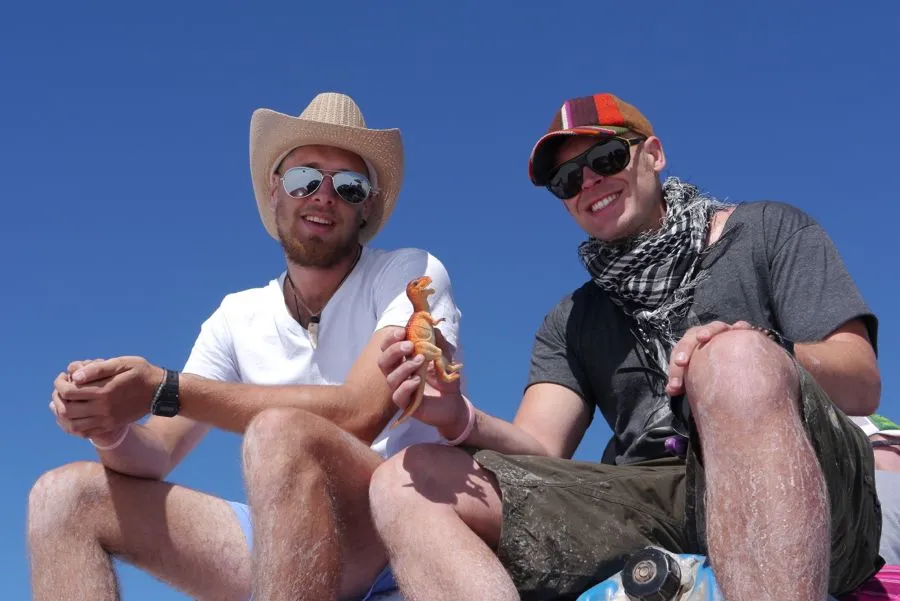
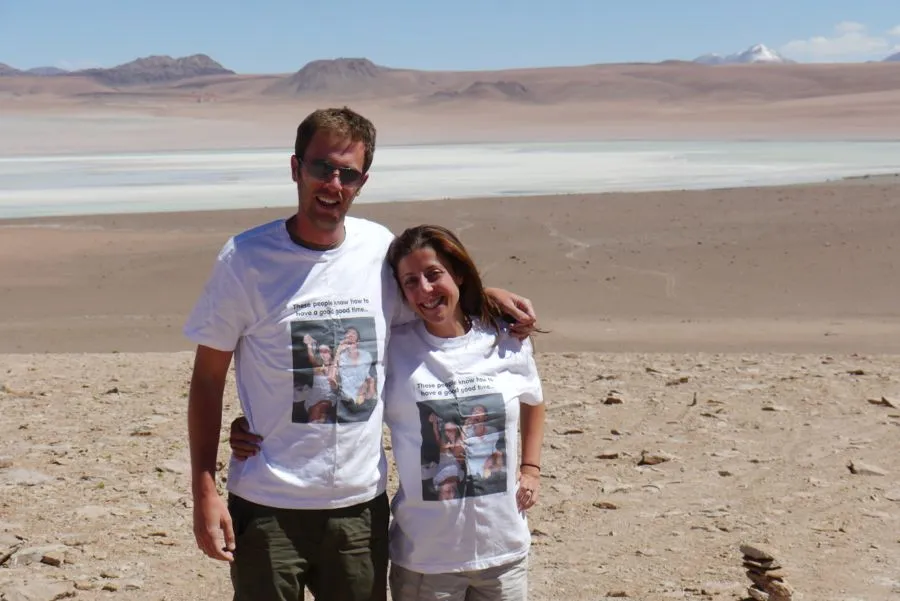
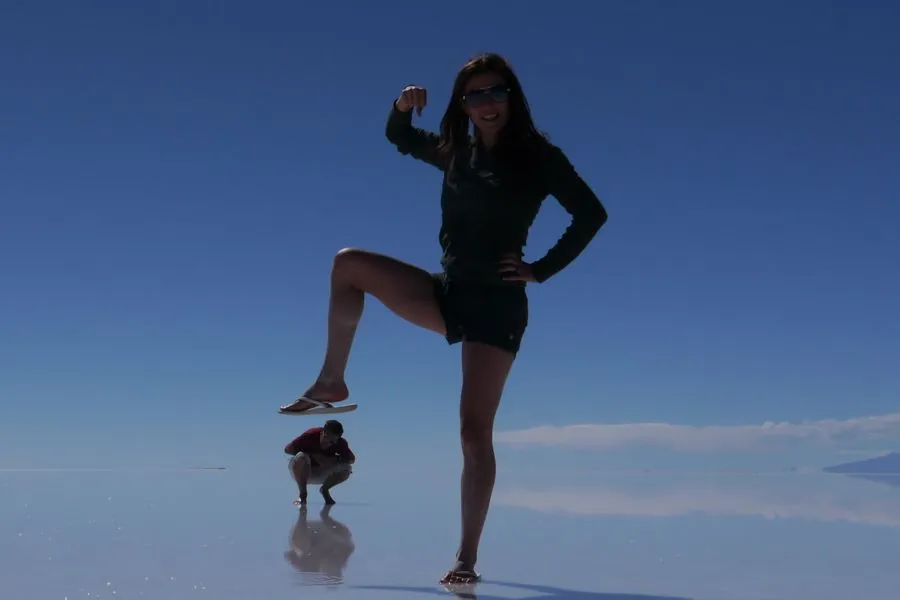
All the tours are done on 4x4 vehicles and you understand why when you leave the dirt path and start driving on the salt lake. Our drivers allowed us to climb to the top of the car and it was stunning to look at the miles of unending whiteness and the small mounds of salt that the locals were drying for harvest. Due to it being the rainy season the lake was fairly wet and the thin layer of water created the most amazing reflections. In the middle of the lake we stopped off for photos, taking our props of wine bottles and plastic dinasours with us as we went in search of our own little bit of pure whiteness. We had fun playing on the salt and got some wicked photos.
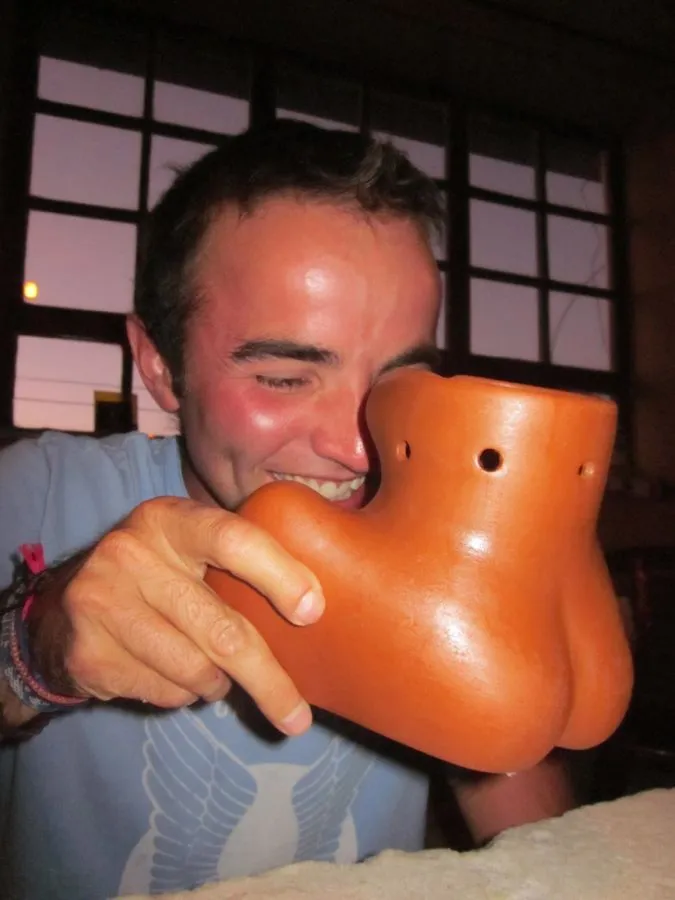
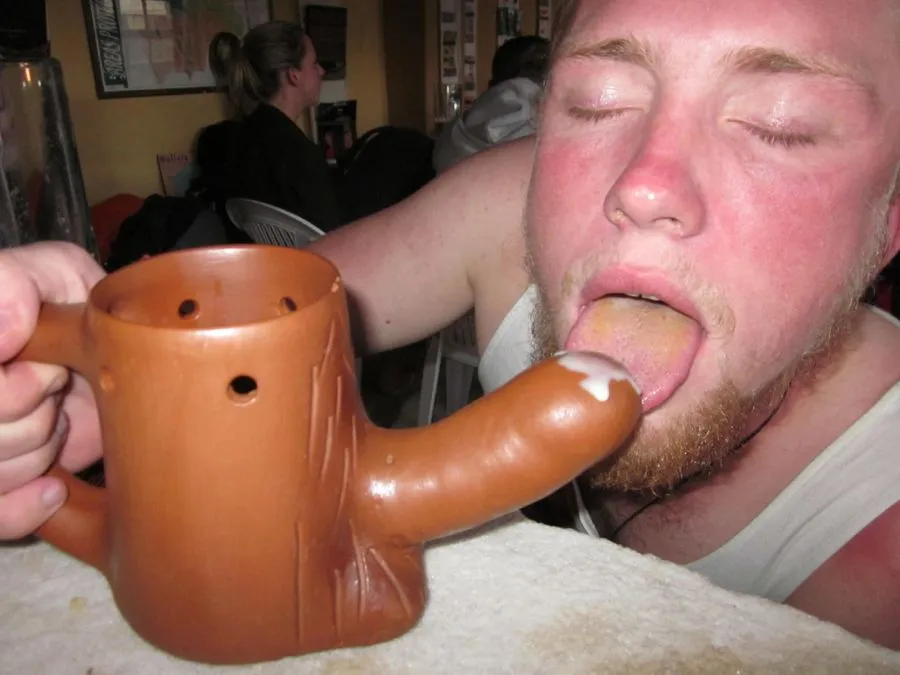
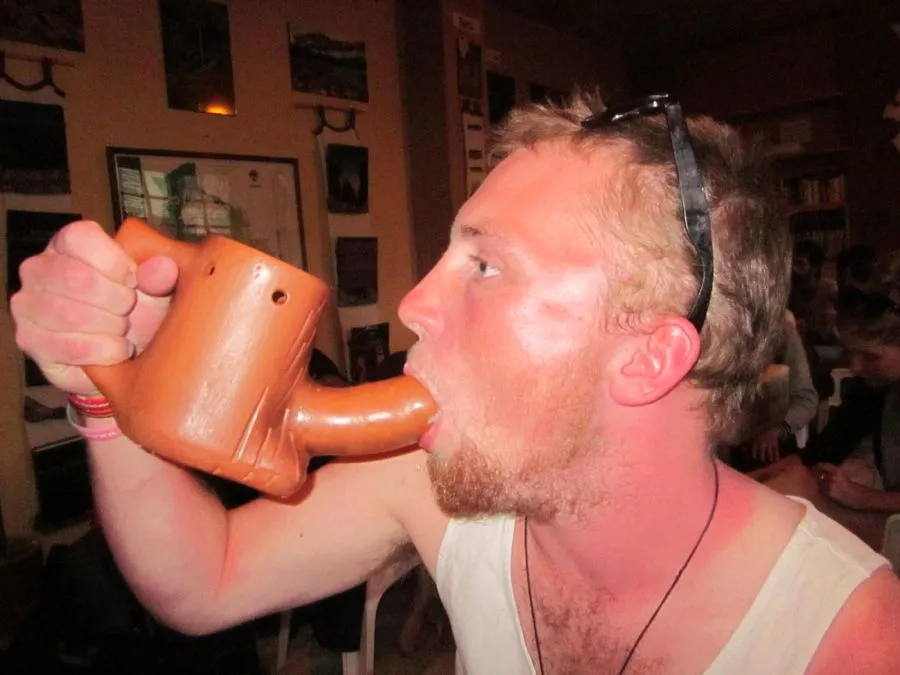
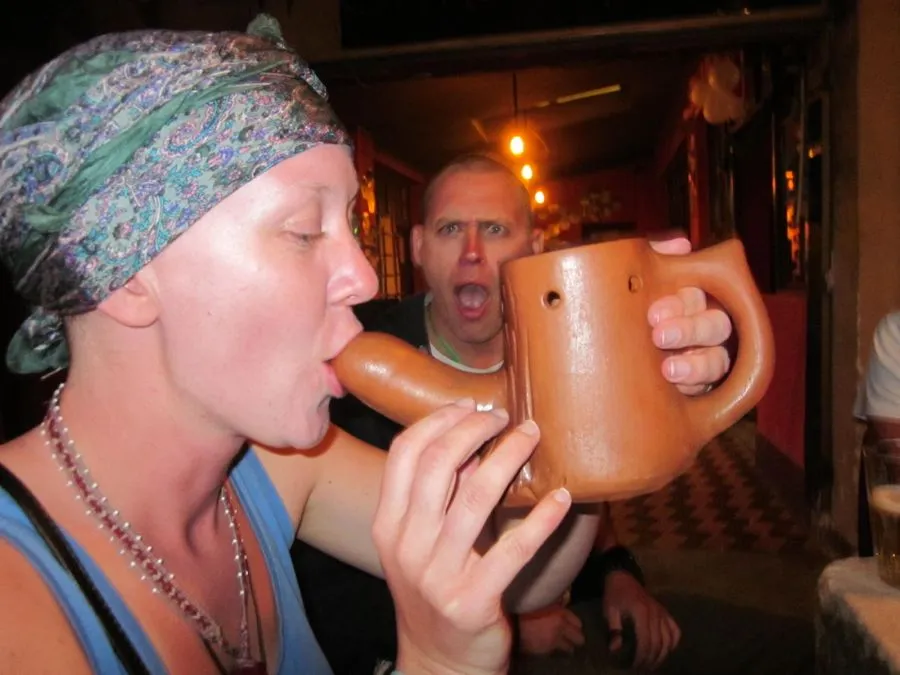
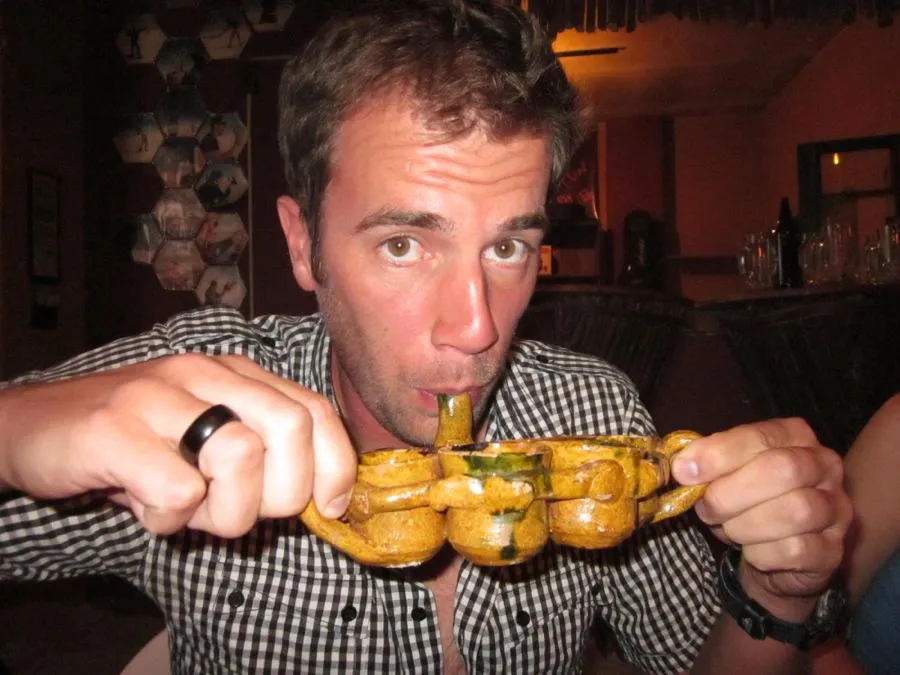
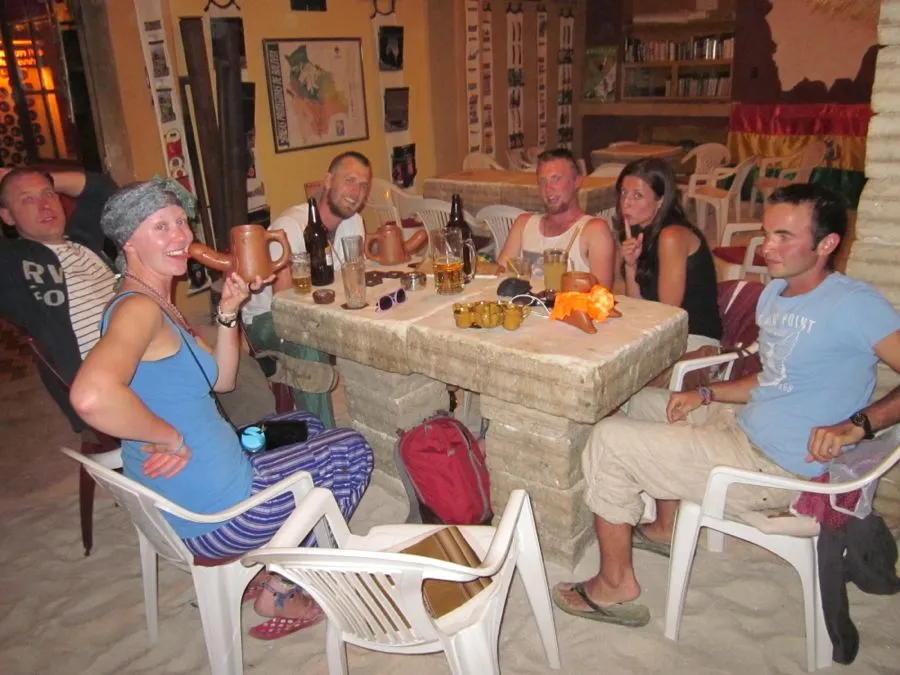
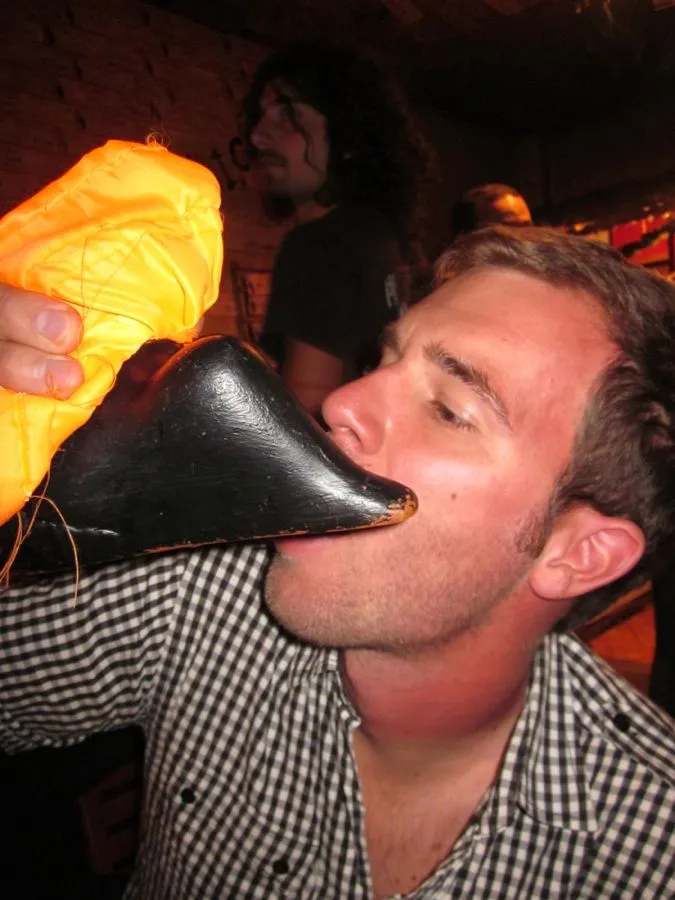
That night our tour came back to Uyuni and we went out for some food and a few drinks in the Extreme Fun Pub. Many cocktails were had in strange drinking vessels (see photos) and our tables and chairs were made entirely from salt. Later this little fun-pub turned into a mini-club with a dance floor and we were all there throwing some shapes.
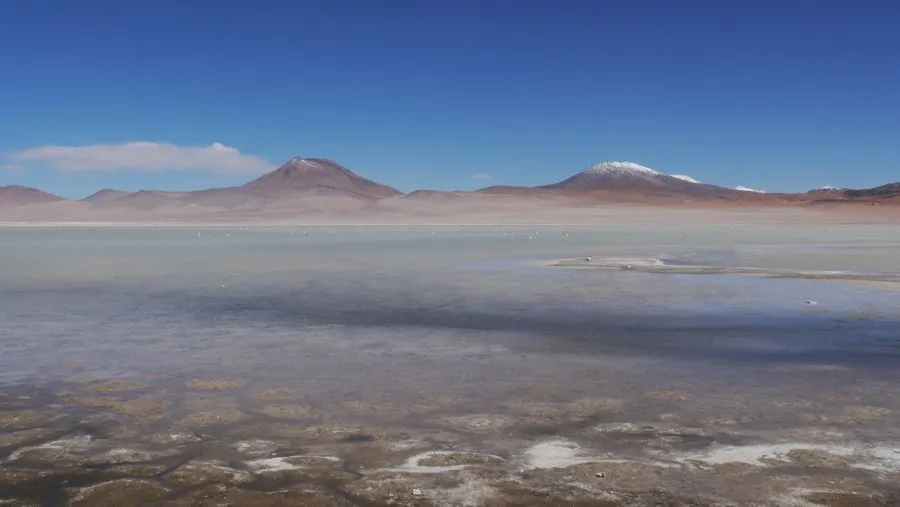
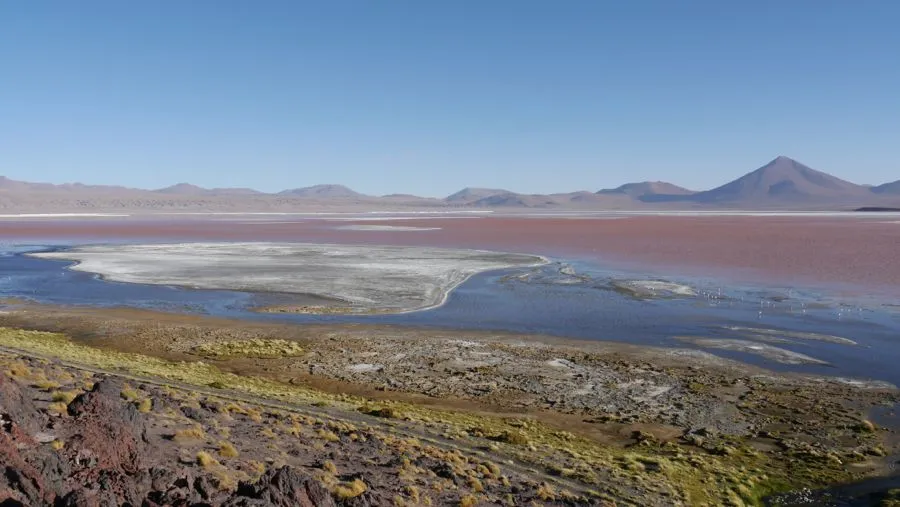
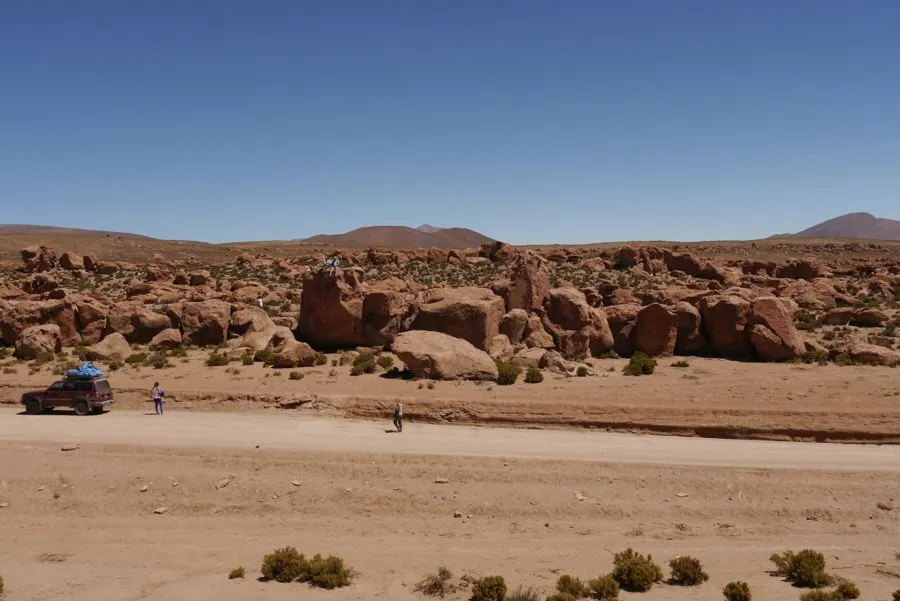
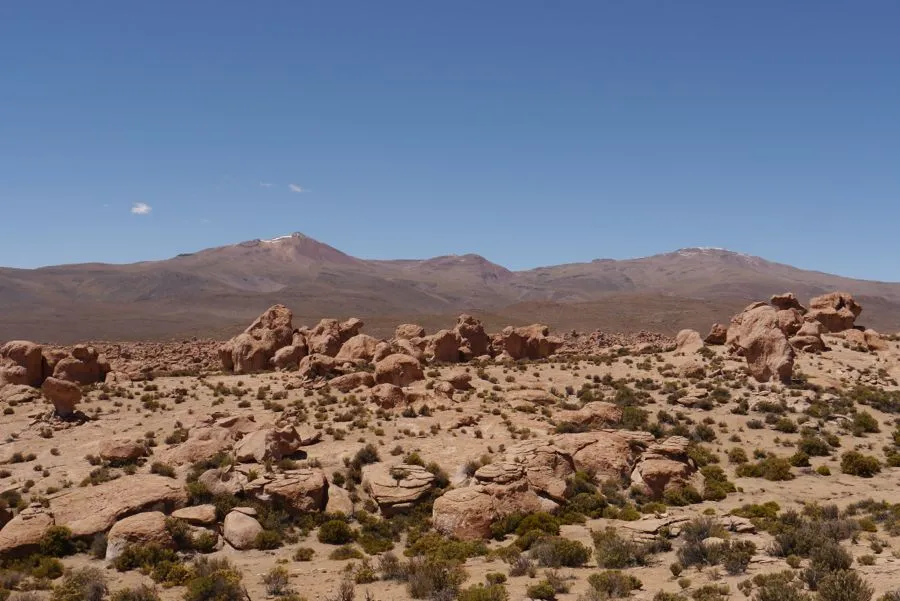
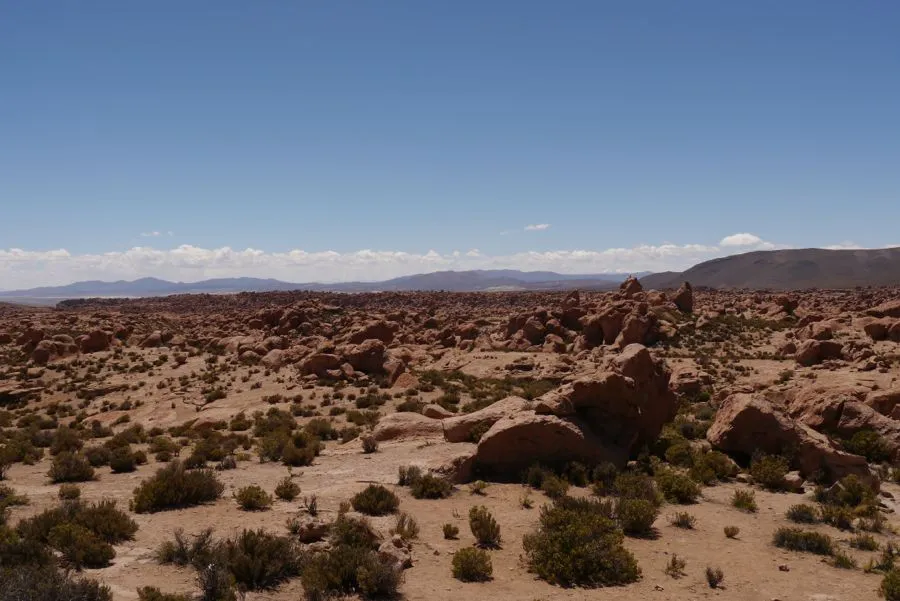
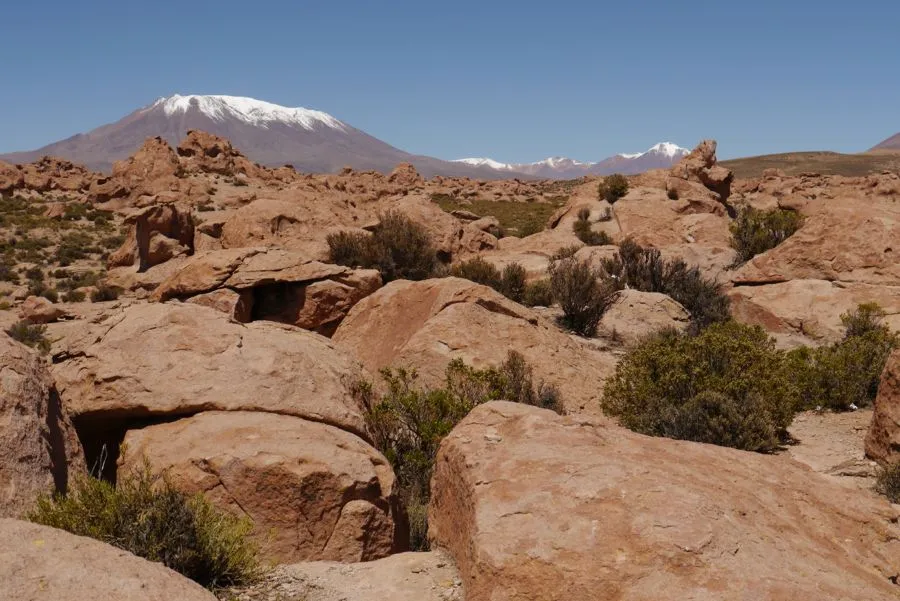
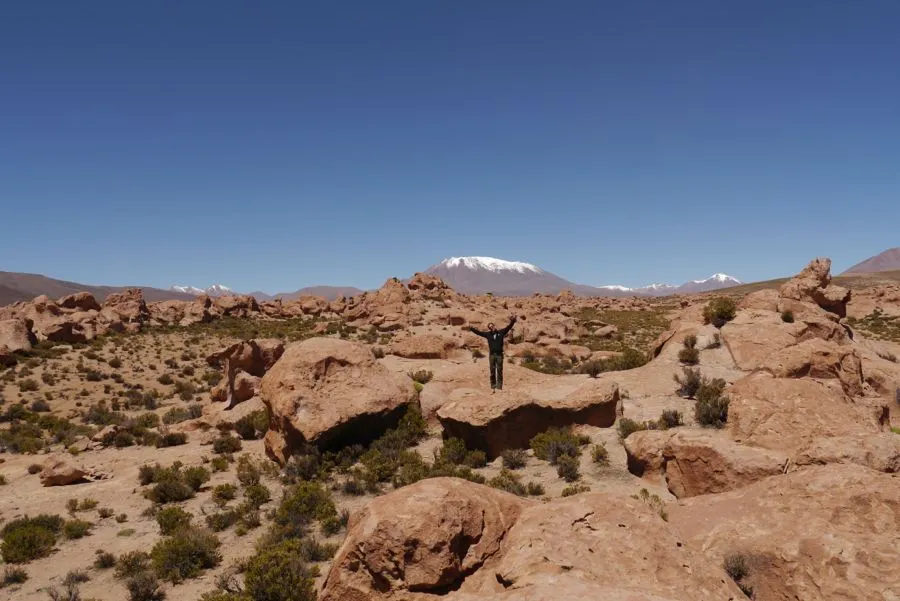
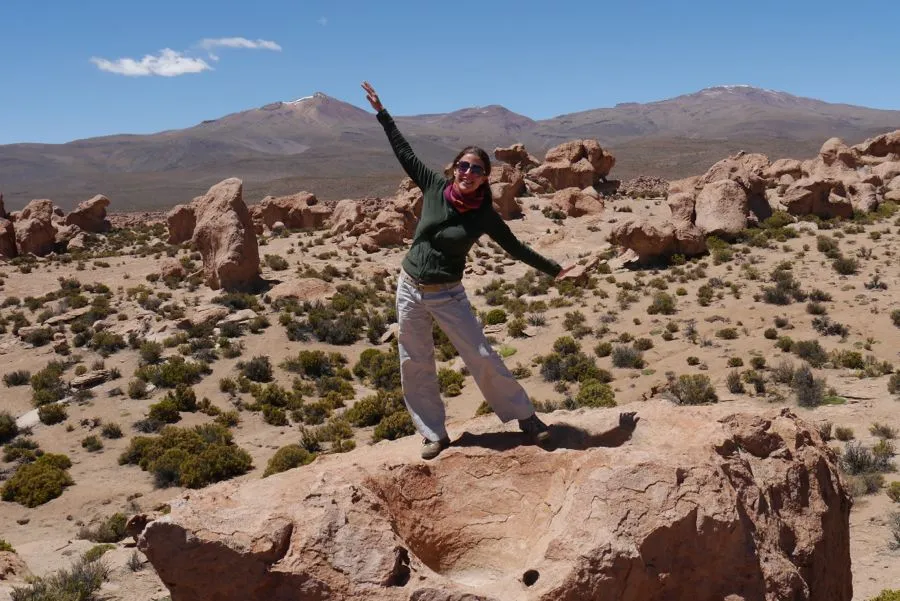
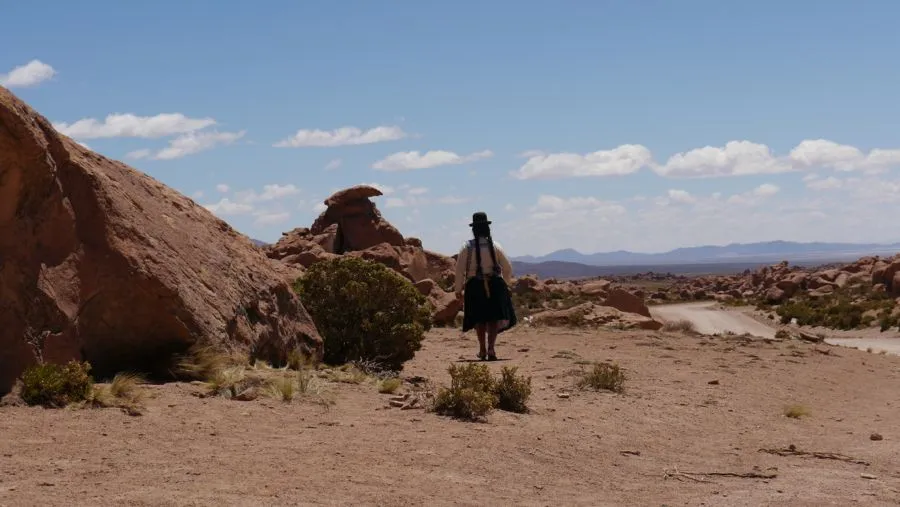
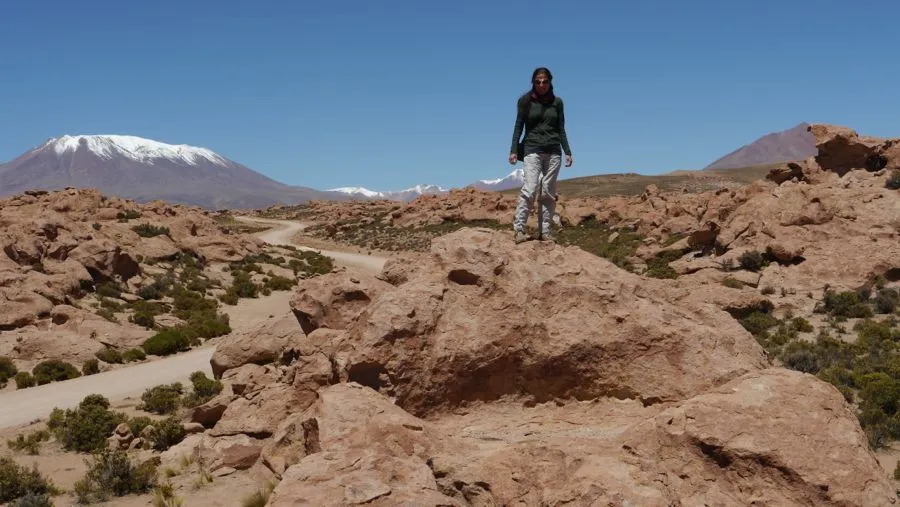
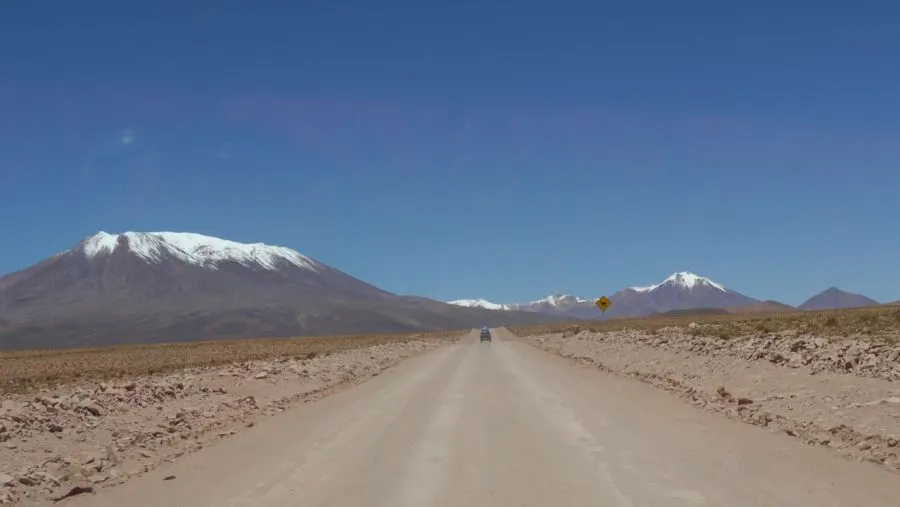
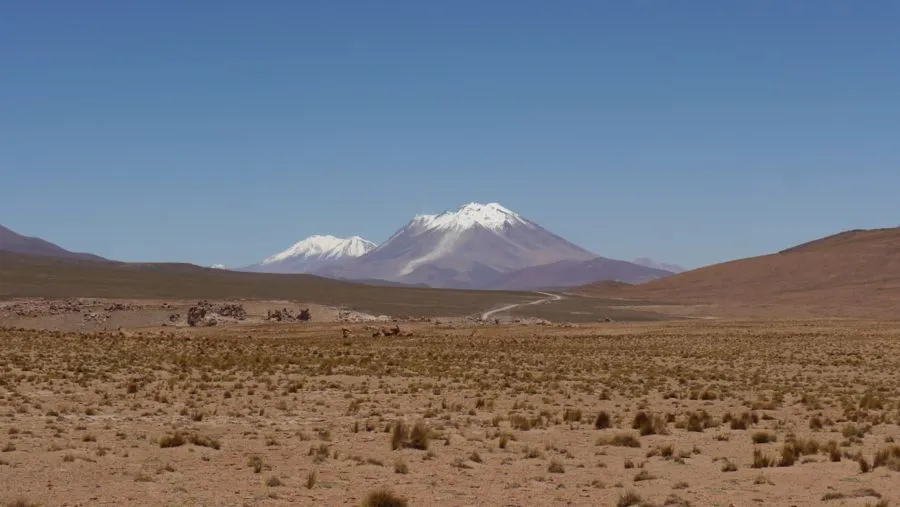
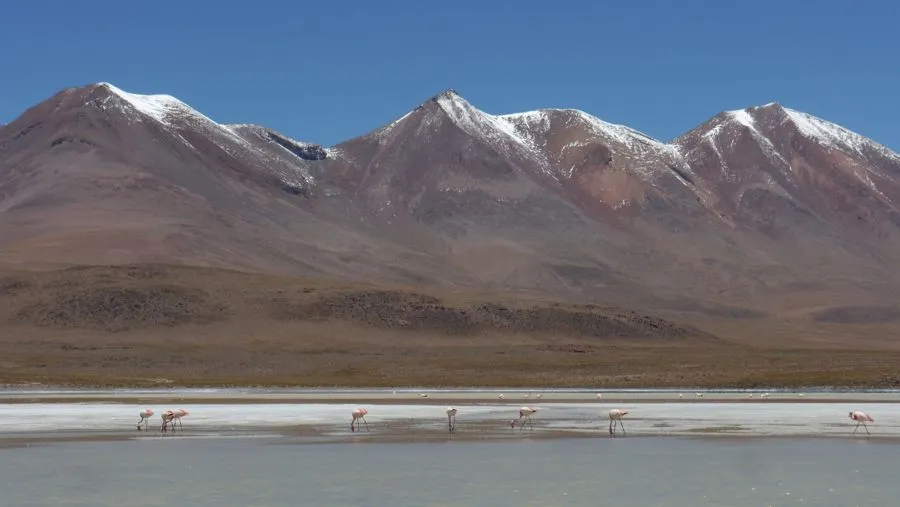
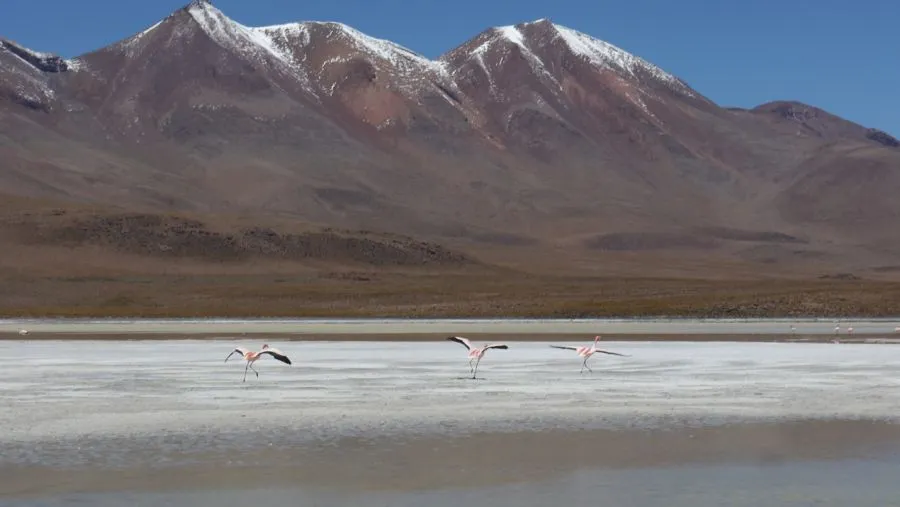
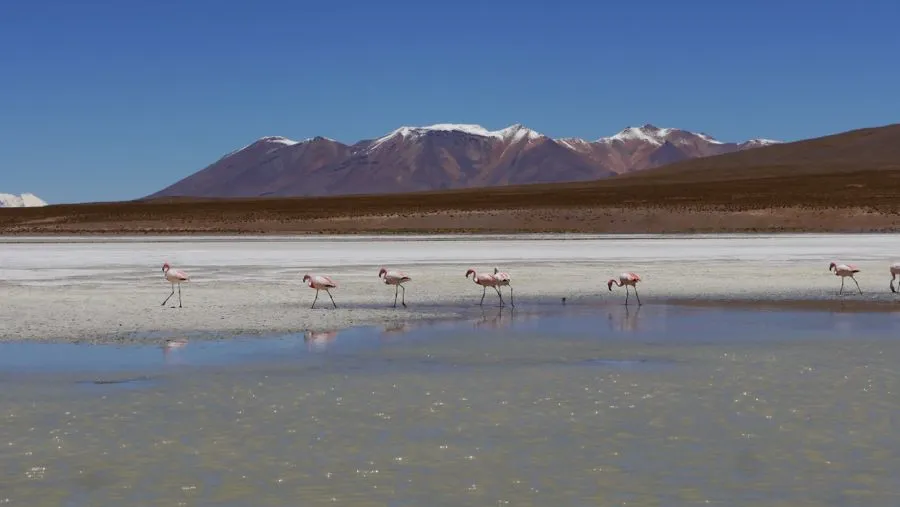
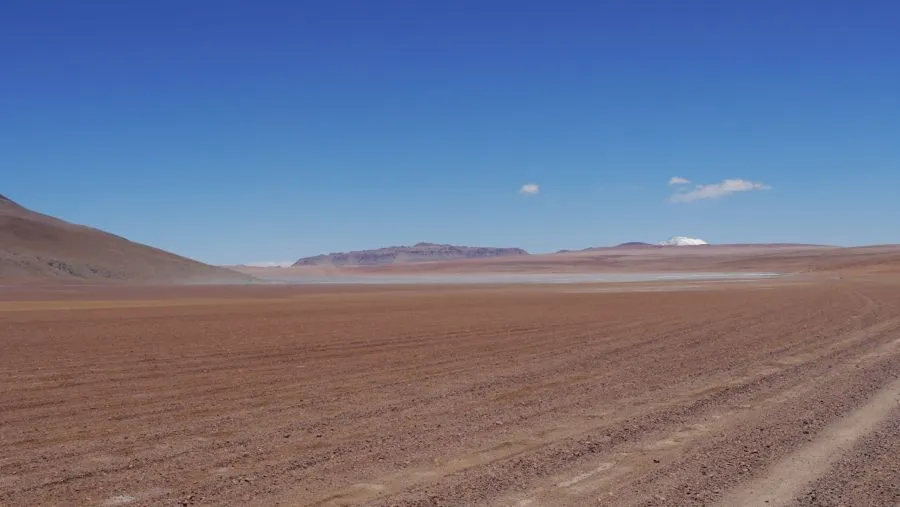
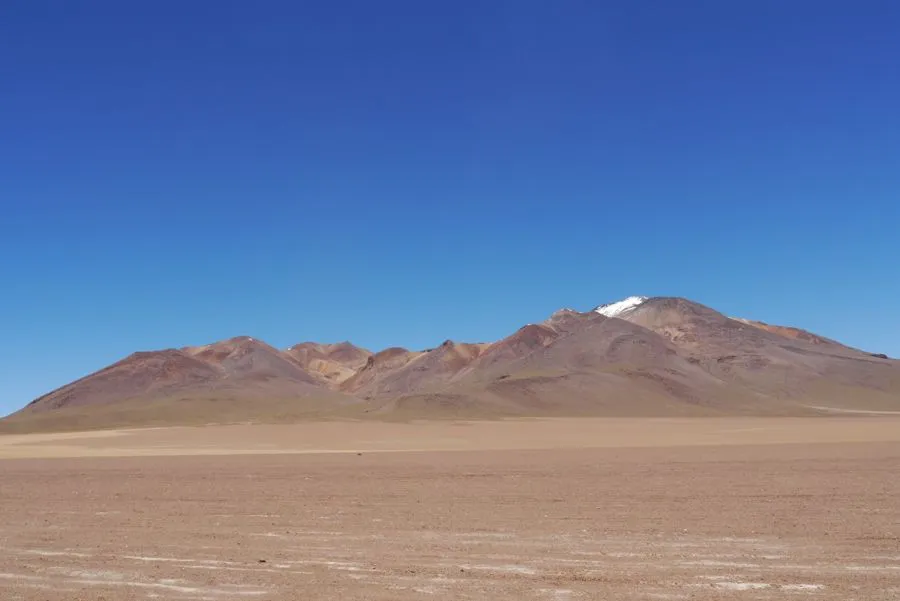
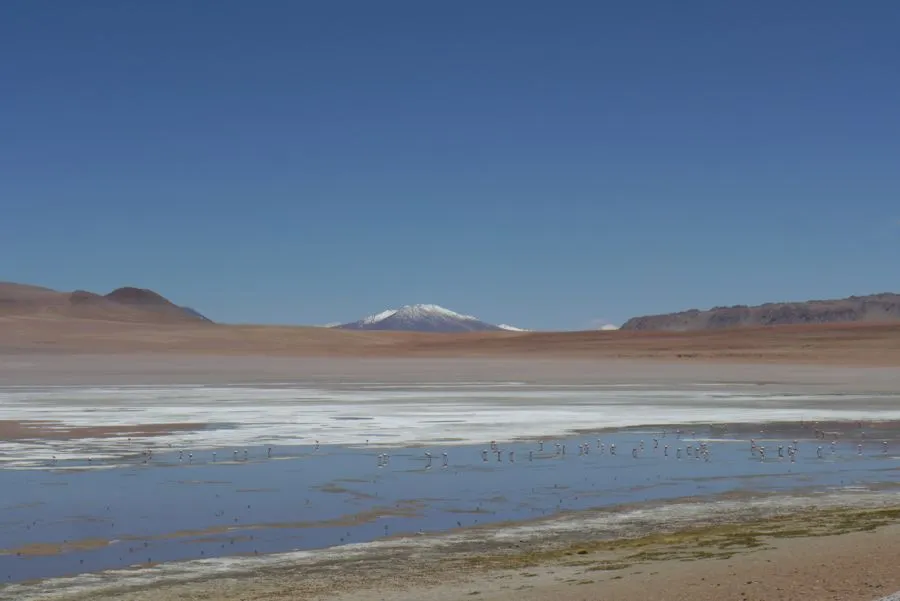
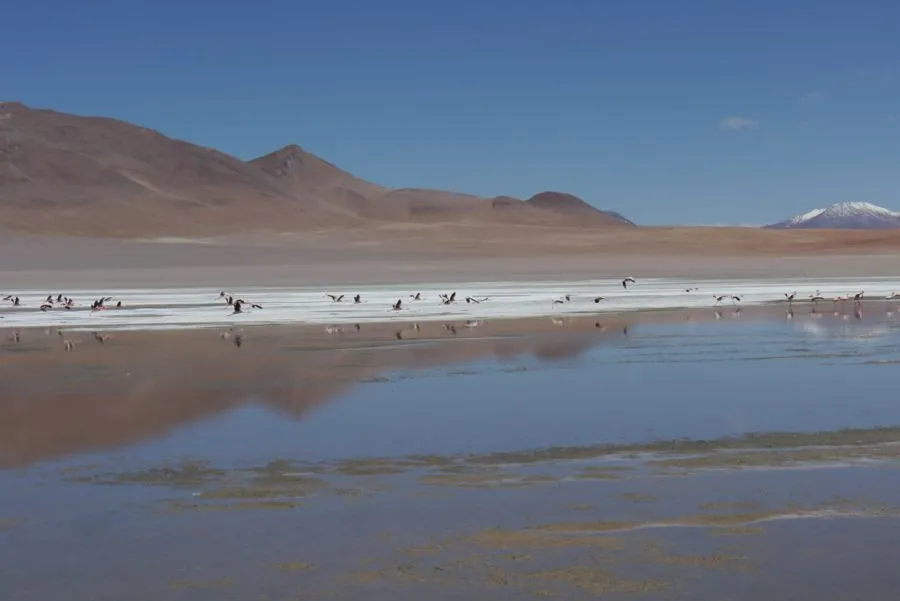
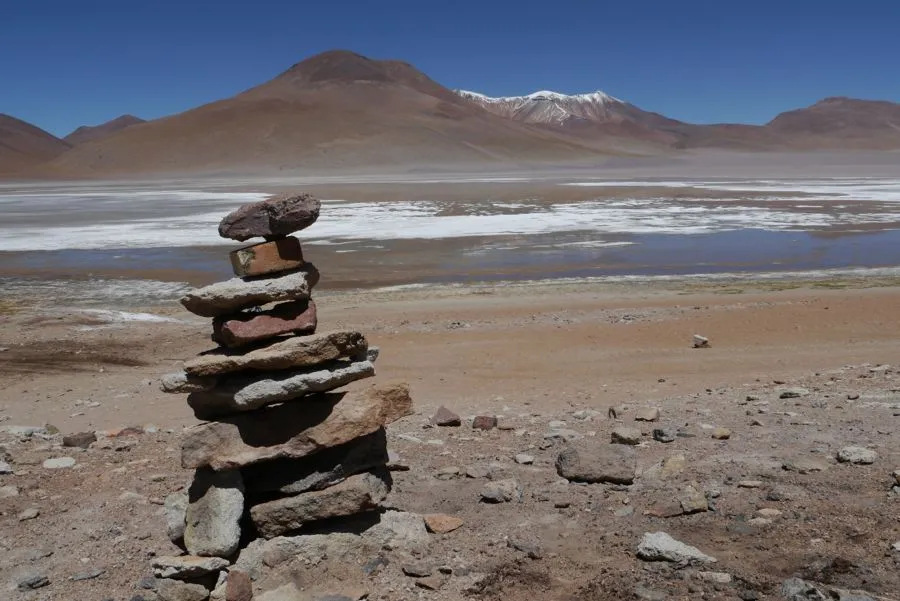
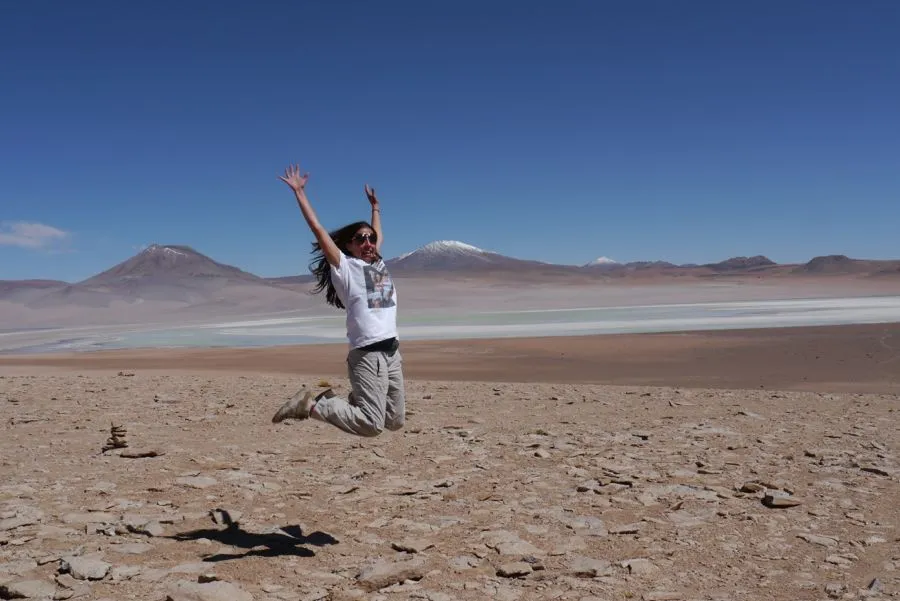
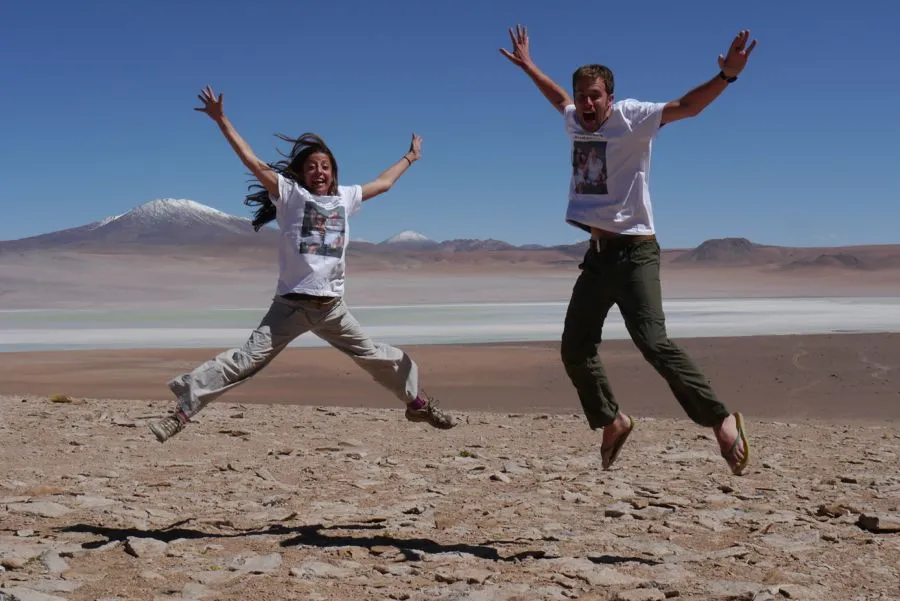
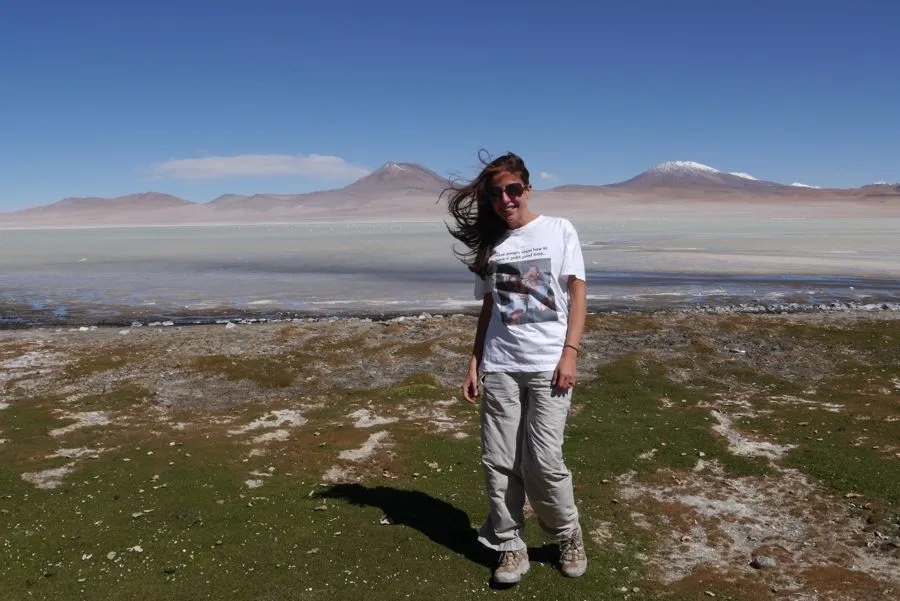
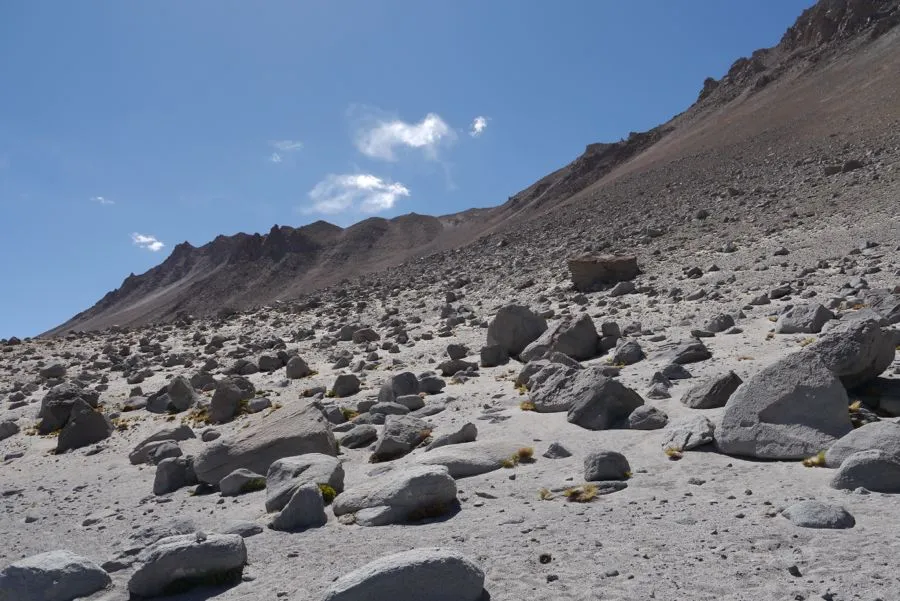
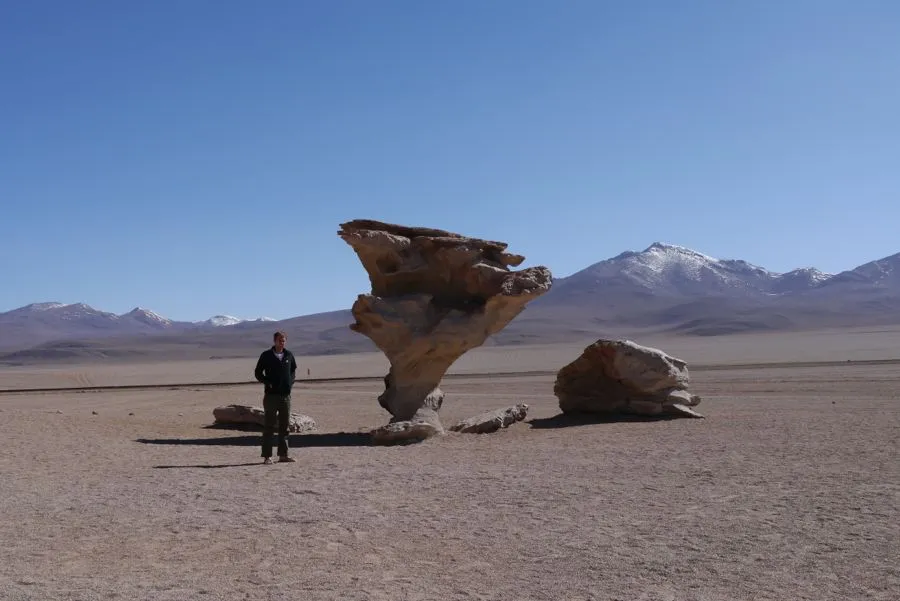
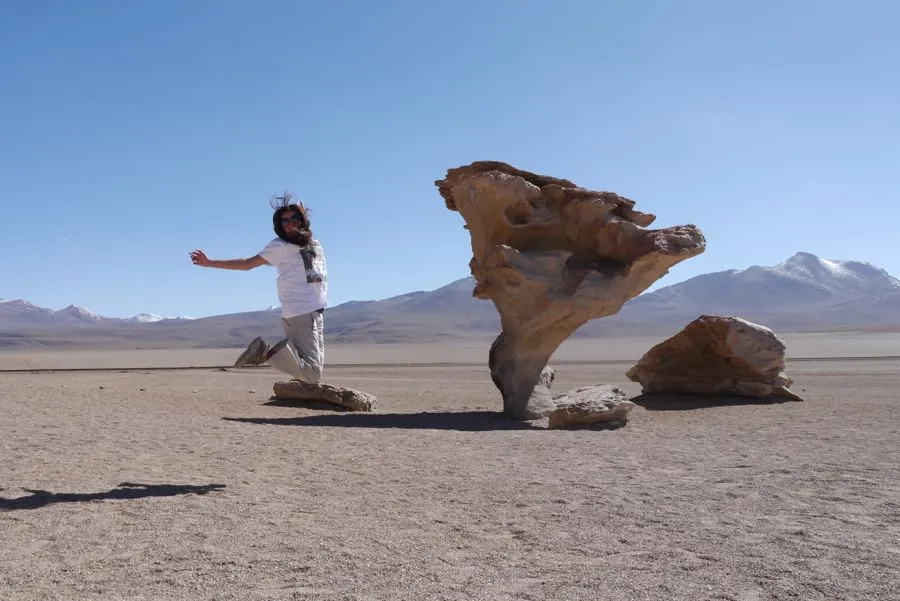
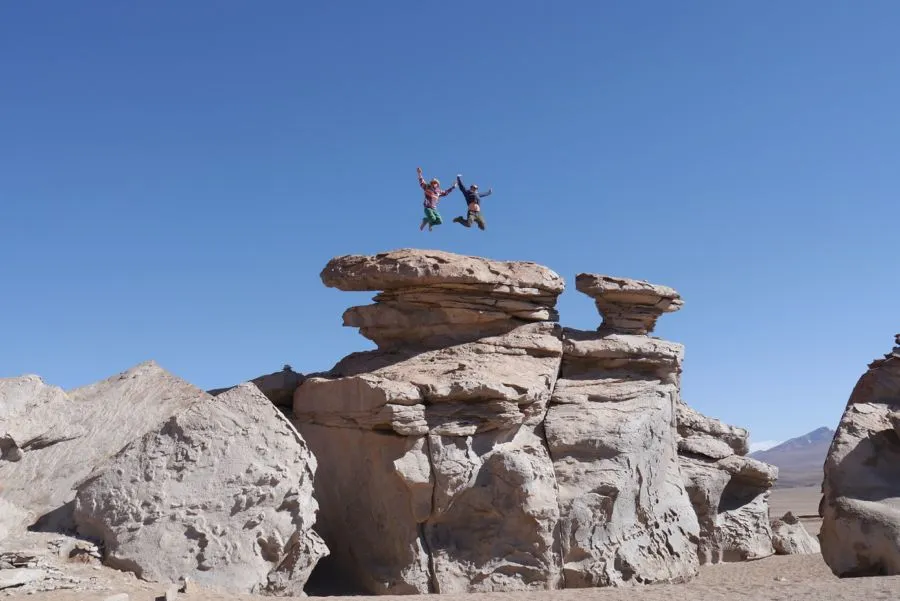
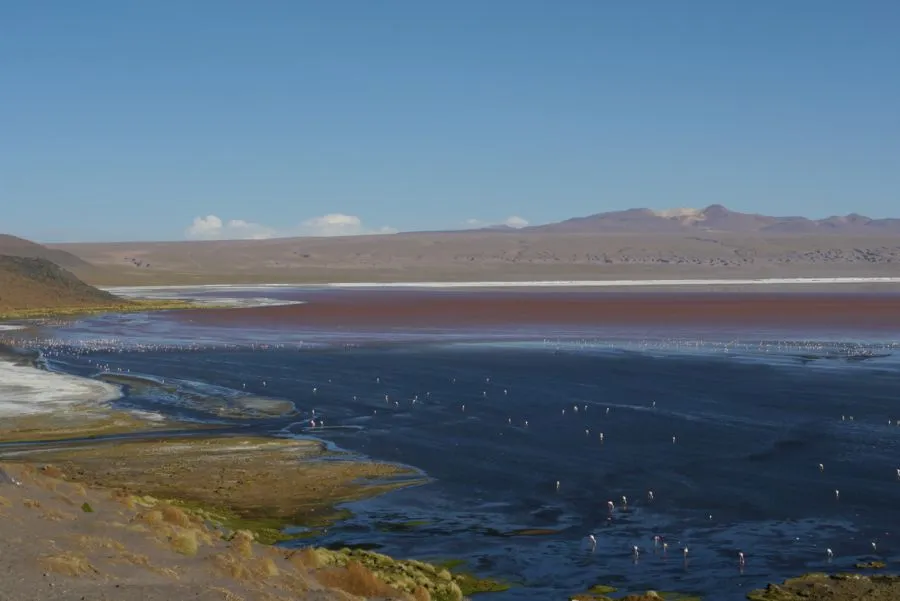
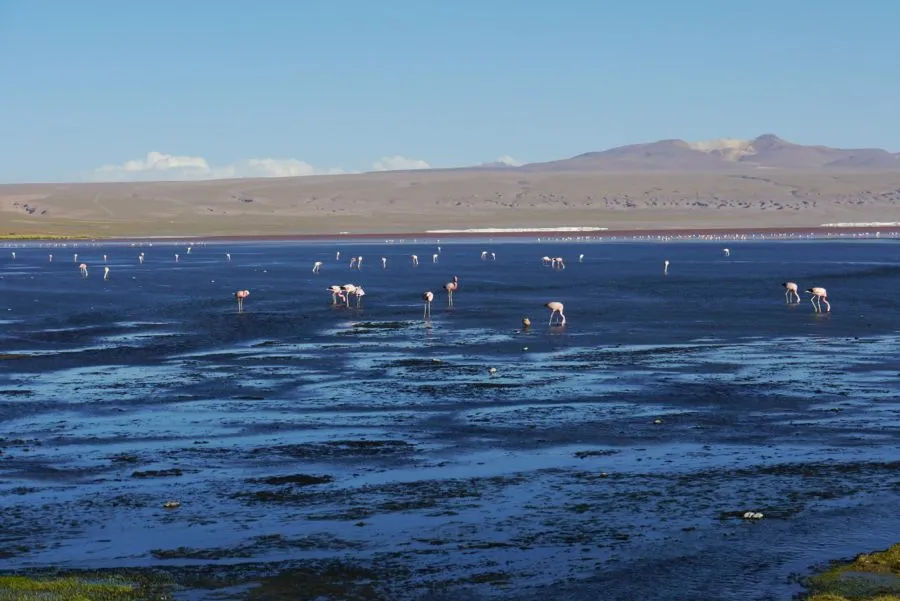
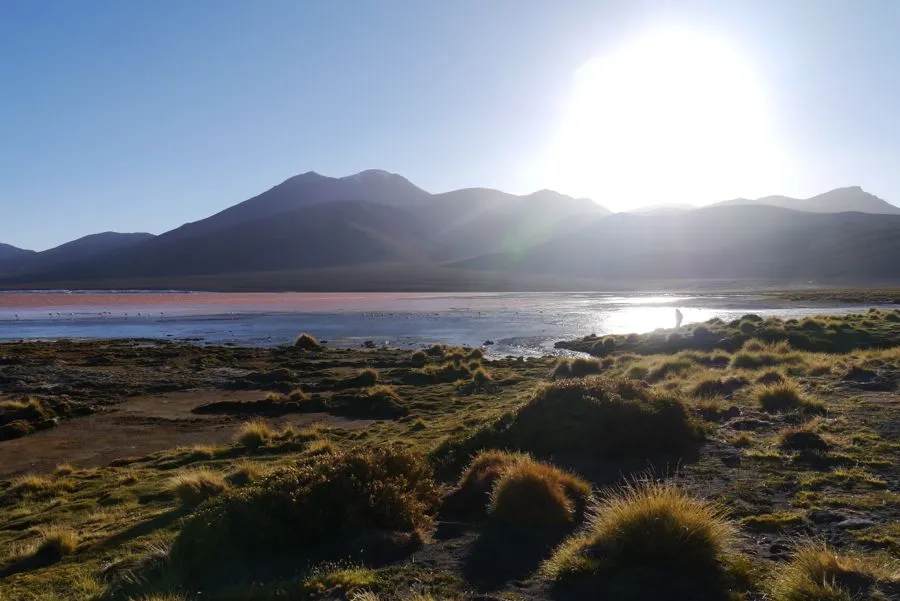
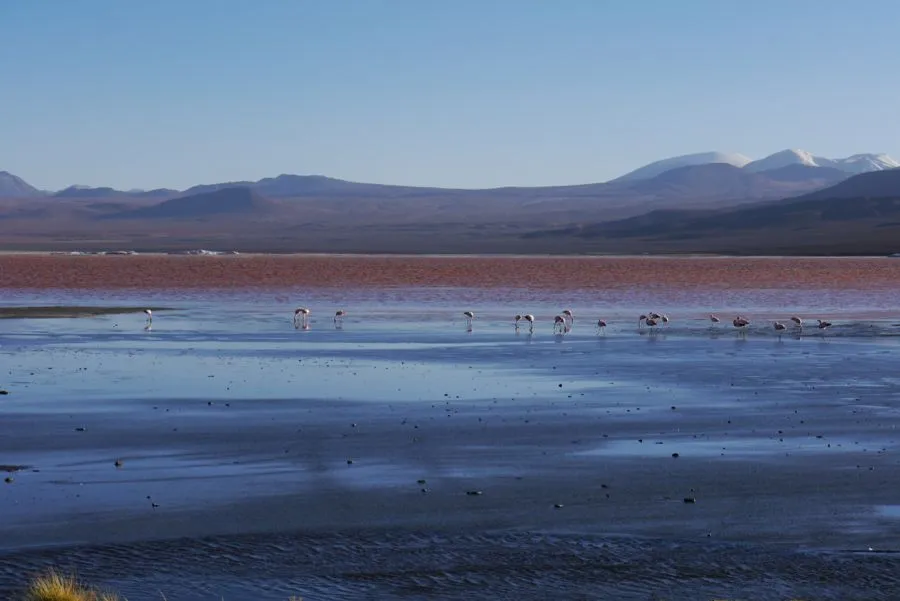
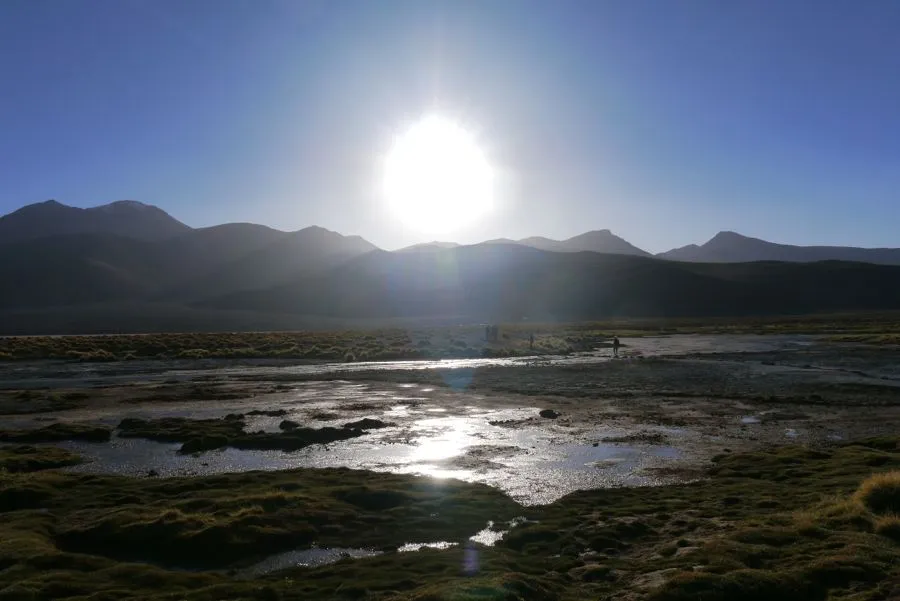
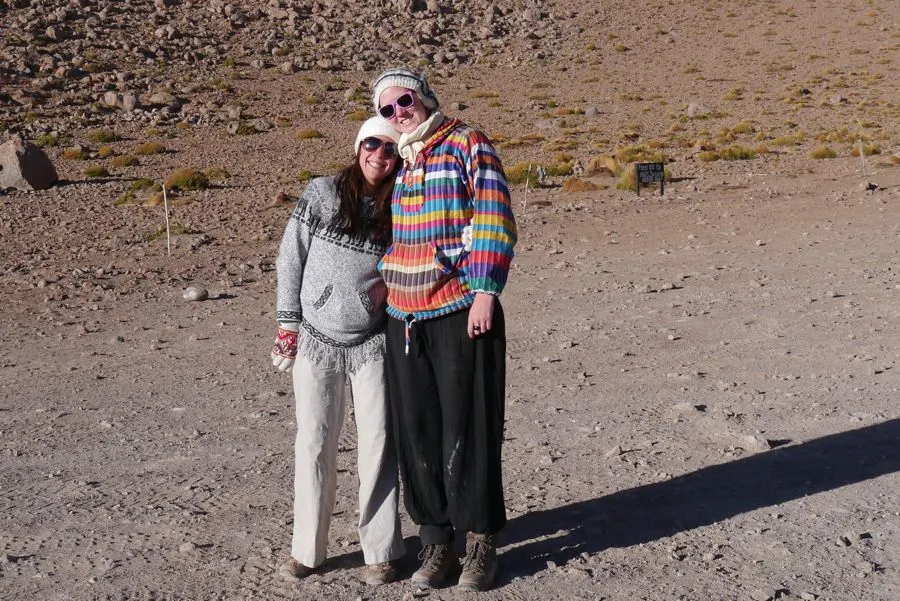
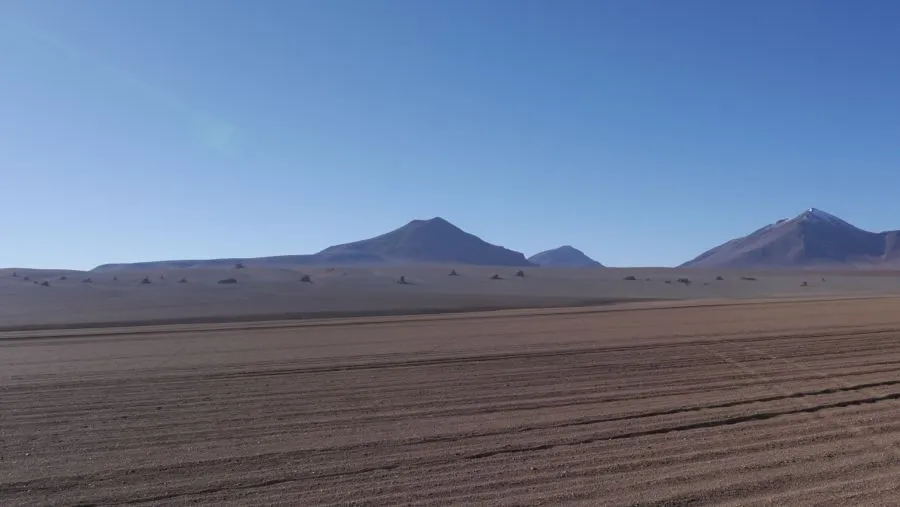
There were many sore heads for the 7am start on second day, but luckily we did not have to be very energenic. Our 4x4 jeep took us to the most beautiful sites including a field of strange rock formations and a number of lagoons full of pink flamingoes. Each site would be better than the one before and the scenary was so arid and starkingly beautiful it was difficult to take it all in. Our last stop and shelter for the night was a little shack by Colorado Lagoon over 5000m up in the Andes. After a walk along the lagoon we came back really feeling the cold. At this altitude it was hard to retain even the tiny bit of heat and we slept with a multitude of layers on and under four blankets.
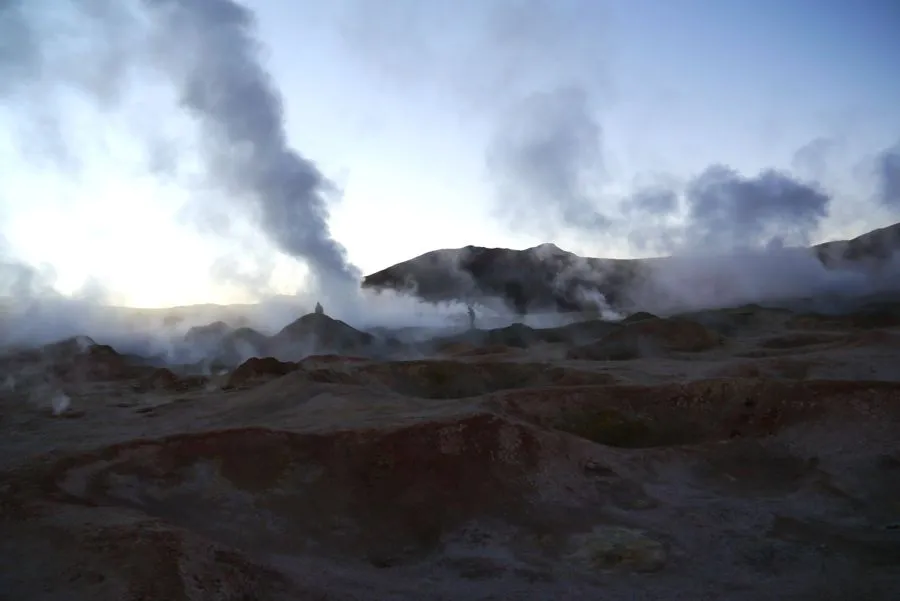
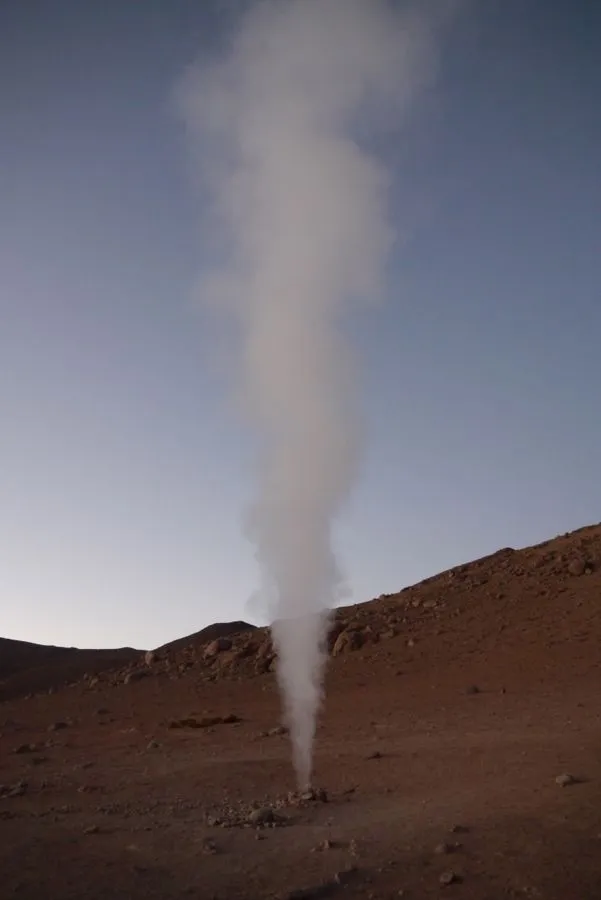
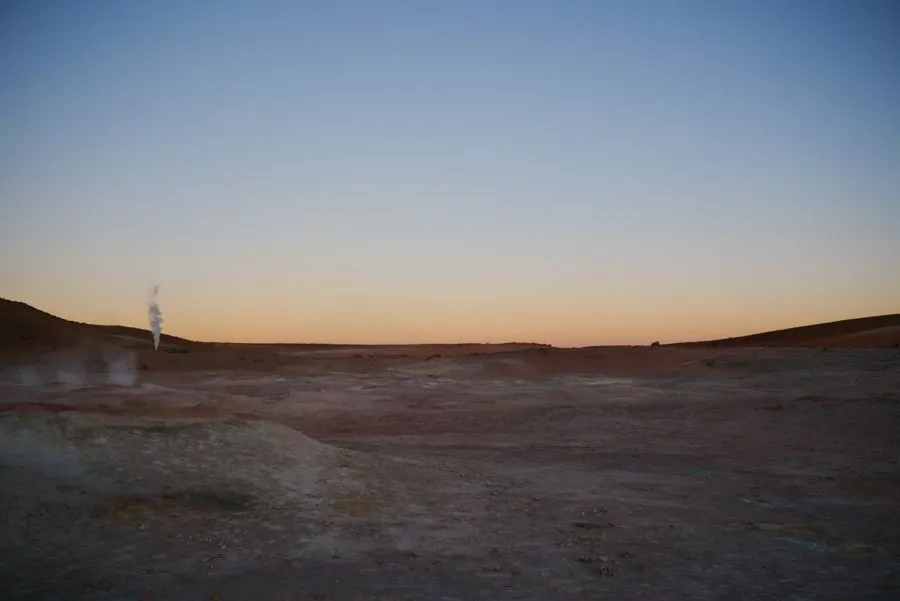
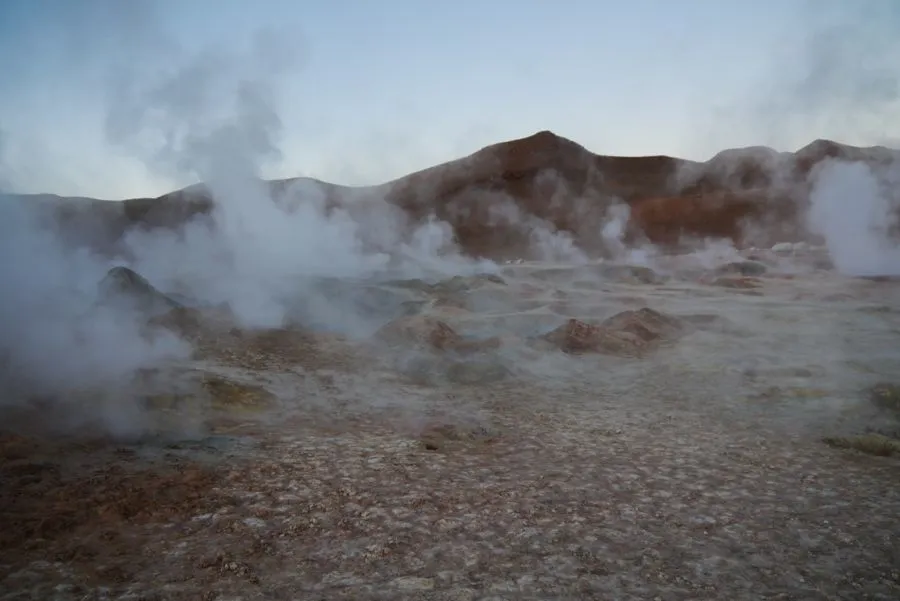
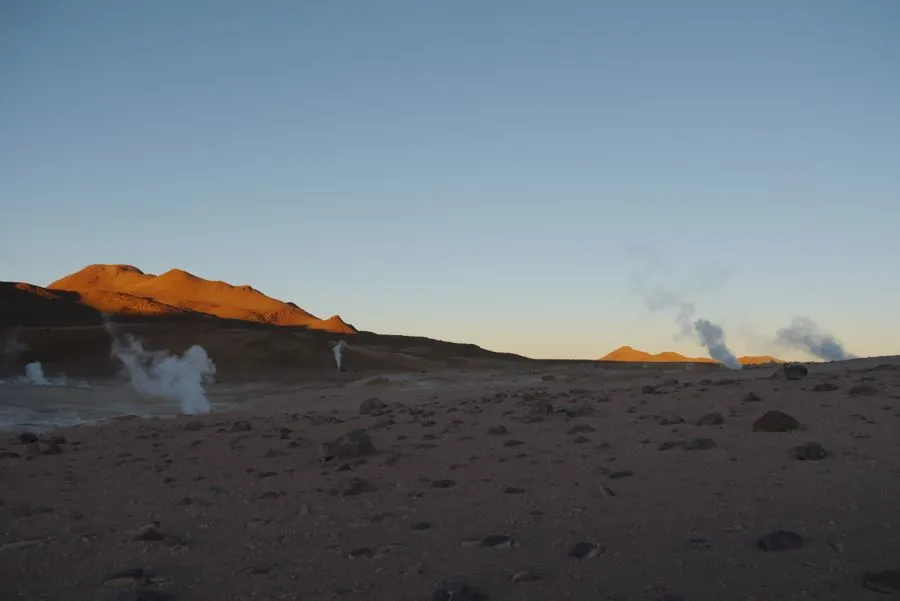
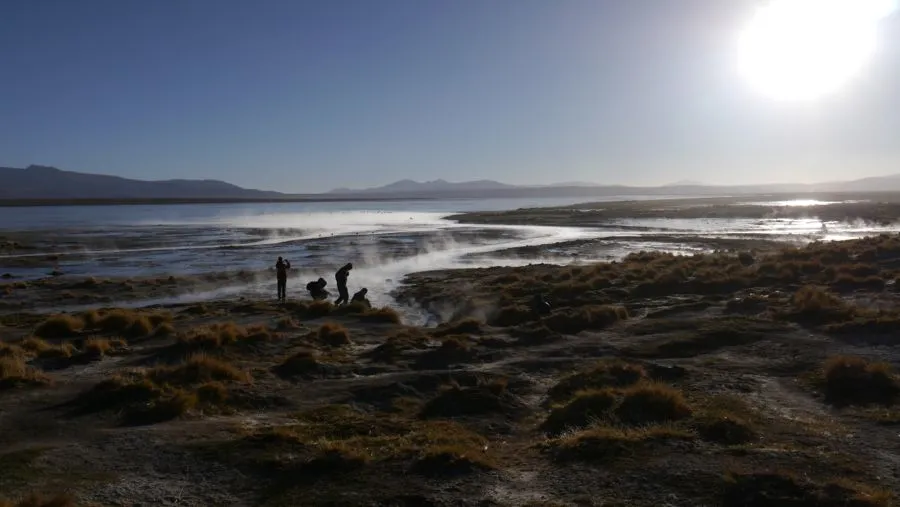
Our 4.30am start the next morning was necessary so we could see the geisers at their most active. The strong smell of sulphur was not enough to put Mark off and he took off on a quest of photography. There was even a natural hot water pool you could swim in, but the near freezing air temperature and the fact that our swimmers had been packed on top of our vehicle meant we could only dip our toes in to the water. It was a perfectly warm and very enticing.
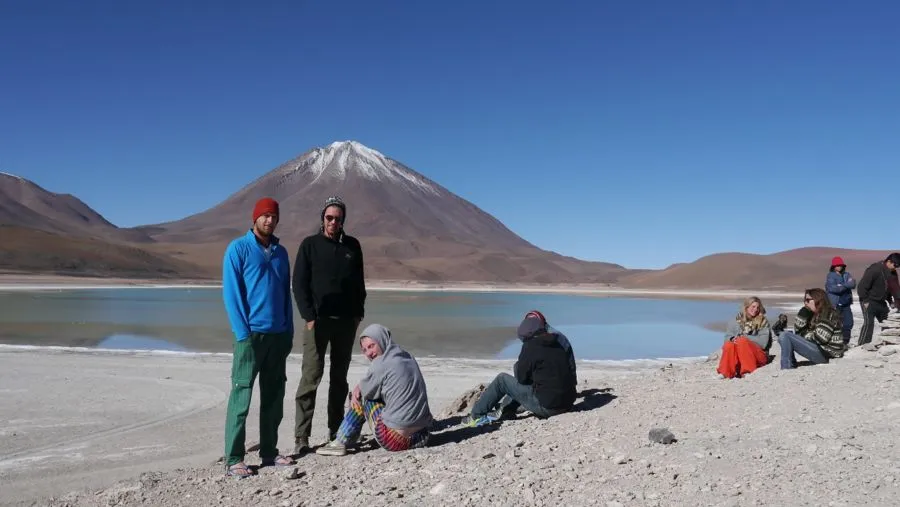
At around 9.30 our guides dropped us at the Bolivian border of immigrations. We had to say goodbye to them and to Bolivia, the country with the biggest contrasts of beauty and the beast...